Tag: #diagnosing endometriosis

  • Different, not better: trying (and failing) to ignore my body

    Different, not better: trying (and failing) to ignore my body

    I have spent 12 months trying to ignore my body. My body has spent 12 months demonstrating how and why that is an impossible endeavour. This week it has been a year since I last published a blog and a year since I last (intentionally) sought medical intervention for endometriosis – happy birthday to my Mirena coil. 

    It’s been a big year, for me personally and for the world, and there’s been plenty to write about but for some reason I couldn’t bring myself to share any of it. I find it hard to express what stopped me but a read of Olivia Sudjic’s Exposure might enlighten you if you’re curious. The simplest explanation is that I didn’t want to. There’s also the fact that I have always tried to keep these blogs relatively positive in their outlook, and much of what I’ve been doing over the last year is coming to terms with the chronic element of endometriosis, a task that involves a significant distortion of optimism as you know it. Again, if you’re curious about how I began to think about that in a more positive light, I highly recommend reading Alison Kafer’s theorisation of crip time. 

    I’m sure as I slowly revive the blog I’ll fill you in on some of the things that have happened but here are the highlights: I graduated from my MSc in Gender and Sexuality, I moved to Brussels, Belgium where I’m still living and working a meaningful job that, refreshingly, doesn’t involve thinking about bodies all day. In many ways these three headlines are all connected to each other and to my attempt at ignoring my body. My MSc was, in the end, incredibly rewarding but it left me with a bit of a hangover. I spent last summer recovering from diagnostic surgery and a traumatic IUD insertion while writing a dissertation on the cultural backlash against hormonal contraception. The dissertation ended up being much more than that – really it was a manifesto for a hormonal feminism. Having been told not to intellectualise my health by an old therapist I did the exact opposite and while I would do the same again, I finally saw what the warning was about: I could no longer think about anything else. 

    So when I was offered a job in Belgium I grabbed the opportunity and saw it as a chance to find out what else I could think about. In many ways the plan was a success. Especially at the beginning, when I was hopeful that if I gave this new treatment a chance to work then maybe I might be able to forget about having endometriosis for a while. So I just ignored the old pains and the awful new ones that had arrived since I got the IUD. I ignored the fact that I hadn’t stopped bleeding for four months. I passed out from pain out on the metro and tried to ignore that too. I took a lot of painkillers and just kept waiting for the IUD to start working. I ignored the very obvious fact that ever since the coil insertion I had redeveloped vaginismus in a much more frightening way than before. I stopped tracking my bleeding or pain, and put every bad day behind me, trying not to notice how debilitating they were or how frequently they were coming. I would work all day and then return home exhausted to eat then sleep, sometimes taking a few moments to marvel at how my flatmates could work, exercise and have social lives. I tried dating again, and when I quickly realised that doing so would make me think about my body, pain and the fact that nothing had really changed, I promptly stopped. 

    Then in January 2020 I came down with the chickenpox at 24 years-old. As it took hold, I told myself it was all in my head, that everything I was feeling was imaginary. It was only when the blisters arrived that I began to believe my body and started to see how much impact the diagnostic process had on my mental health. There is nothing like an acute illness to make you dwell on a chronic one. It was horrible. Every medical intervention I’ve had has gradually chipped away any sense of sexiness I once had, and let me tell you, nothing will finish it off like chickenpox taking over your face and vulva. I wrote some very dark essays where I vowed to start listening to my body’s warning signs and then the files corrupted and I lost the motivation they captured along with the essays. I went for a mammoth hike and felt my body in a good way for the first time in months. It felt good to feel good and I tried to chase that feeling. 

    I finally stopped bleeding for the first time since the coil went in, only for blood to start emerging from new, scarier places. I ignored it. I noticed that I started bleeding after I ran for a bus or carried something heavy. So I stopped doing those things. Seeking good feelings and avoiding the bad ones seemed like a solid way to ignore my body in a slightly healthier way. And then a pandemic started.

    I talked myself out of my COVID symptoms, which were later confirmed by a positive antibody test. I used lockdown to redraft the novella I wrote in 2018 and while the process involved thinking about physical pain, it was easier than thinking about what I was going to do with the pain I felt now or that might get worse at any moment. My pain started to come back more frequently, in ways I could no longer ignore. My flatmates repeatedly implored me to call in sick to work. I again reverted to the logic of waiting until there was a ‘real’ reason, ignoring the fact that not resting immediately would probably cause that ‘real’ reason to arrive. When I bled I no longer reached for a menstrual cup. I finally acknowledged that the coil insertion was the last straw for my vagina: it had truly closed for business.  

    As lockdown began to ease in Belgium I went to see my GP. I had no intention of mentioning endometriosis, I just wanted a blood test and a repeat prescription. But she started to ask questions and I, reluctantly, answered them. ‘You can have surgery for endometriosis, you know?’, she said. I smiled politely and said I knew. After further probing I decided to give her the overview of what I had tried and where I was. She asked me what was next, did I want to seek treatment in Belgium? I didn’t want to seek treatment at all, doing so had only made things different, not better. She tells me I don’t have to suffer, that she knows Belgium’s sole endometriosis specialist personally, that I have options. I start to believe her. I’m not yet sure where that sits with my acceptance of crip time, but optimism is contagious and it was the driving force of this blog. It’s good to have a little back. It’s good to be back. 

    This summer I am taking part in Endometriosis UK’s #WalkForEndo. I will be doing eight 7.5km walks in solidarity with those still on the path to diagnosis, which takes 7.5 years on average in the UK. You can support my fundraising by sponsoring me here. Research suggests that racial biases in medicine, where endometriosis is often considered a white woman’s disease, lead to even longer delays in treatment and diagnosis for Black women. There is a wealth of literature that logs the wrongful presumption that Black women’s tolerance for pain is higher than others. It takes all of us to address these inequalities in healthcare and beyond and I urge all readers to confront them.
  • Vindication, endometriosis & some Douglas bloke | Pleasure Moans #3

    Vindication, endometriosis & some Douglas bloke | Pleasure Moans #3

    In my last blog I detailed my hesitation and resistance to my gynaecologist’s suggestion that I have a second diagnostic laparoscopy (keyhole surgery) to look for endometriosis. It feels weird then, almost two months later, to be writing that this week I had that surgery.

    My hesitations varied from not wanting to repeat another painful and probably pointless surgery like the one I had in August 2017, to wanting an endometriosis specialist to be the one to go in for a second look, rather than a general gynaecologist. Once I received a date for the operation I was more certain than ever that I was going to be withdrawing my name from the waiting list, but I had an upcoming appointment with a different doctor that I had set as the deadline for my final decision.

    This other appointment was a bit of a cock-up – I was supposed to have been referred to a specialist gynaecology clinic in London but wires were crossed and somehow I ended up with a referral to a sexual health clinic in London that specialises in sexual pain. The problem was, the only female sexual pain the clinic deals with was superficial pain, relating to pain that occurs externally or on entry, like vaginismus and vulvodynia. While I have had some run-ins with superficial pain, my most persistent symptom over the last few years has been deep dyspareunia – that’s deep, internal pain during vaginal penetration.

    When I got to the appointment I was, as expected, greeted with, ‘why have you been sent here? We don’t deal with deep pain, that’s gynaecology.’ But I was kind of hoping I might be referred to that hospital’s gynaecology department because it’s one of the best. He decided to examine me anyway, and I realised this was going to be something of a new experience when he said, ‘oh we use stirrups a little differently here…’ One bizarre examination later and he agreed with me that superficial pain was not a primary issue but that it was present. He also said I appear to have some pelvic floor dysfunction which doesn’t surprise me at all. Physio is something I’ve been increasingly curious about over recent months.

    When it became clear that he wasn’t going to refer me to the hospital’s gynae unit, I just decided to ask, ‘do you think I should have a second laparoscopy?’ He took a sharp inhale and said something along the lines of, ‘I’m sure you get this a lot and are pretty fed up of it, but it sounds like endometriosis to me.’ He was right, I have been getting that a lot, increasingly so. He suggested some urological and gastrointestinal causes too, but then he went on to explain endometriosis to me in a way no one else ever had before. He said, ‘some women will be struggling with infertility, have absolutely no pain and a laparoscopy will find endometriosis in abundance. Other people will have serious, chronic pain and yet when endometriosis is found it will be a really small, localised amount, probably on or very near a nerve.’

    This, pardon the pun, really struck a nerve. My symptoms have improved so much since going on the pill that it seemed to me that if I did have endometriosis after all then there couldn’t be very much of it. So I started to focus in on the one symptom that hadn’t changed – deep dyspareunia. I asked around, did a lot of research (I’m particularly grateful for the resources on the Nancy’s Nook Endometriosis Education Facebook page) and discovered that deep dyspareunia is often associated with rectovaginal endometriosis and endometriosis found in the Pouch of Douglas (POD).

    Image result for rectouterine pouch

    ‘POD’ struck a chord. Why did I know those letters? I started sifting through my (now finally organised) records of appointments, examinations and scans and discovered that on one of my more troubling scans, where a persistent hemorrhagic cyst (commonly associated with endometriosis) was found, a very small, uneventful comment was written: ‘some free fluid seen in POD.’ The POD, evidently named after some Douglas bloke, is also known as the ‘rectouterine pouch’ or the ‘posterior pouch.’ It’s the seemingly useless ‘cul de sac’ between the uterus and the rectum. Intelligent design, eat your heart out. The more I read about endometriosis-related dyspareunia the more it all seemed to marry up with my symptoms (retroverted uterus, constipation after sex, deep dyspareunia).

    It was this discovery, as well as my first debilitating period in a year, that pushed me to say I would have the surgery in April after all. I was pretty steady in this decision, up until a week before where I promptly freaked out. My initial fear was that I going to die and it was all going to be my fault, but most of all, I was crippled by the fear of going through the entire process again to be told there was nothing wrong but to continue to be told that my symptoms sound like endometriosis. It’s an incredibly frustrating cycle. Once I talked myself off of that ledge I was determined to be as prepared as I possibly could be for the surgery. Looking at it now, I think I did a pretty good job.

    I had a full sheet of questions and concerns that I wanted to run by my gynaecologist before I let him operate on me, all of which he respectfully and sincerely answered. A few included:

    1. Please don’t stretch my vagina, as you suggested you might – OK
    2. Since deep dyspareunia is my most persistent symptom can you please check my POD and look out for rectovaginal endometriosis – it’s unlikely but sure, I would have looked anyway
    3. Will you open up my old scars or create new ones? A bit of both, personally I prefer going in from the left, so that would mean a new scar
    4. If you find endometriosis how will you treat it? Burn it
    5. Is excision surgery not an option? I hear that it’s better. If it’s significant then I would excise it, yes.

    Ecetera, etcetera.

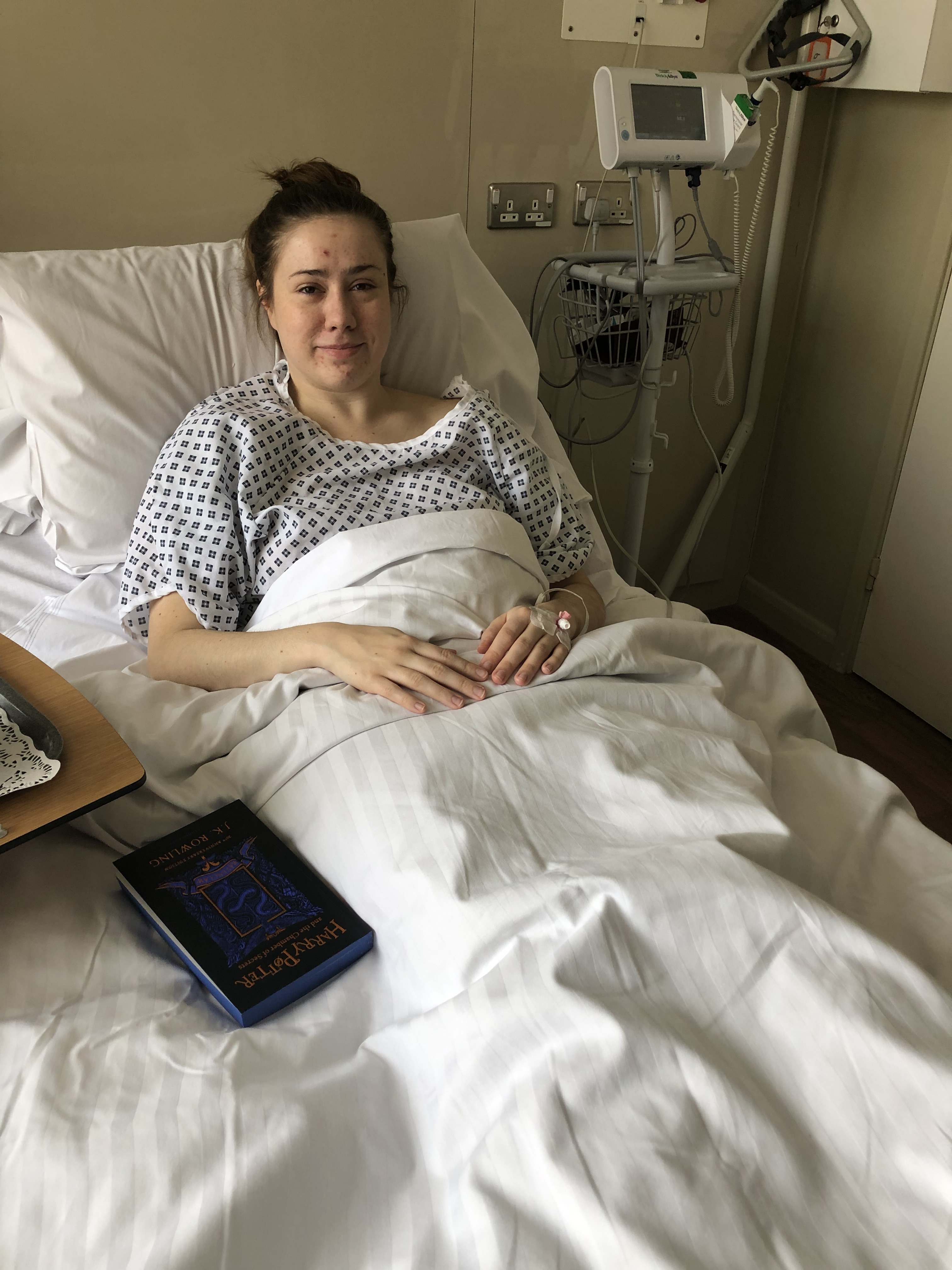
    Reassured by his answers and our rapport, I was readied for surgery and sat reading Chamber of Secrets until they came and got me.

    Inhale.

    A couple of hours later, exactly 20 months after my first disheartening surgery, my gynaecologist swaggered into recovery (where I was crying and swearing because my drugged-up self had come to the conclusion they hadn’t found anything) to tell me, ‘I found endometriosis in your Pouch of Douglas, it’s not in your head!’

    Exhale.

    IMG_7403
    Sore, surprised and a little smug

    It’s only been a few days and I’m still processing. It was a really tiny amount of endometriosis, but as I’ve been reminded time and time again, the severity of endometriosis does not correlate to pain. Giving myself endometriosis imposter syndrome at this point will help nothing.

    I can’t help but wonder what role my own advocacy and research played in finally get an, albeit tentative, answer. Would he have double-checked my POD if I hadn’t specifically done the research and asked him to? Would painful sex ever have been the symptom my doctors focussed on if I hadn’t forced them to? A widely touted statistic about endometriosis is that on average it takes 7.5 years to get a diagnosis, but that’s actually contested between 7 and 12 years. I’ve got here, where I’m not sure I have a diagnosis exactly but where I have had endometriosis discovered and treated, in three and a half years. But reaching this point has been a hell of a lot of hard work, physically and emotionally. I’ve been misdiagnosed with vaginismus, spent months attending psychosexual counselling, been placed on a pill that’s wreaked havoc with my skin and mood, taken anti-depressants for pain management, stopped running, stopped having sex, stopped socialising like a normal twenty-whatever-year-old. I’ve gained a lot too, knowledge, friends, writing gigs, a novel, job opportunities, a post-grad pathway I didn’t expect, a blog – but I am constantly curious about what the last three years might have looked like if my pain had been believed earlier, taken seriously sooner and treated promptly – by myself and by others.

    It’s not yet clear whether this is the beginning or the end of this particular experience. I have a million questions for my post-op appointment and I won’t know if the surgery has actually improved anything for months. But to have had the hysteria label lifted is hugely gratifying. Honestly, I feel vindicated because in my head the pain was never in my head. If that makes any sense at all.

    IMG_2795
    Of course, summer arrived the day after my op so I’ll be sporting some DVT stocking tan lines this year!

  • Why didn’t the gynae look at my vagina? #Periodically 6

    Why didn’t the gynae look at my vagina? #Periodically 6

    There were a couple of requests after I ominously ended Periodically 2 with ‘a story for another day’ in reference to my visit to the gynaecologist. Well folks, today is that day! I have discussed certain aspects of those conversations in Periodically 4, but let’s get right into the nitty gritty, shall we?

    Oh wait, we can’t. Because I waited over three months for a gynaecology appointment for the gynae NOT TO LOOK AT MY VAGINA. I understand that my symptoms are mostly ‘deeper’ than the vagina but come on, what if it’s something obvious? Maybe I don’t have a vagina, or maybe it’s upside down? I don’t know, the only professional that ever looked was Dr H and she said ‘we all come in different shapes and sizes’. As true and profound as that is, it’s not what you really want to hear when a doctor is looking at your vagina for the first time… and let’s remember, that was said moments before ‘I can’t seem to find your cervix’.

    Tangent: I do question why in Europe and the USA gynaecology appointments are so standard for most people with female reproductive systems, and yet in the UK most people don’t see a gynaecologist until they’re pregnant. 

    Want to talk about another disappointment? I had an ultrasound and then didn’t let me see! The liberty! Considering asking to stay awake for the laparoscopy next month, just so I can ask ‘WELL?’

    Simply put, the gynaecologist just confirmed that all my symptoms sound like endometriosis, but that there was high chance that it could be ‘nothing’. Dr M went straight into filling out the consent form for a diagnostic laparoscopy (that he didn’t entirely explain to me, but thank you Google). The plan is that he will poke a couple of holes in me to assess the damage, if there is any he’ll fix what he can but if it’s anything more sinister I’ll be brought back round to discuss possibly treatments.

    It was a very underwhelming appointment after weeks and weeks of anticipation, but all jokes aside, I’m just glad I was seen (progress!) and that it was free. Thank you NHS, you wonderful, wonderful thing. #SaveOurNHS

    It was a waste of a shower though. OK, I’ll stop.