Tag: Writing

  • The pill & my face #Periodically 31

    The pill & my face #Periodically 31

    Here’s a blog I didn’t want to write but that’s been itching to get out for a couple of months. It’s about a problem I didn’t realise the extent of until the worst had passed, so keep in mind that this story has a slightly happier ending than most of my blogs!

    A Skin Thing

    I have never had particularly ‘good’ skin — that is to say since puberty I have always had some acne. But it was completely synced to my menstrual cycle and, while annoying, it was totally manageable. The only time it got a little out of hand was around exam periods, which was always perfect considering exams are nearly always rounded off with a prom or a summer ball. But that was as bad as it got. When I was on the pill in the past I noticed changes but never anything drastic, other than that it was much better when I finally came off all hormonal birth control in 2015, by which point I was 20 and thought maybe I was just beginning to grow out of it.

    When I went back on the combined pill in February of this year I was prepared for a little skin turbulence. I knew that while things were settling it was likely to get worse, but I also knew that the general rule preached by my doctors and countless anecdotal stories was that my acne was likely to improve on the pill. At the time, it felt like the only silver lining of selling my pill-free self to the hormone gods.

    What I didn’t expect was that when things did eventually settle on the pill that my face would be taken hostage by what my doctors were by now calling “adult acne.” Oh good, not only am I spotty but I’m also out of the designated spotty age bracket!
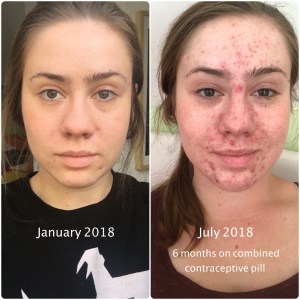
    skin3

    The irony is that I took the “before” shot thinking “my skin is going to get so much better!” A classic case of you don’t know what you’ve got ’til it’s gone… 

    My GP immediately said, “that’s unusual, it usually gets better,” and my gynae said, “that shouldn’t happen.” We literally watched my face get worse and worse the longer I took the pill — it was like an accumulative allergic reaction. This was the only visual sign I had of my “improving” health, which didn’t make things feel all that improved — shocker! “If it’s not supposed to do this then surely it’s a sign that there is some kind of hormonal imbalance in my body?” I asked my doctors. They both agreed but said there was no point investigating it because “we know so little about hormones that even if an endocrinologist did spot an anomaly we wouldn’t know what to do with that data.” Which, while completely true, didn’t make me feel much better.

    Remember how a few months ago I said, “it’s a bummer but acne is something I am well-used to dealing with, and I’ll take it over pain any day“? I don’t necessarily take that back, but when your pain hardly improves and your acne just descends into total chaos it’s hard to take it on the chin (very literally). To add insult to injury, the blistering hot summer we just had meant that 30 million freckles also descended on my face (regardless of how much SPF I put on). I just felt and looked like a bit of a mess. No wonder I started taking Bookstagram so seriously, I was hardly likely to be posting summer selfies. In fact, I now realise that I was cutting my face out of Bookstagrams to hide the acne, case and point:


    (Remember kids, Instagram is a web of lies!)

    Funnily enough, this did not help my mood, which was already being tormented by raging mood swings and rampant PMS. I’m pretty good at hiding acne with makeup but it was so painful that I didn’t want to touch it. I like to think of myself as pretty skin-positive (I love everything Em Ford does for the movement!) but I really avoided leaving the house or wearing makeup unless I absolutely had to. Dyspareunia and vaginismus aren’t exactly conditions that make one feel particularly sexy, throw some angry acne into the mix and it understandable results in a slight crisis of confidence.

    However, I’m not beating myself up about that too much. I did eventually think, “stuff it, I don’t have to look at my face when I’m out, that’s the rest of the world’s problem.” But it’s not great when you do finally leave the house, spots-and-all, and are then bombarded with well-meaning people telling you to “drink more water” or “try this horrifically expensive product.” And when you dare say that you chug water by the gallon or that you can’t afford this particular product then somehow it becomes your own fault — you’re not trying hard enough and therefore you want your skin to be bad… Um, sod off?

    There’s no doubt in my mind that there are dietary changes and some products that genuinely help some kinds of acne. Hell, I’ve tried lots of them, but given how quickly and aggressively this came on it felt so obvious to me, and my doctors, that it was hormonal. Personally, changes to my diet have never made a difference to my skin, but I think acne is nearly always a case-by-case, individual issue and unsolicited advice about it, for me at least, is always unwanted.

    A little bit of this and a little bit of that…

    As promised this story has a happy-ish ending. My GP and gynae both suggested that the pill was more likely to reduce my pain if I skipped periods. This meant I would take two or three pill packets back-to-back without a withdrawal bleed. When I eventually gave it a try my mood improved in a matter of days and everything else followed. I had no idea it would make such a big difference but it really did. Around this time I also started using prescribed Adapalene gel and taking Evening Primrose Oil. Whether it’s one of these treatments or a combination of all three, the last two+ months have seen a drastic improvement in my acne, mood and (fanfare please) pain! (Typically, three days after I penned this blog things got a little worse again, but overall things are definitely better!)

    skin7

    What now?

    It’s getting better as the scarring goes down and the further away I am from my last withdrawal bleed the better my skin is, but considering going on the pill was a last-resort solution for my pain, this skin journey doesn’t exactly feel like a triumph. The last few months have mostly been about treating problems that the pill caused. As mentioned, I have finally noticed an improvement in my pelvic pain but I would be lying if I said I don’t worry about what happens to that progress if and when I have sex or come off the pill. Long-term readers won’t be surprised to hear that staying on the pill for the rest of my ‘reproductive life’ isn’t my plan of choice.

    Why didn’t I want to write this blog? Because I didn’t want to start moaning about something else. So many of my friends have struggled with their skin for years, dealing with Roaccutane and its complications. Eight months of bad skin hardly feels worth complaining about in that respect. But I had no idea that the pill could have this effect — so that’s something I’m keen to share and leaving it out of these blogs felt a little dishonest.

    Love the skin you’re in, unless it bloody well hurts, in which case: seek medical intervention… Thanks for reading! 
  • City by the Book: Death at the Château Bremont

    City by the Book: Death at the Château Bremont

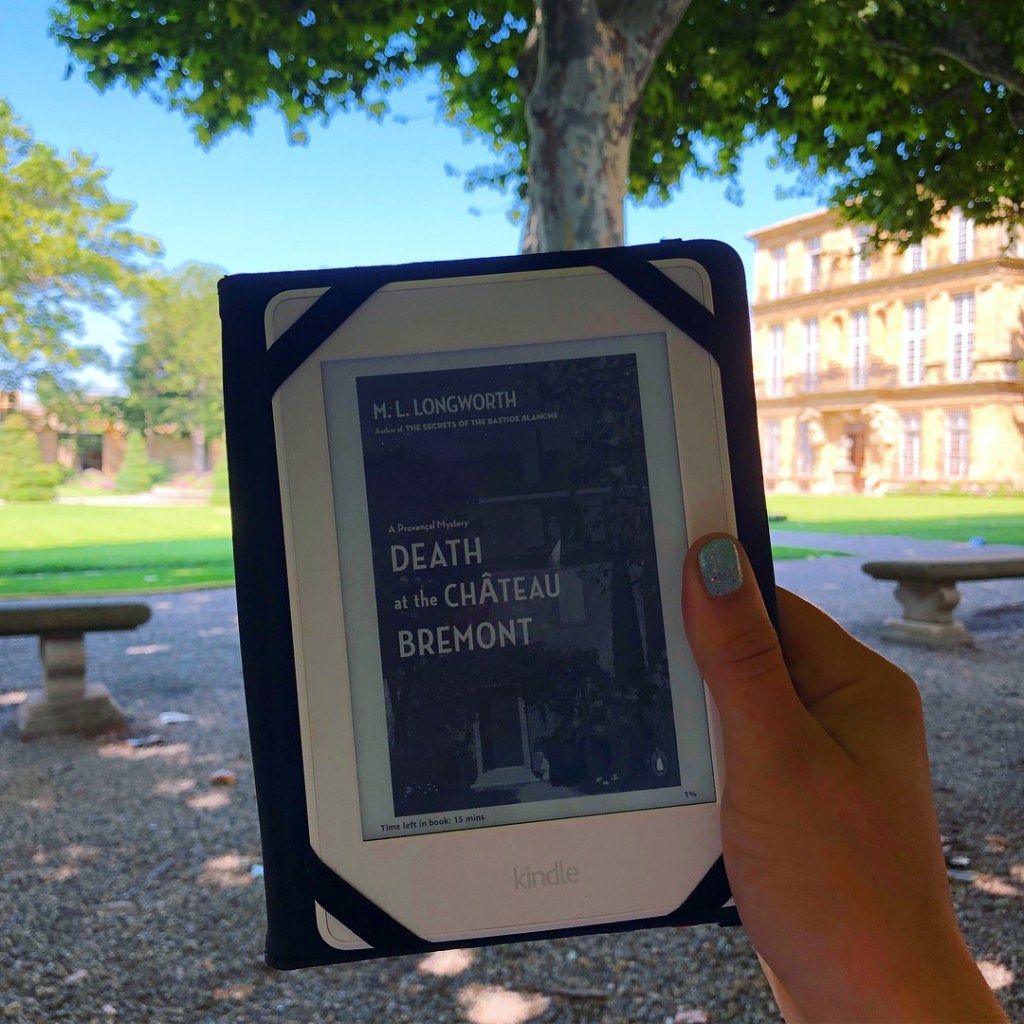
    The final City by the Book from my most recent trip takes us to Aix-en-Provence, a city my travel companion knew well, but that I didn’t know at all. Well, it’s much easier to get to know a city in two days when a) you have a private tour guide and b) you have a book as brilliant as M L Longworth’s Death at the Chateau Bremont. The book is actually the first in a series of provençal murder mysteries, all set in and around Aix-en-Provence. And I don’t mean loosely, I was recognising street names and restaurants all over the place thanks to Longworth’s book.

    I’m not a huge murder mystery reader, but living with my dad means that exposure to it is inevitable, so I’m always pleasantly surprised by how much I enjoy them. The series has the usual cryptic detective, Antoine Verlaque, who is clearly not handling some unknown inner turmoil, but refreshingly, he is joined by university professor Marine Bonnet.

    When we first hit cours Mirabeau in the daylight, Aix’s iconic street, my friend felt like something was different — the trees. The street wasn’t how she remembered it, lined with trees so densely that they formed a cover over the street itself. A few hours later, I think we might have been in Parc Jourdan, I read the following passage in Longworth’s book.

    “One hundred years ago double rows of plane trees had been planted on both sides of the street, and by the summer they would shade the sidewalks and the street itself. But the cours had been in a state of construction, or “decontruction,” as Slyvie, Marine’s best friend, a photographer and art historian, liked to say. No sooner was the top of the street completed than the workmen would start jack-hammering the bottom, and then someone at city hall would change his or her mind and the bottom would be hurridedly finished so the construction team could tear up the newly finished work at the top.” — M L Longworth, Death at the Chateau Bremont 

    It’s not a particularly happy anecdote, but isn’t it nice when a novel can fill in the blanks on why a landmark, plastered on every postcard and fridge magnet, looks so completely different?

    Books like Death at the Chateau Bremont are why I like writing the City by the Book blogs — it can transform how you experience a trip. It was also really easy for me to find thanks to the Aix Centric blog, which has a list of books set in Aix — I wish it was as easy for every city! The same blog also has a post about the tree situation, find it here.

    I expect I’ll read some more of the Verlaque and Bonnet series, but I almost want to wait until I can visit Aix again — reading becomes an even more immersive experience when you get to read a book in the city in which it’s set. 

    The last City by the Book looks at Toulouse, Montpellier and Henry James, read it here
  • Down a different rabbit hole… #Periodically 30

    Down a different rabbit hole… #Periodically 30

    For whatever reason, the area between my legs has always been a place of curiosity for me, perhaps not helped by my discovery of the vagina-brain connection theory discussed in Naomi Wolf’s Vagina. Recently, and with help from my psychosexual counsellor, I’ve realised that this ‘curiosity’ might have meant I always had a certain ‘vulnerability’ to something like vaginismus. Perhaps it was always lying in wait and it would just take an unfortunate combination of events to trigger it.

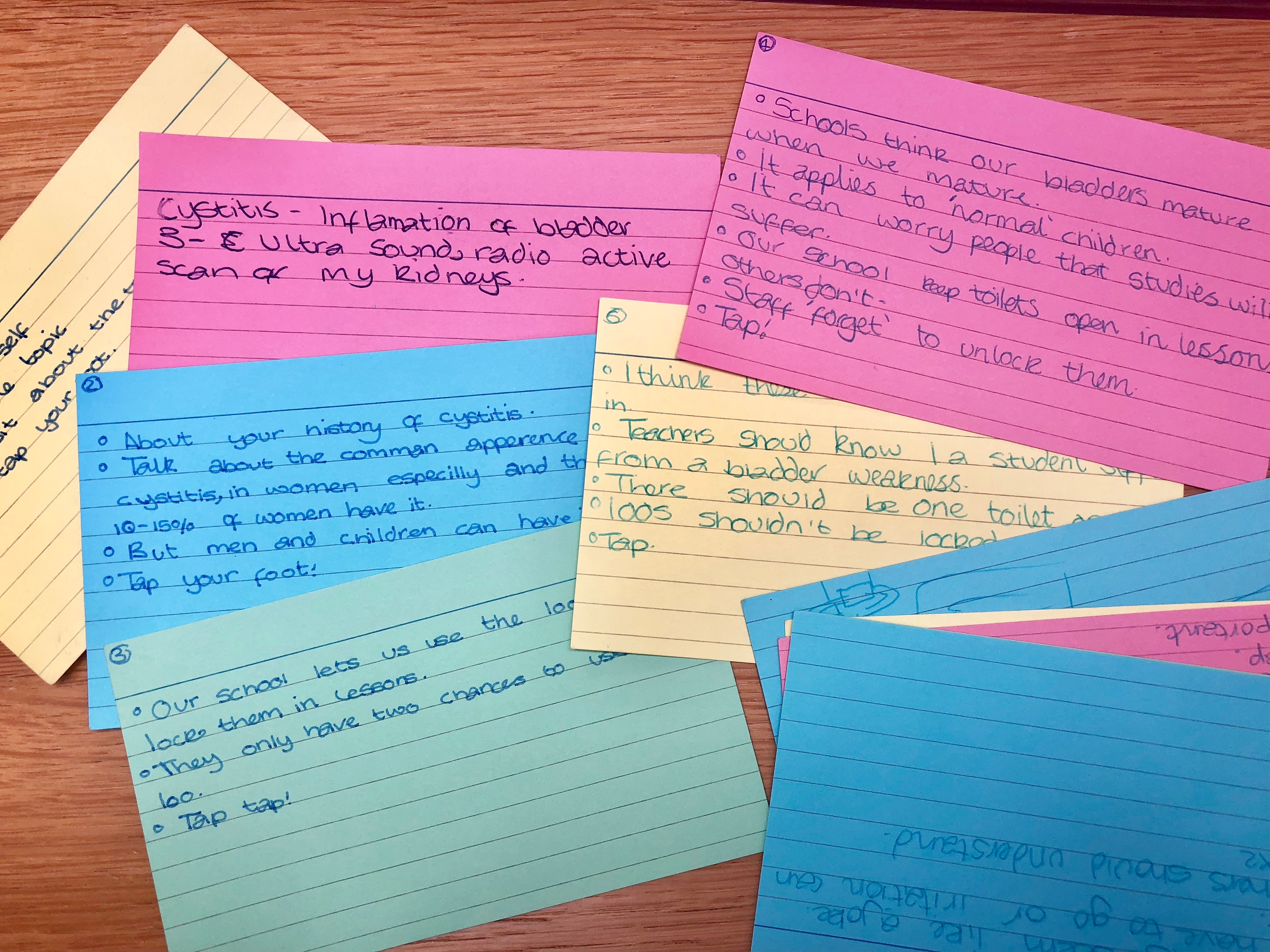
    But it’s not just the vagina that I’ve been curious about — for most of my life, the uninary system has caused the most trouble. The exploration into gynaecological causes of my pelvic pain over the last couple of years has overtaken a bit, especially since when I raised the subject of urology with my doctor last autumn, he said, “you don’t experience painful periods or painful sex unless there is a gynaecological problem.” It was only last winter, when I was clearing the loft with my mum and considering starting counselling, that I found some note cards from 2007 that made me wonder if my bladder might be playing a role in my present situation.

    IMG_2888
    Hilary’s obsession with bodily fluids circa 2007

    As part of a public speaking exercise, I chose to talk about cystitis and toilet access in schools. What inspires an eleven-year-old to give a speech about urinary tract infections (UTIs)? A long and complicated history with them and bladder weakness, even at eleven. I had a few kidney scans as a kid but the general consensus from my doctors back then was, “she’ll grow out of it.” Lo and behold I did not. The UTIs subsided during puberty, but once I started having sex they returned. I had a reputation as an obsessive pee-er as a kid, I planned my day around when and where I was going to wee, a habit I still sometimes catch myself practising now.

    Throughout this whole process investigating my bladder for something like interstitial cystitis seemed like such an obvious path to take and it’s finally happening. Last month I saw a urologist and, as always, I was armed with a list of things I thought relevant to mention, and for the first time ever, all the points on my list came up as a result of the doctor’s questions. I didn’t have to suggest anything myself. Dr K was immediately nodding and it was like my body was doing all the right (or wrong) things to have been sent to this department.

    Dr K has referred me for (yet another) ultrasound, took a urine sample and then started mentioning some elusive “other procedure” and because I’m a moron I didn’t actually ask what this third procedure was. And then a letter came in the post while I was on holiday informing me that fairly soon I’ll be having a camera up my urethra (flexible cystoscopy). OH GOOD.

    As always, I’m excited to explore another orifice (lol) but I’m worried about traumatising my body with another pelvic procedure, especially since I’ll be conscious for this one. I was given almost no information about what to expect or how to prepare other than to “bring some small change and a urine sample” — are the two connected? I rang the department to try and find out a little more and was told “it’s just like a smear test,” which is really helpful because a) I’ve never had one as I’m under 25, and b) pelvic examinations have been so painful in the past that I was diagnosed with vaginismus. So I wouldn’t say I’m feeling totally relaxed about the whole thing, but when I look back on the last two years with fresh urological eyes, there are a lot of unanswered questions. Like the fact my pain started around two memorable events, only my doctors chose to focus on one; a) a period so painful I left work to go home and vomit/cry and b) having a drink spiked and feeling like I was hungover for three months because of what turned out to be a bladder infection.

    My GP isn’t convinced that the answer to all my problems lies in my bladder, and neither am I. Going back on the pill certainly hasn’t ‘fixed’ me but my body’s reactions to it and the adjustments in how I take it have confirmed that there is undoubtedly something hormonally abnormal going on in my body. And yet I can’t shake the sneaking suspicion that a piece of the larger puzzle might be in my bladder.