Tag: Women’s Health

  • Timing (and science!) is everything

    Timing (and science!) is everything

    So a couple of months on from writing about the overwhelming sensations conjured by a team of researchers, doctors and midwives actually having a plan for investigating and hopefully treating my endometriosis, I still haven’t written about the plan itself. So in theory, that’s what this blog is about but as usual, we’ll see where else it goes. 

    I should start by saying that the timing of the plan is… complicated. 2021 has been a rough old year so far (seriously, I thought 2020 was bad) and by the time I got to my expedited appointment with the endo specialist, I had decided that if the appointment wasn’t a radical change of circumstance, then it was time for me to seriously consider returning to the UK. But, as you know, the appointment did present a radical turn of events. So when the midwife asked me, moments after the gynaecologist had presented *the plan*, ‘ and just to check, you are planning to stay in Belgium, right?’ I found myself saying yes. It seemed quite a simple answer at the time but in practice, it’s been a bit trickier. 

    The plan, then, is some serious investigative work before any more surgery. Music to my ears! My doctor was honest about the fact that ‘this does end in surgery’ but that by using as many resources as possible we can try to maximise the impact of the surgery by knowing exactly where I have endometriosis in advance. The first investigation is a type of internal ultrasound using ‘International Deep Endometriosis Analysis’ (IDEA). This special, and I am expecting painful, ultrasound is part of a clinical study. Basically, the scans and the interpretation of them will be compared with what is actually found inside me during surgery. The results of the wider study will inform if and how ultrasounds using this technique can offer a less invasive, non-surgical way of diagnosing endo. I’ve never signed an informed consent form quicker. 

    The second investigation is an MRI. For years, doctor friends have been telling me to get an MRI, even privately if I had to. The problem was, even if I found the funds for an MRI, at no point had I been under the care of a doctor who could interpret anything about endometriosis from an MRI. That’s all changed now, though. This MRI won’t be pleasant, like for the colonoscopy in March, it will involve a full bowel prep and during the scan I will be filled with various fluids via my anus and vagina. Can you think of a better way of spending your summer? Ah, yes that was the crux. Summer.

    It was, is, a completely manageable crux. Both scans happen to be at various points in the summer. Which would so not be even the slightest problem, if it wasn’t for the fact that we’re still in the middle of a pandemic and I haven’t seen my family or friends at home in the UK yet this year, and many of them for much, much longer than that. In line with Brussels’ summers, I had set my heart on spending July and August working from home and reuniting with family in the UK but with quarantine restrictions and the unfortunate timing of the scans, that idea has been greatly downsized and, at times, seemed impossible. Now that I’m closer to getting home, even if it’s just for a little while, I’m finding it easier to manage but the last months have been frustrating and painful, knowing that if I stopped seeking treatment for this stupid condition then not only could I spend the summer with my family but I could consider moving back to the UK. During the last few months, I have often felt like I am inflicting unnecessary emotional pain on myself and my loved ones all for a slim chance of treating endometriosis. 

    Side note: it has been suggested many times this year that I move home and start seeking treatment in the UK again. But not only have I tried that twice with, let’s face it, pretty poor results but it would mean starting the clock again at a far slower pace, and that’s not to mention the professional and financial consequences. If I’m going to run on curative time, fine, but I’m not going to do so indefinitely. 

    Anyway, this is a problem for Right Now Hilary, stuck in Belgium without her family, but I can only hope that Future Hilary will be grateful. Persevering with life in Belgium to stay on this doctor’s books continues to feel like the right decision but it’s been a harsh reminder that sometimes, the right decision doesn’t feel like a good decision. 

    Once I’ve had the scans I will then, in the autumn, meet my gynaecologist again and discuss what kind of surgery route to go down. There may be more options when it comes to it but the two options she put to me in April were: standard laparoscopy performed by a gynaecologist to excise endometriosis from the reproductive system; or a more intense, interdisciplinary laparoscopy performed by a gynaecologist, urologist and/or gastroenterologist to excise endometriosis from additional organs, like the bowel, bladder and appendix. It’s really exciting science, medicine and surgery! Scary too though, especially if COVID will continue to limit my support system – thank god for good friends in Brussels. As always, I am managing my expectations but I’m happy to even be a guinea pig. 

    Being a guinea pig also has some other benefits because it gives me an indication of when I might have surgery. This is because the clinical study design stipulates that the surgery takes place no more than a year after the IDEA ultrasound. Timing really is everything, at the moment. 

    The plan didn’t stop there though. There was great concern from my GP, GI, new gynaecologist (and me) about the persistence and increasing frequency of rectal bleeding. For whatever reason, primary or secondary, it seemed I was bleeding out my arse when my pelvic pain flared up or when I got stressed, even though we have managed to turn off all vaginal bleeding with a Mirena coil. Something I find quite ironic, as back in the days of incredibly heavy periods, I used to say, ‘christ, I’m bleeding out my arse!’ Ah, Past Hilary, if only you knew what was to come. 

    For this reason, I was encouraged to do exactly what I didn’t want to do and go on a low-dose combined hormonal contraceptive, despite already having a hormonal coil. The logic behind this is known as ‘ovariostase’ in Dutch and French (I’m not sure about English, ovariostasis, maybe?) Essentially, it’s to turn my ovaries off and stop them from producing hormones. High on *the plan,* I said yes and then cried about it for days and refused to take what is a very expensive brand of the pill for weeks. As you might have gathered, my mood was very low and I was also worried that if I went on the pill while I was already down, I might unfairly blame the pill and unnecessarily fuel my pill-scepticism further. Eventually, after even more rectal bleeding, I took the first pill. And I’ve taken it every day since.

    Honestly, I am not happy about it, nor am I happy with my new pill-induced boobs and the other usual side effects but I am taking it on the assurance of all my doctors that this is only a temporary measure to help me now. For the first time, no one is under the delusion that the pill is a permanent solution. The bleeding has lessened significantly and when I began to notice that I worried that, like my gynaecologist back in Essex, they might say, ‘well, there we go, job done.’ What’s actually happened is that it confirmed that there is a link between my hormones and/or endometriosis and the rectal bleeding. My instincts were right. Again. 

    So that’s the plan, COVID-permitting, and let me tell you, recent events since I wrote the first draft of this blog has really rubbed the weight of that condition in… What’s nice is that although these upcoming scans are going to be uncomfortable and probably painful, they shouldn’t require any decision making on my part yet. That’s a great comfort – there have been far too many grown up decisions to make lately. Bring on a summer of scans, being reunited with my dog and avoiding major life choices.

    This week the UK government will debate the National Borders Bill, which fails to protect vulnerable refugees and will even go on to treat them as criminals. If you’re a British citizen, the Refugee Council has prepared a template email to send to your MP, imploring them to speak out and up for refugees, learn more here.

  • Reading My Broken Vagina by Fran Bushe

    Reading My Broken Vagina by Fran Bushe

    Much like with Lara Parker’s Vagina Problems, I don’t think it’s entirely appropriate for me to ‘review’ Fran Bushe’s My Broken Vagina because the content is so close to home. I’ve also seen Bushe’s one-woman show Ad Libido three times, discussed it several times on this blog and written about it during the same module of my MSc that I discussed in my last blog. I’m a big fan and completely biased, so instead of reviewing My Broken Vagina, here are some thoughts I had while reading it.

    My Broken Vagina is a frank, funny and warm book where Bushe describes her experience of feeling like her vagina is broken and her quest to fix it: spoiler alert, the only thing that’s broken is sex education. As soon as I started reading My Broken Vagina I felt like I was being hugged by Ad Libido. Each of my three viewings of Bushe’s show marked significant chapters in my own relationship with my broken bits but having its wisdom captured in a written form that I can return to and share beyond the limits of the theatre feels very special. Just like her play, Bushe’s book is laugh-out-loud funny, genuinely educational and wonderfully moving. As an added bonus, it’s filled with amazing, poster-worthy illustrations. 

    Among many important points that come up in My Broken Vagina, is one that I am always particularly fascinated by: ‘the conversation’. That is, the great pleasure of telling a potential new intimate partner that they might need to change their expectations of sex because of sexual pain. Perhaps it sounds simple but it’s been something of a minefield for me for many years and I was thrilled to find it in Vagina Problems and now My Broken Vagina too. It’s refreshing to see it being discussed openly because advice about talking to a partner about sexual pain nearly always assumes you’re in an established, monogamous and heterosexual relationship. It’s likely I relate to Bushe and Parker’s musings on the subject so much because we’re all discussing experiences of being single with sexual pain as white, cis women dating men, but there are definitely similar threads running through discussions of ‘the conversation’ that I think are worth talking about. Take a look at these quotes from My Broken Vagina and Vagina Problems:

    ‘Yeah, haha, and by the way, I might never be able to have sex with you. But I’m still pretty funny and I can make decent banana bread.’

    Lara Parker, Vagina Problems – 114

    ‘At what point on a date with someone new, do you say, “Hey, I know we are probably going to go back to mine and bang it out/make sexy magic, but I want you to know … I might find this very painful”.’

    Fran Bushe, My Broken Vagina – p.36 

    Recently, I got over my fear of ‘the conversation,’ by coming to the remarkable discovery that it doesn’t matter. It doesn’t matter for two reasons. First of all, it is a complete distraction from the actual important bits of getting to know someone and figuring out if you even want to get intimate with them:

    ‘I nodded when I was supposed to and laughed on cue, all while thinking about what it might be like to tell him that I might not ever be able to have penetrative sex with him.’

    Lara Parker, Vagina Problems – p.115

    ‘The fear of having this conversation with a stranger not only meant I had never had a one-night stand, it also meant I’d stay in bad relationships longer than I should.’

    Fran Bushe, My Broken Vagina – p.37 

    Secondly, it doesn’t matter because no matter how you present the information, you cannot control the other person’s reaction. Nothing has ever been more out of your control and, if I’m totally honest, a person’s reaction to that revelation can often be a good test of character. The last time I told someone I was dating that sex might not be what they were expecting or used to but that it could still be fun and good if they kept an open mind, the guy in question went quiet for a moment and became very focussed on the beer bottle in his hand. I was about to panic babble when he suddenly became very animated and asked me why his ex-girlfriend had instructed him to stuff a head of garlic up her vagina to prevent UTIs. It cued internal howls of laughter and shook out all the anxiety I had about ‘the conversation.’ Shock therapy? There is no way I could have anticipated that response (nor any way I could have answered his question.) 


    This subject and many others are built upon in much funnier ways in Bushe’s writing. Bushe’s play came to me (steady on) by chance when I was still feeling very much alone in my experience of sexual pain. The Gilmore Girls gif I used to describe how Ad Libido made me feel the first time I saw it is still better than any words I’ve found to describe that feeling. The idea that some scared teenager discovering their body might find My Broken Vagina before sifting through the heaps of unhelpful and incorrect information and advice Bushe and others like myself have had to sift through warms my soul. I wonder how my former Catholic all-girls school would feel about a sudden library donation? I think I’ll find out, because at the heart of My Broken Vagina is a lesson we can all do with reminding of from time to time: that there’s a big difference between feeling broken and being broken.

    You can buy My Broken Vagina from all good bookshops now and until 19 June you can stream Ad Libido online here – I think I’ll be getting my fourth viewing in! P.S. Speaking of vaginas, if you’re in London get to the Vagina Museum for what looks to be an amazing exhibition, ‘Periods: A Brief History,’ featuring the amazing Hazel Mead. Wish I could get there!

  • Vindication, endometriosis & some Douglas bloke | Pleasure Moans #3

    Vindication, endometriosis & some Douglas bloke | Pleasure Moans #3

    In my last blog I detailed my hesitation and resistance to my gynaecologist’s suggestion that I have a second diagnostic laparoscopy (keyhole surgery) to look for endometriosis. It feels weird then, almost two months later, to be writing that this week I had that surgery.

    My hesitations varied from not wanting to repeat another painful and probably pointless surgery like the one I had in August 2017, to wanting an endometriosis specialist to be the one to go in for a second look, rather than a general gynaecologist. Once I received a date for the operation I was more certain than ever that I was going to be withdrawing my name from the waiting list, but I had an upcoming appointment with a different doctor that I had set as the deadline for my final decision.

    This other appointment was a bit of a cock-up – I was supposed to have been referred to a specialist gynaecology clinic in London but wires were crossed and somehow I ended up with a referral to a sexual health clinic in London that specialises in sexual pain. The problem was, the only female sexual pain the clinic deals with was superficial pain, relating to pain that occurs externally or on entry, like vaginismus and vulvodynia. While I have had some run-ins with superficial pain, my most persistent symptom over the last few years has been deep dyspareunia – that’s deep, internal pain during vaginal penetration.

    When I got to the appointment I was, as expected, greeted with, ‘why have you been sent here? We don’t deal with deep pain, that’s gynaecology.’ But I was kind of hoping I might be referred to that hospital’s gynaecology department because it’s one of the best. He decided to examine me anyway, and I realised this was going to be something of a new experience when he said, ‘oh we use stirrups a little differently here…’ One bizarre examination later and he agreed with me that superficial pain was not a primary issue but that it was present. He also said I appear to have some pelvic floor dysfunction which doesn’t surprise me at all. Physio is something I’ve been increasingly curious about over recent months.

    When it became clear that he wasn’t going to refer me to the hospital’s gynae unit, I just decided to ask, ‘do you think I should have a second laparoscopy?’ He took a sharp inhale and said something along the lines of, ‘I’m sure you get this a lot and are pretty fed up of it, but it sounds like endometriosis to me.’ He was right, I have been getting that a lot, increasingly so. He suggested some urological and gastrointestinal causes too, but then he went on to explain endometriosis to me in a way no one else ever had before. He said, ‘some women will be struggling with infertility, have absolutely no pain and a laparoscopy will find endometriosis in abundance. Other people will have serious, chronic pain and yet when endometriosis is found it will be a really small, localised amount, probably on or very near a nerve.’

    This, pardon the pun, really struck a nerve. My symptoms have improved so much since going on the pill that it seemed to me that if I did have endometriosis after all then there couldn’t be very much of it. So I started to focus in on the one symptom that hadn’t changed – deep dyspareunia. I asked around, did a lot of research (I’m particularly grateful for the resources on the Nancy’s Nook Endometriosis Education Facebook page) and discovered that deep dyspareunia is often associated with rectovaginal endometriosis and endometriosis found in the Pouch of Douglas (POD).

    Image result for rectouterine pouch

    ‘POD’ struck a chord. Why did I know those letters? I started sifting through my (now finally organised) records of appointments, examinations and scans and discovered that on one of my more troubling scans, where a persistent hemorrhagic cyst (commonly associated with endometriosis) was found, a very small, uneventful comment was written: ‘some free fluid seen in POD.’ The POD, evidently named after some Douglas bloke, is also known as the ‘rectouterine pouch’ or the ‘posterior pouch.’ It’s the seemingly useless ‘cul de sac’ between the uterus and the rectum. Intelligent design, eat your heart out. The more I read about endometriosis-related dyspareunia the more it all seemed to marry up with my symptoms (retroverted uterus, constipation after sex, deep dyspareunia).

    It was this discovery, as well as my first debilitating period in a year, that pushed me to say I would have the surgery in April after all. I was pretty steady in this decision, up until a week before where I promptly freaked out. My initial fear was that I going to die and it was all going to be my fault, but most of all, I was crippled by the fear of going through the entire process again to be told there was nothing wrong but to continue to be told that my symptoms sound like endometriosis. It’s an incredibly frustrating cycle. Once I talked myself off of that ledge I was determined to be as prepared as I possibly could be for the surgery. Looking at it now, I think I did a pretty good job.

    I had a full sheet of questions and concerns that I wanted to run by my gynaecologist before I let him operate on me, all of which he respectfully and sincerely answered. A few included:

    1. Please don’t stretch my vagina, as you suggested you might – OK
    2. Since deep dyspareunia is my most persistent symptom can you please check my POD and look out for rectovaginal endometriosis – it’s unlikely but sure, I would have looked anyway
    3. Will you open up my old scars or create new ones? A bit of both, personally I prefer going in from the left, so that would mean a new scar
    4. If you find endometriosis how will you treat it? Burn it
    5. Is excision surgery not an option? I hear that it’s better. If it’s significant then I would excise it, yes.

    Ecetera, etcetera.

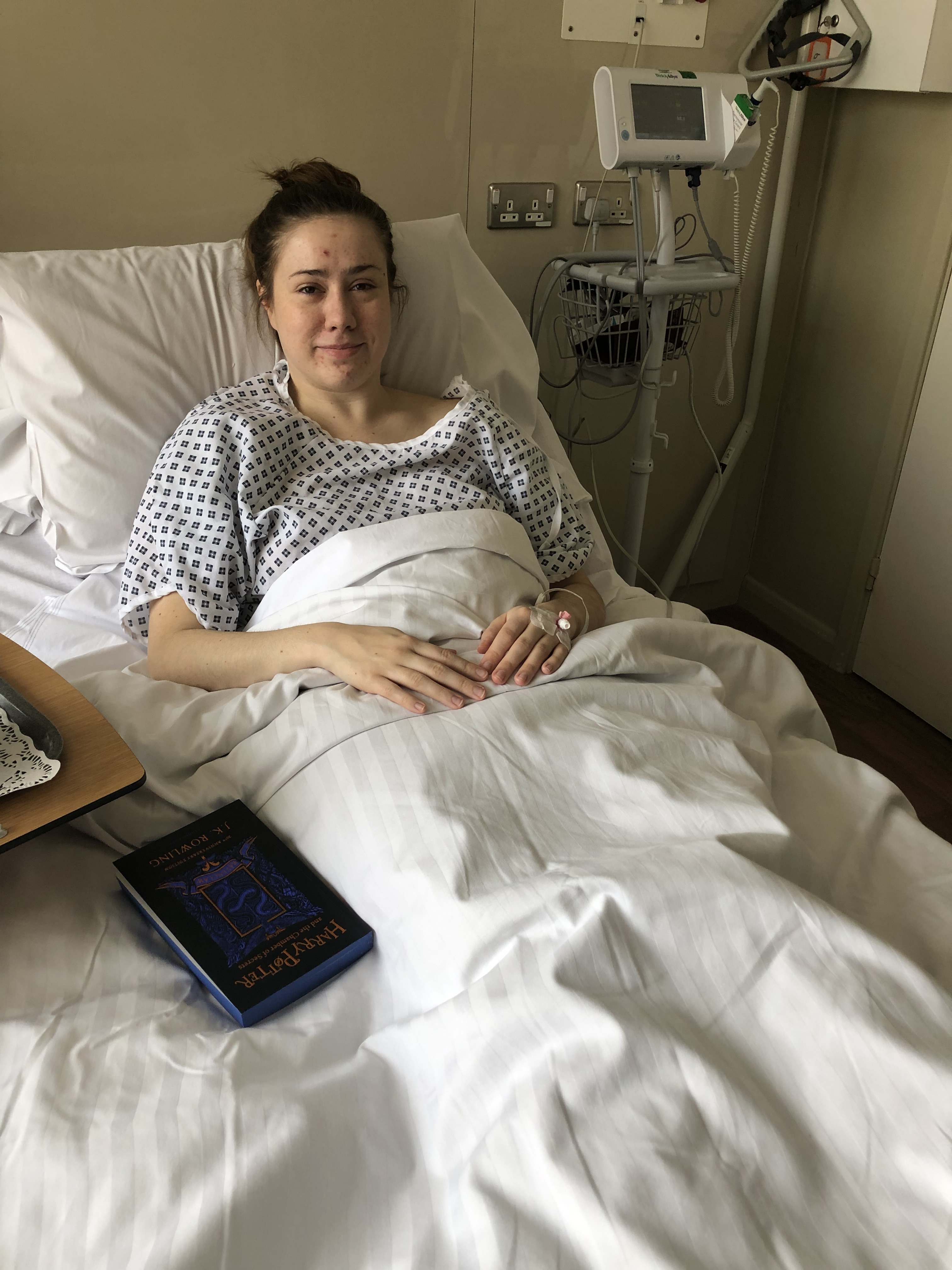
    Reassured by his answers and our rapport, I was readied for surgery and sat reading Chamber of Secrets until they came and got me.

    Inhale.

    A couple of hours later, exactly 20 months after my first disheartening surgery, my gynaecologist swaggered into recovery (where I was crying and swearing because my drugged-up self had come to the conclusion they hadn’t found anything) to tell me, ‘I found endometriosis in your Pouch of Douglas, it’s not in your head!’

    Exhale.

    IMG_7403
    Sore, surprised and a little smug

    It’s only been a few days and I’m still processing. It was a really tiny amount of endometriosis, but as I’ve been reminded time and time again, the severity of endometriosis does not correlate to pain. Giving myself endometriosis imposter syndrome at this point will help nothing.

    I can’t help but wonder what role my own advocacy and research played in finally get an, albeit tentative, answer. Would he have double-checked my POD if I hadn’t specifically done the research and asked him to? Would painful sex ever have been the symptom my doctors focussed on if I hadn’t forced them to? A widely touted statistic about endometriosis is that on average it takes 7.5 years to get a diagnosis, but that’s actually contested between 7 and 12 years. I’ve got here, where I’m not sure I have a diagnosis exactly but where I have had endometriosis discovered and treated, in three and a half years. But reaching this point has been a hell of a lot of hard work, physically and emotionally. I’ve been misdiagnosed with vaginismus, spent months attending psychosexual counselling, been placed on a pill that’s wreaked havoc with my skin and mood, taken anti-depressants for pain management, stopped running, stopped having sex, stopped socialising like a normal twenty-whatever-year-old. I’ve gained a lot too, knowledge, friends, writing gigs, a novel, job opportunities, a post-grad pathway I didn’t expect, a blog – but I am constantly curious about what the last three years might have looked like if my pain had been believed earlier, taken seriously sooner and treated promptly – by myself and by others.

    It’s not yet clear whether this is the beginning or the end of this particular experience. I have a million questions for my post-op appointment and I won’t know if the surgery has actually improved anything for months. But to have had the hysteria label lifted is hugely gratifying. Honestly, I feel vindicated because in my head the pain was never in my head. If that makes any sense at all.

    IMG_2795
    Of course, summer arrived the day after my op so I’ll be sporting some DVT stocking tan lines this year!