Tag: Tolstoy

  • History in Context: From hating history to, well what exactly?

    History in Context: From hating history to, well what exactly?

    I despised history lessons when I was at school. For the most part, it was limited to British history and I was more interested in the rest of the world. For the other part, I took the attitude ‘why are we focussing on the past?’ or, as the SSX Tricky character would yell, ‘the past is gone, now is all there is!’ Of course every right minded person, usually my dad, would fire back with ‘you have to learn about the past to stop us from making the same mistakes’. From where I was sitting, however, humankind kept making even worse mistakes than those I learnt about in history class, so it couldn’t be that effective. Tired of this age-old philosophical argument, I instead just decided to adopt the easier excuse; that I thought history was boring (of course that only pissed off people (my dad) tenfold).

    The moment I didn’t have to study history I stopped, or at least, I thought I had. In fact I found I got sort of a thrill out of how irritated saying I ‘hated’ history made people. While I was done with history, history it seemed, was not done with me.

    I remember the moment, in A Level English where my teacher Miss O’Neil, started talking about how the character of Serena Joy in Margaret Atwood’s The Handmaid’s Tale was based on a real woman, Phyllis Schlafly, from the age of Thatcher and Reagan. ‘It’s context like this that will really push your grade up in your coursework’. I remember thinking, ‘cool, what is this mysterious context business?’ like it was a new found entity. I plodded my way through A Level revelling in the moments where I got to bring in context or even ‘cultural context’ to explain why a novel was written a certain way, or the parallels that could be drawn between the book and the ‘real world’.

    Then I got to university and something truly horrible happened. In our first and only compulsory module (that didn’t go well for me for other reasons) Monsters and Transformations, the slide show in the introductory lecture paired the words ‘history’ and ‘context’ together. Historical context? What is that supposed to mean? As the module progressed I began to become more and more suspicious that historical context might actually be the same damn thing as context. You can imagine my horror, in learning that one of my favourite parts about my chosen subject was actually rooted, in its entirety, in my least favourite subject.

    Eventually I accepted it. In fact, I started to really enjoy it. I even opted in for French modules our lecturers called ‘cultural modules,’ that I now realise were often European and French history classes. When my sister finally agreed to read Harry Potter last year she said it was under the condition I read something with history in it, and gave me Captain Corelli’s Mandolin. Did I still think history was boring? Did I really never read historical novels, I asked?

    I loved The Handmaid’s Tale and that was packed full of historical context, as was Nineteen Eighty-Four which I studied alongside it. The same was true with The Scarlett Letter and King Lear. Even biblical books like Impossible Saints drew me in (questionable re: history, though) and hell, my dissertation was packed full of context of the 1960s and 70s, if that counts as historical yet. OK so maybe I like historical novels, but not ones about war? Nope that wasn’t it. Milan Kundera’s The Unbearable Lightness of Being led me to read Anna Karenina, which set me on a path to War and Peace and The Kossacks. To my horror, I’d become a Tolstoy fan, which meant that war clearly wasn’t the problem. In these French cultural modules we studied art, literature and film in context, meaning we would explore cultural artefacts from one specific period or place, and I loved it. When Les Misérables was made into a film, I loved that even more and read A Tale of Two Cities (even though I would quickly learn that it was about a different French Revolution).

    Last month I finally read Captain Corelli’s Mandolin, and surprise to no one, I really enjoyed it (except the ending, don’t get me started). The entire time I was reading though it I was thinking, am I over my hatred of history? Last month I went to the Imperial War museum, it was certainly heavy in content but boring it was not. I’ve been to Anne Frank’s house, I wasn’t bored, insensitive or uninterested. If I went back to school now to study history, would I still be distraught with boredom?

    Honestly? Yes. Sitting down and learning about history is not how my brain processes the past. I need history in context. Learning about the past for past’s sake doesn’t fire me up, I need human stories to realise it. The worst parts of history don’t hit home until you understand the impact they had on someone’s life. Take Captain Corelli for example, before I read it I had no idea of Italy, Greece or the Ionian Islands’ involvement in World War II. The novel only gives you four or five perspectives and of course there are so many more, but really understanding how transformative one event can be on one person’s life, gives you a crazy amount of perspective when you zoom out and think about how many different lives were effected by the same event. Even the best events from history, like the sexual revolution, they’re no good without the personal stories. When I’m reading a novel with a real context, I find myself googling and reading simultaneously, and for some years now, that’s how I’ve learnt to enjoy learning about history.

    Last week I had the extraordinary opportunity to hear Margaret Atwood speak at New Scientist Live. Known for her science and speculative fiction, often set in dystopian futures, I always associated her work with the future. She talked about how she couldn’t have predicted how relevant her novels would have become, given the election of Trump and its effects of reproductive rights and the environment. Talking about how his election ‘framed’ the Hulu adaptation of The Handmaid’s Tale, Atwood said how if Hillary Clinton had been elected the show would have been the same but it would have been viewed differently. “Even if you’re writing a historical novel, you’re still writing about now,” she said. This was after I’d written this blog but I had to come back and add that quote in. I think it would be equally true to say “even if you’re reading a historical novel, you’re still reading about now”.

    That’s what I’ve learnt from historical novels. History is relevant and interesting and not boring because it’s always, however subtly, applicable to the current world. So if you ever hear a kid saying they don’t like history, I strongly recommend giving them a good book. Because any good book tells a story about a place, a people and a time and historical context is just part of that. (Hey that’s sounds like Christian in Moulin Rouge, another example of history sneaking into my world without me knowing).

    IMG_7229
    Thank you Margaret Atwood, for putting this blog in context
  • Final (probably) Revision Reads

    Final (probably) Revision Reads

    It is with a real mix of emotions that today I finished my degree as I come to the end of one really intense month of hard work and the end of four years of sheer joy. Given the intensity of the last three weeks in particular I haven’t had time to blog – something I expect I will have a lot more time to do over the next few weeks. But I have still been reading!

    During deadline and exam periods I’m always surprised to find that reading is actually something I do more of. I find reading the odd chapter of a novel or blasting through a non-fiction book totally different from anything I’m studying is a great way of blowing off steam in between revising vocabulary and proof reading essays. So here are my, potentially final, revision reads:

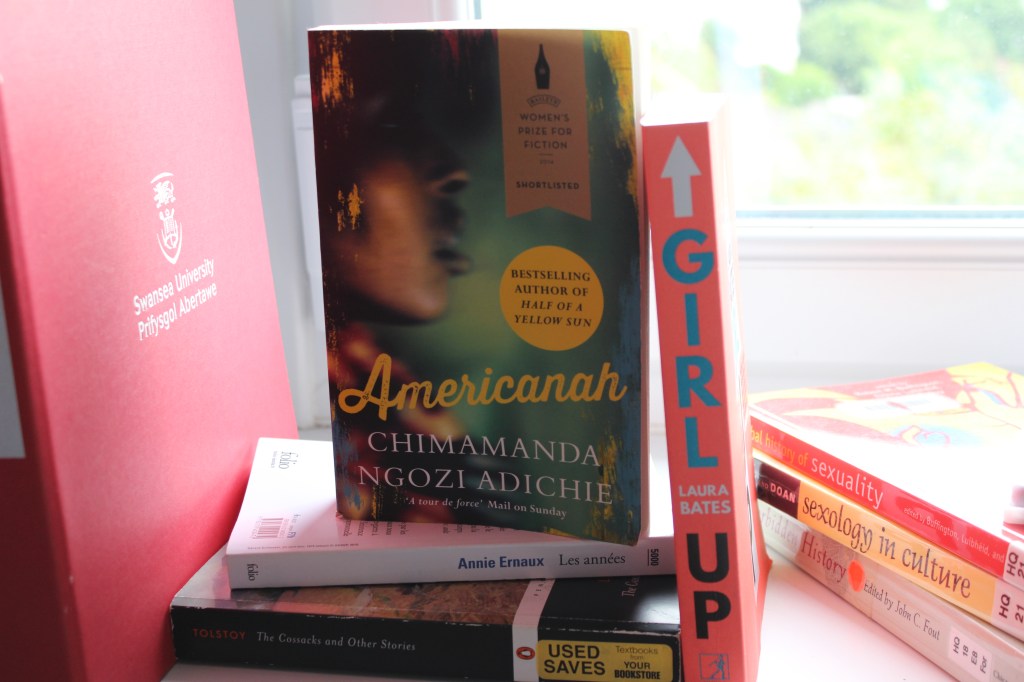
    The Cossacks and Other Stories – Leo Tolstoy

    It’s no news to this blog that I’m a big fan of Tolstoy. I asked for this book for Christmas in the hopes of being able to get more Tolstoy in a shorter burst compared to Anna Karenina and War and Peace. For short stories, they’re still pretty damn long… damn it Tolstoy. Regardless, I really enjoyed them, and I love how Tolstoy manages to make the most mundane of things incredibly profound and poetic:
    “No, the hero of my story, whom I love with all my heart and soul, whom I have attempted to portray in all his beauty and who has always been, is now and will always be supremely magnificent, is truth” – Sevastopol in May. 

    GIRL UP – Laura Bates

    While I haven’t read Everyday Sexism I have been a big fan of Laura Bates ever since I got Twitter and discovered the Everyday Sexism Project. Much like Doing It, I feel like I didn’t learn a whole lot new but the ideas in these books are incredibly valuable for teenagers and those involved in their lives. Honestly, it’s the kind of book I read and I think ‘my dad should read this’… more to come on that particular idea in a future blog. 10/10 for pictures of dancing vaginas – if I wasn’t going to pass the book on I would definitely cut several pages out as post cards.

    Les Années – Annie Ernaux

    I studied Cleaned Out in my first year and absolutely loved it. Why it took me so long to read another Ernaux book, and in French this time, I do not know. It’s such a cool and unique book. It’s often described as an impersonal autobiography and that’s exactly what it is. It became quite a nostalgic read for me, as many of the political, social and cultural events that Ernaux comments on throughout Les Années are subjects I’ve studied in French modules at Swansea – we’ve come full circle, eh?

    Americanah – Chiamanda Ngozi Adichie

    Without a doubt the most I have enjoyed a novel in a while. Americanah accompanied me through the last five days of intense revision and it totally transported me away from adjectival agreement and the passé simple tense. In the novel protagonist Ifemelu asks ‘why did people ask “What is it about?” as if a novel had to be about only one thing.’ It is the perfect way to respond to someone asking what Americanah is about – it covers so much in such a wonderful way. Despite the title the novel transcends location as it explores identity, race, gender, academia, social media and immigration in America, Nigeria and the UK, while maintaining a complex and meandering story of love and sex. Released in just 2014, it’s depressing how ironic the hope of Obama’s election in the novel feels now, reading from the reign of Trump, and it does give me pretty big blog success envy, but truth be told, Americanah was such a treat to read.

    Expect more blogs from me now I’m done revising, book recommendations for an unemployed graduate are greatly appreciated. I have also now finished my time as Deputy Editor and as a writer at Waterfront newspaper, which means this ‘fiction’ blog may soon have to become the platform for me to write on other topics, i.e. current affairs and feminism. A new section called Non-Fictitiously Hilary, perhaps? Thoughts?

    IMG_7694


  • Christmas haul and Review: Scrappy Little Nobody

    Christmas haul and Review: Scrappy Little Nobody

    A bit late for the festive season I know, but before I head back to university and scatter my books across the UK I thought I’d give a little haul of the books I got for Christmas. I was really lucky to get all the books I asked for and a load I didn’t and I’m already stuck into devouring this collection.

    img_6672

    Virago

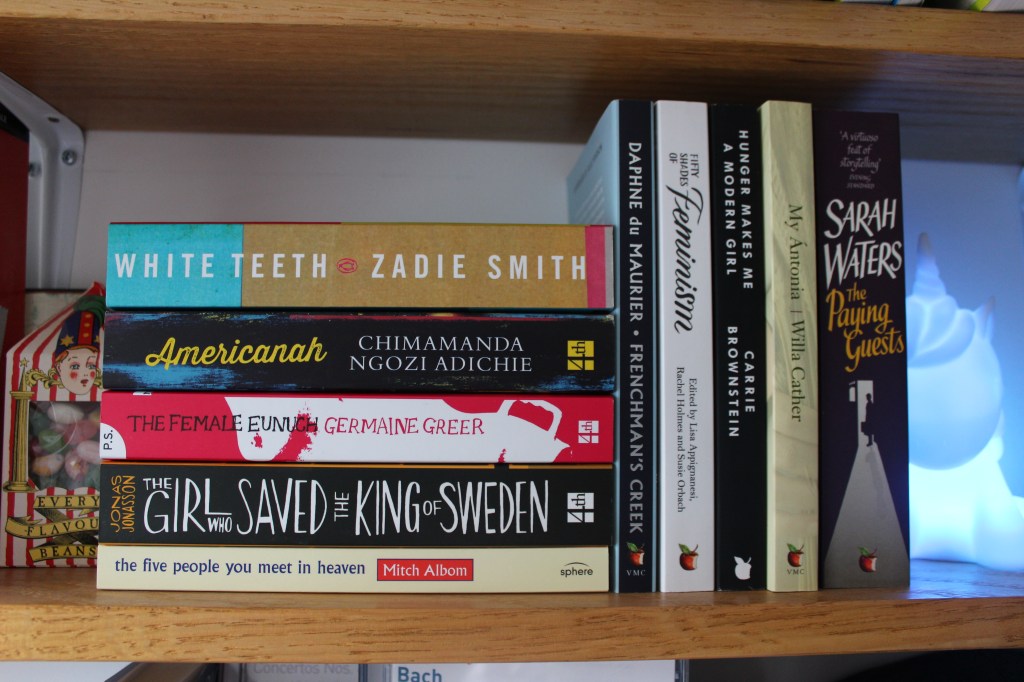
    A selection of the books come from my mum’s recent discovery and love for Virago press. She insisted a couple of months ago that I watched the BBC documentary about the publishing house. I watched it and messaged her throughout saying ‘hey I have all these books,’ and ‘that’s in my dissertation, and so is that, and so is that…’ etc. I then looked at my bookshelf and realised that Virago’s little apple logo was scattered across the majority of my books. I don’t know how I’d never made the connection that all these wonderful women writers shared the world’s coolest publishing house. So Father Christmas this year filled my stocking with four lovely Virago books, and my sister added another to the pile:

    Frenchman’s Creek Daphne du Maurier – I love Rebecca so I’m excited for more du Maurier.
    Hunger Makes Me a Modern GirlCarrie Brownstein – This was on my list after Emma Watson recommended it.
    My ÁntoniaWilla Carter – I haven’t the foggiest about it but time will tell!
    The Paying GuestsSarah Waters – I love Sarah Waters, Tipping the Velvet and Fingersmith are excellent so I’m looking forward to this.
    Fifty Shades of Feminism – edited by Susie Orbach, Rachel Holmes, Lisa Appignanesi – I know nothing about this book but it certainly sounds like my cup of tea (thank you Sally!)

    It’s not Virago but my mum wanted me to finally read Germaine Greer‘s The Female Enuch so that found it’s way into my stocking, super stoked to read this at last.

    Broadening my horizons

    My old friend (she’s actually younger than me) Mads and I have a habit of buying each other books and because we have such different taste this means I often get to try something new. Really looking forward to these two:

    The Girl Who Saved the King of Sweden – Jonas Jonasson
    The Five People You Meet in Heaven – Mitch Albom

    To physically broaden my horizons my aunt bought me the Lonely Planet South America on a Shoestring guide to help me plan for a post-graduation adventure… EEK!

    Random Requests

    Goodbye, ColombusPhilip Roth – My first read of 2017! I finished this last week and really enjoyed it. As with most books I read, I wanted it so I could understand a reference in Lena Dunham’s GIRLS… and now I do.

    The next three I wanted to read after I found a Guardian article about the best contemporary women’s writers:
    Beloved – Toni Morrison 
    White TeethZadie Smith
    AmericanahChimamanda Ngozi Adichie (I have heard nothing but praise for Adichie and this book).

    LolitaVladimir Nabokov – My current read. I wanted to read this to see if I just like Tolstoy or if Russian literature is my thing, though after listening to three dissertation presentations about it I think I’m in for a twisted time…

    The Cossacks and Other Stories – Leo Tolstoy – No justification needed, though apparently it was a nightmare to track down… sorry Gran!

    HimselfJess Kidd – Honestly, I wanted this so I could scope out a literary agent who has now rejected me… I’m sure it’s wonderful nonetheless! Not bitter at all…

    FOOD

    I thought this had been my first Christmas where I hadn’t received a cookbook… until I got a package from the US from Melanie (also known as queen of the world and best gift giver ever). In the run up to the Gilmore Girls revival I came across Kristi Carlson‘s Eat Like a Gilmore recipe book in the weird world that is Gilmore Instagram. I even tried to get my hands on a copy but at that point it wasn’t shipping to the UK. I’m so excited to gain several stone from this book. It’s fabulous because it’s sorted into each cooking character’s kitchen so now I can really pretend I’m having a Luke’s breakfast. I promise I do have a firm grip on reality… sometimes.

    Scrappy Little NobodyAnna Kendrick

    Big thank you to Sally for getting me this. I read Scrappy Little Nobody in three days and it was a perfect book for some light revision relief. Last month I though the reason I loved Lauren Graham’s autobiography so much was because I worship her. And while I do, of course, worship Anna Kendrick, I wasn’t sure what to expect from her as a writer. Now however, I think I just have a thing for actresses’ autobiographies. Kendrick, like Graham, writes how she speaks which makings reading it fun, but also is just a total hoot and bizarre human.

    Not only do I seem to be really enthralled by the will-she-won’t-she have a big break chapters (spoiler: she does) and her experience as a child actress, but Kendrick has some really interesting ideas and musings about fame, work ethics, relationships and the monumental task of being a woman. Her chapter on award shows had me laughing out loud (very different from LOL-ing).

    While at times it does mimic how she speaks a little too much so that  it becomes a bit of a confusing (but still funny) stream of consciousness, I think that’s an important thing to have in an autobiography. It gets a scrappy little 4 out 5 from me.

    Following Carrie Fisher’s death and Graham’s praise of her books in Talking as Fast as I can I think those will the actress autobiographies I hit up next.

    Some favourite snippets:

    On being nice but saying no to a drink or a date: “if you don’t, someone might strip you of an adjective you’ve been convinced has value, and label you as something else”.

    On commitment: “I can’t imagine what would drive a person to get out of bed in the morning if you knew you’d never have that drunk new-crush feeling again or ever dance on a table, or get so drunk you try to fight a stranger”. (Spoiler: she feels differently in a few pages time). 

    On something I’m certain she took from my own brain: “I wish people could tell the difference between the ‘leave me alone’ vibe I give off all the time by accident and my actual ‘leave me alone’ vibe”.

    I’d also like to blame Anna Kendrick for my use of ‘super stoked’ earlier, that was all her influence.