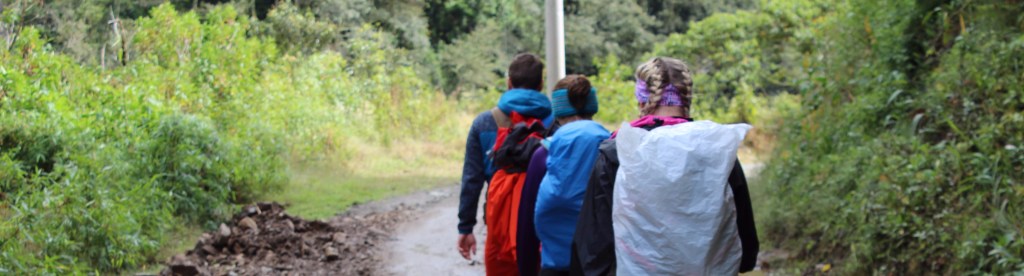
When my sister and I began planning our trip to South America, we each had one bucket list accomplishment for the continent. Alice’s was Copacabana and mine was to do an Inca trail trek to Machu Picchu. Unfortunately, even though we were booking over six months ahead of time, by the time we had organised our dates, the traditional four day/three night Inca trail treks to Machu Picchu had all sold out. Luckily, one company offered us an alternative, the Salkantay Trek.
A bit of research taught us that the Salkantay trail was the route taken by people who had missed out on an Inca Trail, perfect! It comes in 4d/3n and 5d/4n packages but because we had already organised our travel dates we stuck with the shorter trip, which substitutes a portion of the route with a train ride and involves one night in a hotel. The trek is a gruelling and beautiful hike through the Andes, where instead of seeing lots and lots of Inca ruins, one sees a lot more phenomenal, natural views.
Warned about altitude sickness, we arrived in Cusco, where most Machu Picchu tours depart from, with two days to acclimatise.

‘Acclimatising’ in Cusco
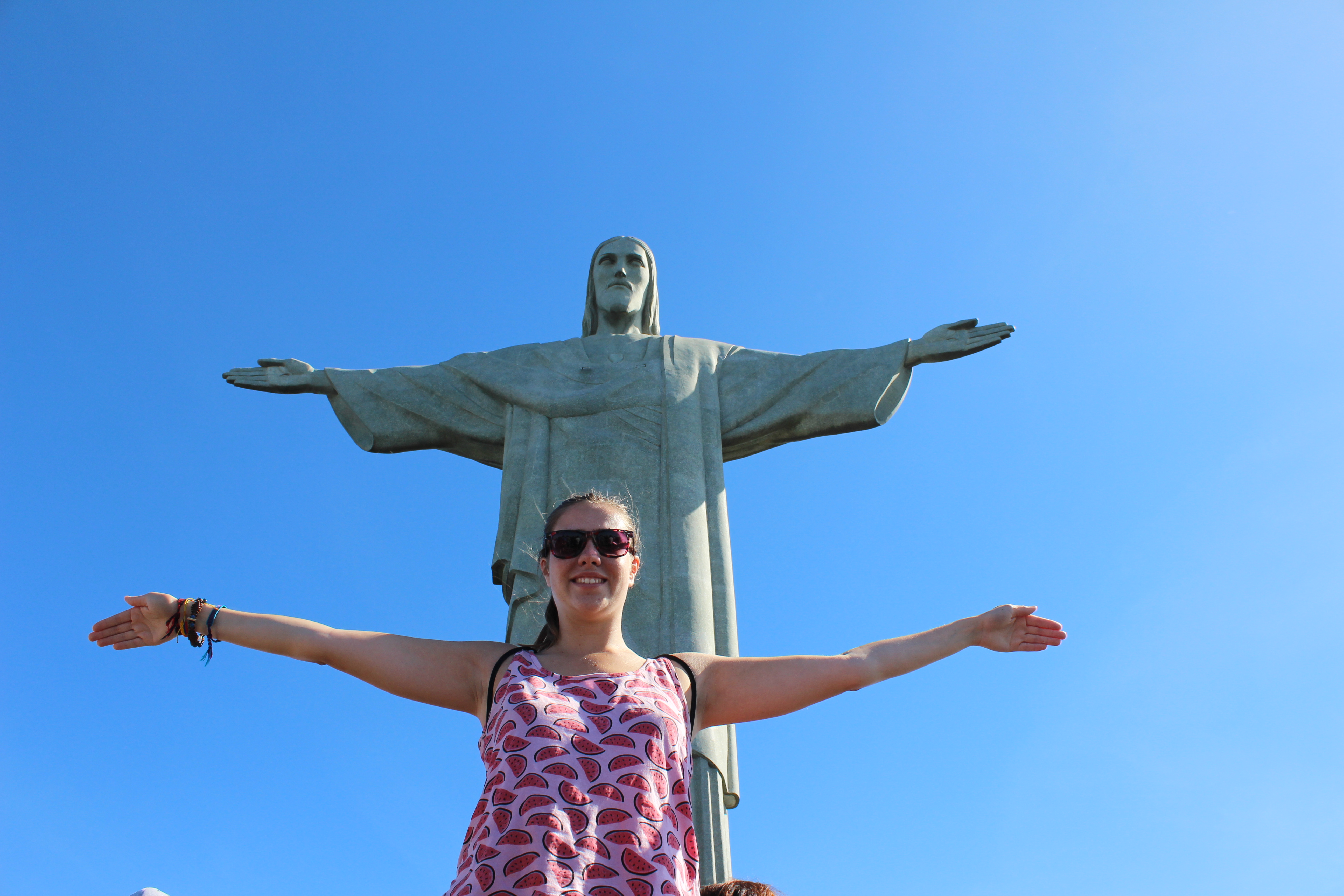
Cusco is one of the most culturally and historically rich and colourful cities I have ever been to – and its in the middle of nowhere! Shortly after we arrived we went on a free walking tour where we learnt about the wonders of Inca wall construction, alpacas, the trio of the puma (only to be pronounced ‘poomah’ forget what you think you know), condor and snake, as well as the city’s sad history via the Spanish invasion and, of course, the Pisco Sourz cocktail! Some way into this tour unfortunately, both my sister and I started to feel the altitude (Cusco is 3399m above sea level). Alice’s was worst first but also she was much better at coping with it. Mine started in the evening, was made worse by our hike to our hostel at the top of a hill and then NEVER LEFT. Headaches that pounded in the most literal sense, nausea and vomiting plagued us, making for a very grumpy Hilary. So while my time in the wonderful Cusco was dampened by altitude sickness, we still managed to get some practice hikes up to Christo Blanco (#notRio) and spent too many Peruvian sol on Alpaca jumpers, scarves, hats and gloves. Alice was especially good at this.


Trek induction
When we weren’t chugging down mugs of coca tea, we attended our induction for the trek. Hoping to meet our large group of trek pals we ended up being the only two in our induction due to others joining us from a 5 day trek and the rest not having yet arrived. We met our brilliant guide Juan-Carlos who talked us through the route we would be taking. Having asked in advance about the climate and clothing needed for a July, dry season trek, Alice and I were surprised to find out that wooly hats would be required. Luckily we had bought alpaca hats for our friends as gifts, so we figured we’d just take them in case we needed them. We collected our walking poles and duffle bags and headed back to the hostel to pack.
Day 1 – a few close calls
The trek starts from Mollepata, a drive away from Cusco. So at 6am we were outside our hostel waiting for a minibus to Mollepata. On the minibus were our new trek mates; Juan-Carlos and his two chefs and the horseman, who all spoke to each other in the historic and cool language that is Quechua, plus C from from Switzerland, D from Hungary and Di from Brazil. A small group but spirits were high and I hadn’t even vomited yet that day so I was feeling good!
We stopped at a small town first to get breakfast, buy coca leaves and use the toilet when unfortunately Di collapsed and hit his head badly. Despite suffering his first seizure in some time, potentially caused by the altitude, and with his head bleeding from the fall, Di still wanted to come with us. It freaked us all out, especially since he hadn’t told the company that he had a seizure related condition (so they didn’t have any extra first aid to deal with it). The company said they were happy to risk it after he signed a waiver, but that the decision was down to the rest of the group. C, D, Alice and I said no, and looking back now it was absolutely the right decision given the tough trek that was to follow. Not to mention that every story Juan-Carlos told about silly tourists going off track or doing something dangerous ended with ‘and yeah, they died’. There is no health and safety or mountain rescue out there, if something goes wrong then it goes really wrong. It was sad to see Di exit so early but it could’ve been so much worse if he’d continued.

With me still unable to eat due to altitude sickness and totally freaked out by what had already happened we reached Mollepata (2800m above sea level) and began our hike. So far so good, the fresh air was doing my head wonders and we were chewing on coca leaves as we climbed what we thought was a steep hill to the beautiful lagoon. This lagoon was totally breathtaking, in fact there’s no point even trying to describe it, here are some pictures.


We then descended from the lagoon and were served lunch, still not far from our starting point. There was so much food, but I was still struggling to eat so I just about managed to stomach some soup and tea.
And then shit got real. Slowly. We started the real hike. The first day was one of the longest and hardest afternoons of my life ever. In fact, I think I would say it was harder than both the London and Paris marathons. It was however, completely beautiful. As the altitude increased, I was stopping every 10m or so to catch my breath, drink water and chew some coca. D had only arrived that morning so he was also suffering with the altitude, but for fit C and Alice, they had to be very patient with us slow coaches.


It then started to rain and a tricky, rocky, steep assent to our camp for the night left us exhausted, soaked and sleepy. We arrived at our camp at Soraypampa (3800m above sea level) to find our tents assembled under straw canopies. All we wanted to do was go to bed, but first dinner. D was too ill and sensibly went straight to bed, and I wish I had too. The presentation, in a cold, dark hut, of crackers, popped rice and tea was perfect, all we needed. So we ate it happily and felt ready for bed. Nope, ‘dinner will be ready in an hour or so’. The look C, Alice and I shared was one of total despair, we were fed, now we just wanted to sleep. We piled blankets on us but were still so cold. That’s probably the worst I have ever felt in my life, I kept shutting my eyes and Alice began to actually worry that I was dying. When the food came, surprise surprise I couldn’t eat, and as soon as I stood up I was really sick. However, I managed to get super warm in the tent and slept well. Alice however had a different night where she began to worry that she was dying (or at least losing toes).

Day 2 – praise be to potatoes
We woke up to snow, and it continued to snow all morning. Still not able to eat any of my delicious breakfast, we set off for the last hour or so of our assent. Tougher than it probably should have been because of the weather, Juan Carlos repeatedly said ‘this is freak weather! It never snows like this July!’ Which was, obviously, very comforting. We then reached the very snowy Salkantay summit at a whopping 4600m above sea level. The others jumped and took pictures, I stood quietly and focussed on not dying. It was a pretty exceptional feat in those conditions, and I’m glad I have at least one photo of me being grumpy at the summit. In fact, guess which one’s me…


Promised that the altitude sickness would lessen as soon as we began our descent, we ventured onto the much quicker journey going down. Little by little I felt less death-like, and was able to really enjoy Juan-Carlos’ anecdotes and wisdom about Inca culture and traditions. Faced with lunch, it seemed like I still wasn’t going to be able to eat, an unheard of prospect for me. But then, something magical happened. Peru is a country famous for its extensive range of potatoes and various ways of cooking them. One of our chefs put down a dish of hot, sloppy mashed potatoes in front of me and the entire trek changed from there. Now I don’t want to be over dramatic, but I honestly think those mashed potatoes saved my life. They were hot, nutritious, calorific and easy to take – and thus, my appetite was reborn, and, unsurprisingly, it came back with a vengeance.
The rest of the day was tricky as the rain continued to fall and we headed downhill quickly (literally not figuratively). This posed a bigger problem for Alice’s knees but for me, it became a much smoother ride as we entered the tropical portion of the trek. By the time we arrived at Chaullay (2900m above sea level) I was loving the trek, the company and the food, and we had an evening of popcorn and Uno under the canopy covering our raised tents.


Day 3 – minimal trauma at last

I was actually quite sad to be waking up from our last night camping when I had finally got into the swing of things. The chefs presented us with a delicious cake for breakfast, since it was our last morning all together. We began walking the windy road back to semi-civilisation, crossing waterfalls and peering into tarantula nests, learning about ayahuasca and playing with lots of dogs (and a pig?) en route. By lunch time we had kissed the snow, rain and gradients goodbye and were greeted at Huadquiña by sunshine and a chance to dry ourselves out on hammocks.


Lunch, our last meal as a full team, was a demonstration of how many different ways our chefs could cook potatoes, including tuna mayo wrapped in mashed potato. Here D, Alice and I said goodbye to C and Juan-Carlos who would carry on for the fifth day of the trek.


We were driven to the hydroelectric power station and caught a train to Aguas Calientes (2040m above sea level), the town at the foot of Machu Picchu. Here is where the tour company started to fall short, as our new guide Raúl was supposed to greet us at the station (he didn’t), give D and me some of the tickets we were missing (he didn’t) and give us the plan for the next day (he didn’t). However we had a shower and some internet, so we rested up for the big day ahead.

Day 4 – Machu Picchu!
So per Raúl’s minimal instructions, D, Alice and I, as well as Raúl’s own trek group of about 12 people, were waiting at the bus stop to Machu Picchu at 4am, ready to see the ancient citadel at sunrise. Out of all of us Alice was the only one not at the mercy of Raúl to come along with our tickets, so despite being front of the queue we missed the first four busses because Raúl had overslept after a boozy night. We were a large group of pissed off people. Luckily it was a foggy start to the day so missing sunrise didn’t mean missing much, but I really admire Raúl’s team’s sulking abilities. They made him feel guilty as hell as he gave us the most half hearted tour of Machu Picchu ever. Once the tour was over though, the fog lifted and we were free to explore the crazy coolness of Machu Picchu, its llamas and its surprisingly low altitude (2400m above sea level). It truly is an incredible place and once you’re up there you can see exactly how it managed to be hidden for so long, as any passersby way back when would’ve had to be in exactly the right place at the right time to catch a glimpse of the citadel between the clouds and mountains.


Included in our ticket was a hike up Huayna Picchu, the tall mountain adjacent to Machu Picchu mountain. We knew literally nothing about Huayna Picchu so when it turned out to be a massive CLIMB that was a bit of a surprise, as was the interesting (or terrifying for Alice) descent.


You could spend hours and hours roaming Machu Picchu if they let you. I’m so glad we came when we did though, since from next year visitors will be limited to just two hours before they have to leave, while we managed to spend an entire, incredible morning there.
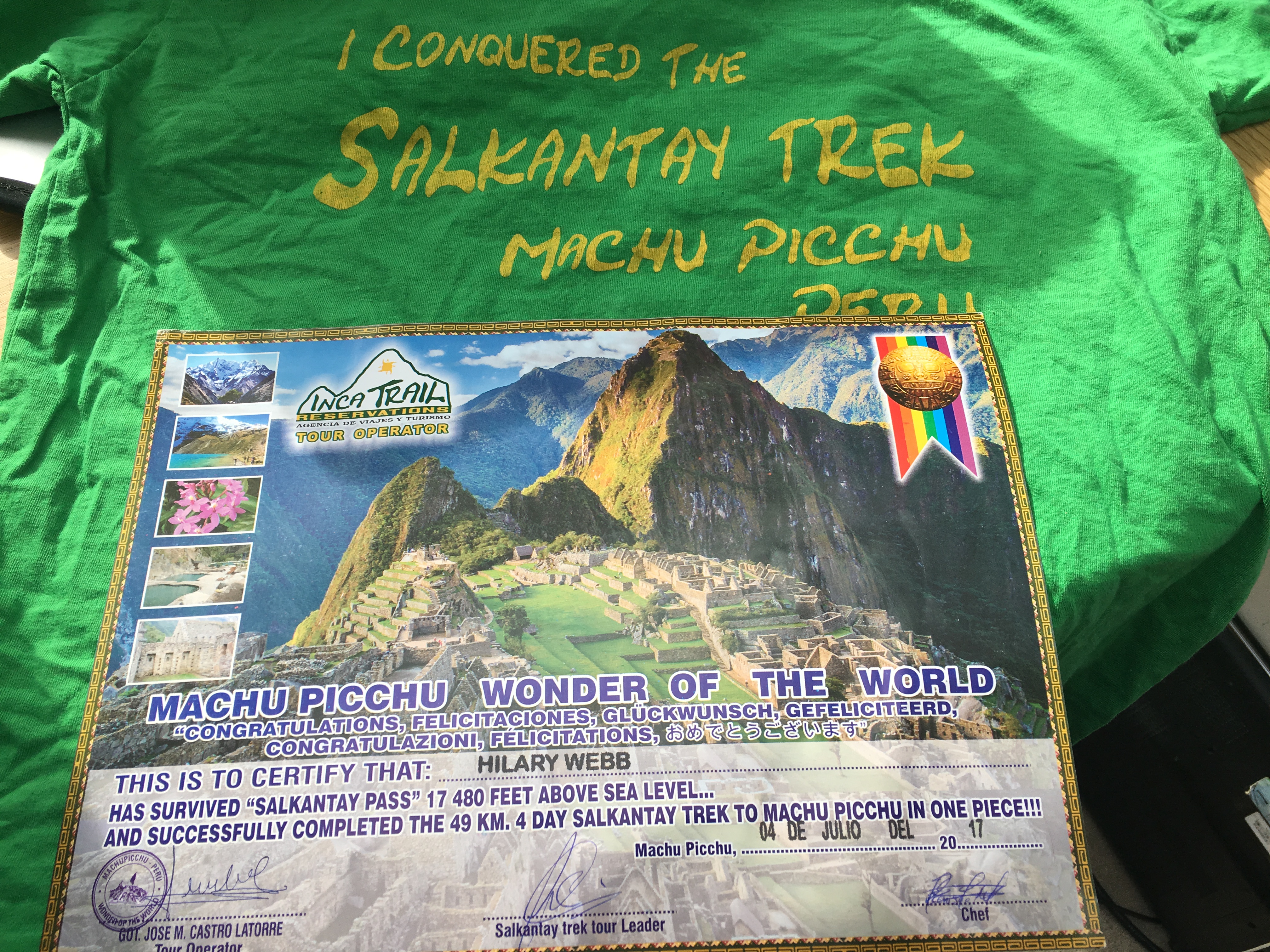
So in conclusion…
Typically when we returned to Cusco my altitude sickness returned, but it wasn’t long before we descended permanently via a night bus to Lima. It was an insanely fun, difficult and adventurous four days. Thank you to my group, and particularly my sister for putting up with a very grumpy, hungry Hilary for a while there. We managed to experience every possible type of climate and dramatic situation on our trek to Machu Picchu, and while some bits I would certainly like to black out, for now Alice and I keep reminding each other of the perspective we gained: we will never be as cold as we were on the first night of the Salkantay trek.

Some links:
- Tour operator (ask for Juan-Carlos not Raúl (shade)): Inca Trail Reservations
- The best shop for your alpaca wear in Cusco: Artesanías Asunta
- I wasn’t a massive fan of our hostel, but only because it was a party hostel and I felt like death, but if you think you’ll be more alive it has a bar with a great view: Wild Rover Backpackers’ Hostel






 fictitiouslyhilary.com