Tag: Review

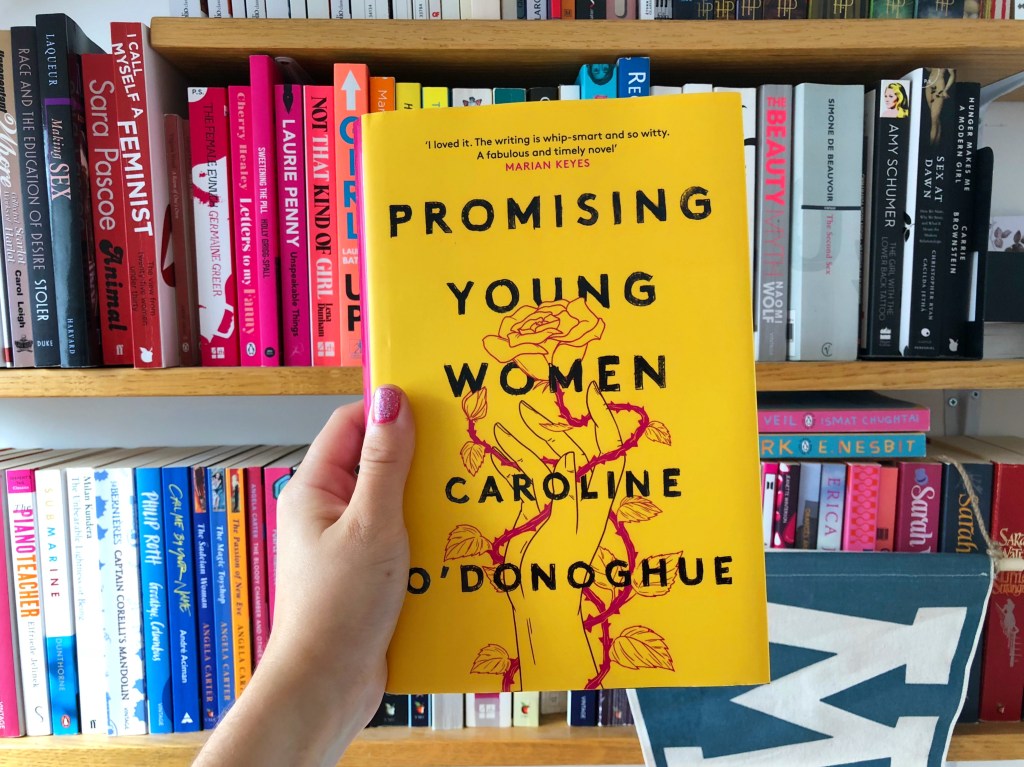
  • Review: Promising Young Women

    Review: Promising Young Women

    Like with most stories that start with a twenty-something London-based office worker navigating the breakdown of a long-term relationship, your mind settles in for a harmless piece of Chick-Lit. And then Caroline O’Donoghue’s Promising Young Women knocks you off-centre by turning into something else entirely.

    The praise on the book’s sleeve repeatedly uses the word “gothic.” Thanks to a module I did in my final year at Swansea (brilliantly named Uncanny places and cyberspaces: Gender and the fantastic) I’m well aware that gothic tropes aren’t limited to stories set in haunted houses in the nineteenth century, but even so Promising Young Women does something totally refreshing with ideas of uncanniness. It’s a novel that proves how relevant gothic images, like starving women fading away, mirrors, periods and other bodily fluids, continue to be relevant and effective at portraying contemporary crises.

    “I don’t have a boyfriend or a fabulous career, and I think she’d like some better adjectives to describe me to her friends with.” – Promising Young Women

    At first, the book doesn’t have the most groundbreaking plot you’ve ever heard of (woman’s anonymous blog seeps into her real life) but O’Donoghue gradually gets under your skin as she tells Jane’s story. A story that while almost fantastical is likely to be relatable and understandable for any young working woman.

    The darkness and depth of this book creep up on you and by the time you’ve realised, you can’t put it down. Dealing with power imbalances (professional and romantic), mental illness and the false security of the Internet’s anonymity, this debut novel makes O’Donoghue one to watch.

  • A Note on Writer’s & Reader’s Block

    A Note on Writer’s & Reader’s Block

    Inspiration has been a hard match to strike this week. Actually, that’s not entirely true. I’m working on a slightly different (and secret!) project at the moment and I’m pumped for that, but when it comes to reading and writing, my usual motivations have simmered. So true to form, I thought I’d write about it (does that mean I’m over it already?!) Writer’s block is something I know all too well and I find mixing projects up helps a lot, but reader’s block is not something I’ve experienced before.

    When it comes to reading I knew my 2018 reading goal of 65 books was going to be tough. So to try and counter disappointment at the end of the year, I thought that if I go super hard in the first couple of months of 2018 then I can take it easy for the rest of the year. I’ve succeeded with this plan, I’m writing this on February 23 and I’m on my 14th book of the year. But this ‘success’ has come at a price. I’m finding it a little hard to concentrate on what I’m reading. Last weekend I found myself not loving Ali Smith’s How to be Both, which surprised me because I loved Girl Meets Boy. I was worried that I would have liked it more if my mind was less on the deadline of how many books can I squeeze into February and more on the content, characters and writing of the book. I think I succeeded in rectifying the problem though: I followed How to be Both with Roald Dahl’s Matilda. I haven’t read it in years but a children’s book demands a little less brain power and offers a lot of entertainment. It shifted my brain back into the reading for pleasure zone. I’m now purposely making slow progress through Naomi Wolf’s The Beauty Myth. However many books I read in March, I hope I stop competing with myself and just enjoy the brilliant books waiting for me on my TBR pile.

    As far as writer’s block goes it’s been a mixed bag. Creatively, things are good – things are happening. I’ve been getting my novels out there to agents and feeling positive about what I’m submitting. I’m even working on a play, as promised. In fact, I’m even more inspired about it after having seen Fran Bushe’s one-woman show Ad Libido at Vault Festival last night, where I had this exact magical Gilmore moment:

    giphy (9)

    The problem this week has been with non-fiction and journalism. This poses a slight problem given that it’s my source of income. Last week an article I wrote about pubic hair was published on Repro Justice, you can read it here. I loved writing it and have thoroughly enjoyed the conversations I’ve had because of it, but ideas for the next article and/or blog are playing hard to get. That being said, if there are any blogs you’d like to see from me or reviews you’d like to read, please let me know!

    Get in touch if your brain’s switched off in inconvenient places this week, then I won’t be alone in my frustration, and if you are facing a wall too, I can confirm that there is always a way around it, even if you have to tear it down with your bare hands. Anyway, I’m confident that my normal levels of reading, writing and loving both will be back soon. And don’t worry, if it doesn’t come back soon I’ll be sure to blame it on the pill.

  • Review: Hag-Seed – Margaret Atwood

    Review: Hag-Seed – Margaret Atwood

    In October 2017 I was lucky enough to hear Margaret Atwood speak and to get a book signed. While Atwood was finishing off her interview my mum ran off to buy a few books for us to get signed. Since I had already read Oryx and Crake I landed with Hag-Seed, a recent Atwood book that had somehow completely passed me by when it was published. I had never even heard of it and googled it while we queued. It’s a re-telling of Shakespeare’s The Tempest. Groovy, I thought.

    Now I’ve finally read it, I’m so glad this is the book I have signed. I will be recommending it to everyone, Shakespeare and Atwood fans or not. Hag-Seed follows the vengeful Felix (or Mr Duke) as he puts on Shakespearean plays in a local prison, all in the hopes of getting his own back on his former colleagues (now national politicians). The layers in Hag-Seed are intense, especially when you consider the layers of The Tempest. It is essentially a novel of a play of a play of a play. There might even be another few plays in there.

    Not only is it a fascinating contemporary re-imagination of The Tempest, Hag-Seed also provides some provocative observations about criminal justice systems, parental grief and, (obviously, it’s Atwood) gender. Towards the end there’s a moment involving a few puppets, and I couldn’t help but get some Angela Carter’s The Magic Toyshop vibes – I would love to know if that was intentional or not.

    Since reading The Handmaid’s Tale at high school, I have considered myself an Atwood fan, but as I’ve mentioned before I have actually struggled with some of her other books, like Oryx and Crake and Lady Oracle. The easy-nature of Hag-Seed was so refreshing and enjoyable, plus I think it’s amazing how it doesn’t even sound like the voice I usually expect to hear from Atwood. I find it really fascinating how so many diverse voices and stories can come from one writer – I hope that is something I might one day achieve myself.

    Buy Hag-Seed and other books from Wordery by using my affiliate link.