Tag: Research

  • Persistence – #Periodically 17

    Persistence – #Periodically 17

    Long time no #Periodically, but don’t fear I’m back with another exciting instalment of “WTF is happening in Hilary’s pelvis” – I’m sure you were all anxiously waiting.

    So we left off with the discovery of two cysts, one functional (good), one hemorrhagic (bad) on my right ovary. The protocol is to wait six weeks to see if they go or grow. I also had a blood test taken the day after the first internal ultrasound and was informed there was something in those blood results that I needed to see a doctor about, but typically (#ToryBritain) the first available appointment was six weeks away. Conveniently though, it was scheduled for the day after the follow up ultrasound.

    I had a couple of really rough weeks in the middle of the wait for “answers”. I was both stressing about what was wrong with my blood (who tests for PCOS and Ovarian Cancer, says something’s wrong but doesn’t tell you what?!), dealing with a sudden and random horrible outbreak of acne and a flare-up of top-notch pain. I was pretty miserable company for a fortnight (sorry friends and family – thank you for not disowning me).

    Let’s throw it back to November 2016 for a second, where the first blood results I had to search for a problem revealed nothing. I did have slightly higher levels of androgens (male hormones) than normal, but nothing that warranted suspicion of PCOS (Polycystic Ovarian Syndrome). So when they found the cysts and something in my blood this November, I couldn’t help but wonder if I had just noticed symptoms of PCOS really early, and the androgens were now at a higher level and had been picked up in my blood. So what does any sane person do in this situation? I GOOGLED. I’m actually glad I did as I quickly learnt the surprising fact that despite the name, polycystic ovaries does not involve many cysts. It involves much smaller bubbles of fluid that grown on the ovaries in abundance. I don’t have that, so I relaxed. But my hairy disposition and sudden acne break out didn’t help calm my PCOS suspicions.

    Now because life is cruel, the six weeks came around and I was due on my period the exact same day as the internal ultrasound. While offering some potential technical problems, it also meant I was super on edge as I tried to suppress my PMS in the hope of postponing my period (this actually worked remarkably well but it also postponed and intensified my PMS, would not recommend). The internal ultrasound goes smoothly albeit painfully, and the sonographer immediately says “oooooh no,” as she sees that the hemorrhagic cyst is still there. “That should have gone,” she said. Problem is, it didn’t grow either, which, she explained, means it’s unlikely I will be referred for any kind of treatment. So I have a “persistent hemorrhagic cyst”.

    The next day I show up bright, early and menstruating for my blood test results. Happily, it was nothing too serious, just that my iron levels are a tiny bit low, which is consistent with having too heavy periods. Unfortunately, I hadn’t seen this doctor before, and having to explain all my symptoms all over again mid the hormonal meltdown I was having, resulted in some really attractive sobbing as I explained the last few years of pills, pain and frustration. This sobbing only worsened when she informed me that contrary to what I’d been told, Dr C never actually got around to referring me to a gynae in Essex. I explained to her that a big part of my frustration is that in 2015 I ran a marathon, in 2016 I ran a marathon but in 2017 I need a lie down after a dog walk. Not being able to have sex isn’t great either obviously, but exercise is a really great way of feeling like you have some control over your body, it’s difficult losing that control.

    However, the sobbing seems to have worked as Dr E has referred me to a local hospital, which should be quicker, and like the God she clearly is, she gave me something. I remain a little perplexed that no one has ever even offered me the medication she prescribed before, as its literal purpose is lightening menstrual flow and potentially easing period pain. It’s non-hormonal and I take it only when I’m on – pixie dust, clearly (Mefenamic Acid IRL). I can’t say I’ve noticed a huge difference thus far, but my period pain has been a little more manageable. I can’t take ibuprofen with it, which makes me nervous that if it doesn’t work then my main source of pain relief is out the window, but we’ll give it a good ol’ college try.
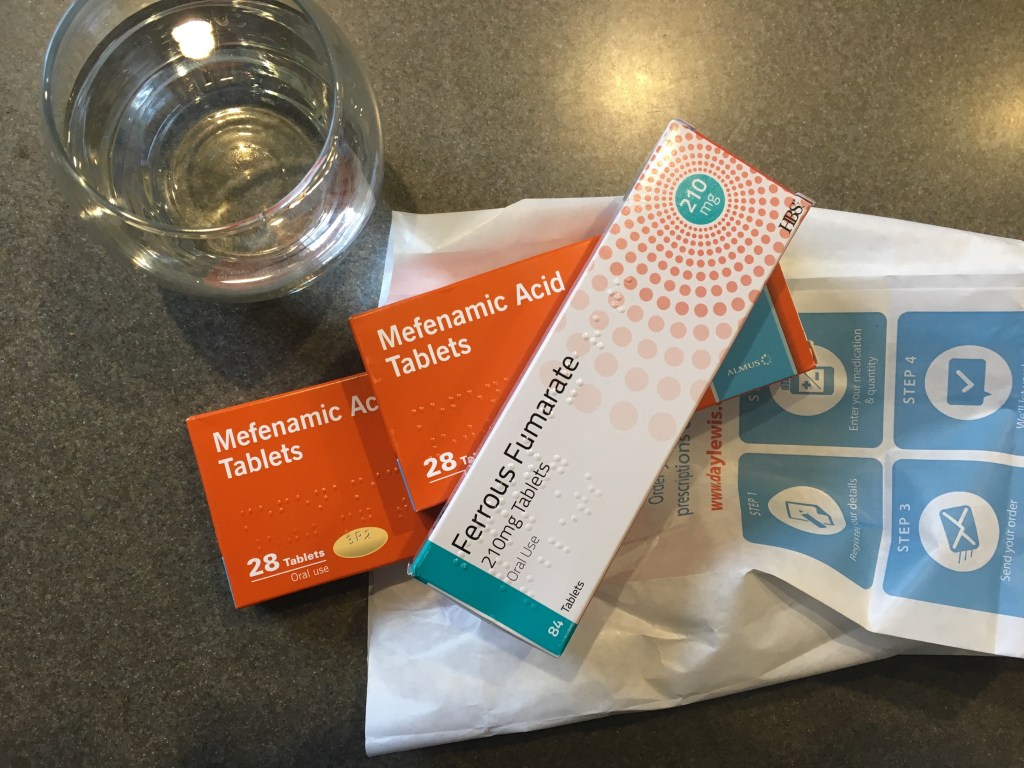
    FullSizeRender
    The latest venture.

    There are lots of frustrating things about this situation, but the two I’ve learnt this week are that the combined pill might stop the cysts from growing in the first place but that no doctor wants to put me on it because of DVT and breast cancer risk factors. The other is that both the sonographer and Dr E’s response to my pain outside of my period has been to say, “yes, sometimes cysts can be painful”. Trying to communicate to them that whatever is causing my pain, cyst or otherwise, is really painful often is proving difficult.

    So with a bit of persistence, like the pesky cyst, I’ve managed to get something to help with period pain, iron tablets that should help with sleepiness, and hopefully a decent and quick referral. It’s not exactly good news, but it’s something.
    Confused? Start the saga from the beginning here

  • Review: The Cincinnati Tin Trunk – Richard Hopkins

    Review: The Cincinnati Tin Trunk – Richard Hopkins

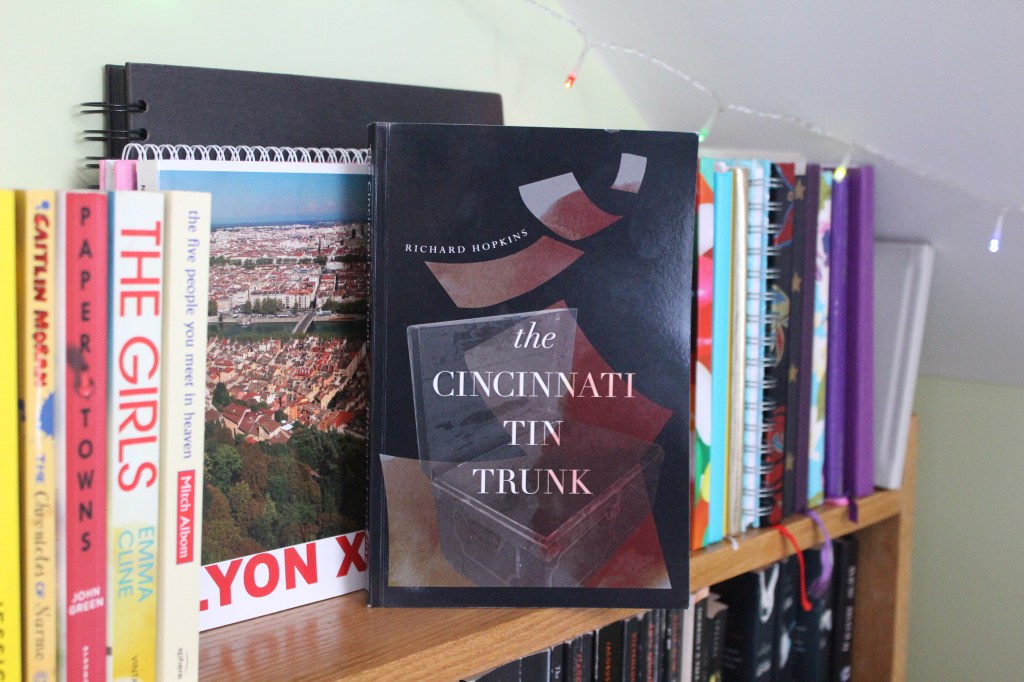
    Those who have been around for the long haul might remember that in my 2016 Favourites I mentioned the first book written and published by my friend Richard Hopkins – Interleaving. It’s now my pleasure to let you know that the second book in what is going to be a trilogy is out now!

    “Readers are taken on a historical treasure hunt”

    It’s always nice to be able to give a friend’s projects some airtime, and it’s even nicer when I really enjoyed the book. The Cincinnati Tin Trunk is like Interleaving in many ways, and totally different in others. I’ve talked before about how my relationship with historical fiction has been a bit rocky, but Richard’s books are a really great way to ease yourself into history – by literally immersing yourself in the past. Inspired by the life and work of a real nineteenth century Dutch photographic Assistant, Nicolaas Henneman, the novel follows the journey of one twenty-first century historian’s physical, literary and photographic quest to learn more. Together with Tom, his wife Libby and adult daughters, readers are taken on a historical treasure hunt across the US, Holland, France, the UK and back again.

    Both a product of its time (2016 – yikes!) and a captivating exploration of early photography, nineteenth century life and migration The Cincinnati Tin Trunk can’t help but take you on a walking tour of Henneman’s life. Like Interleaving Richard drops you into London, both then and now, and guides you around the places that you might otherwise not have noticed. The book is both a form of escapism and a reminder that every story have many sides, some of which still need to be uncovered.

    Despite the fact that the characters are all new in this second instalment of the trilogy, it does what all good middle trilogy books do – it leaves you pondering about the third. Once again the profits from the book are going towards charities that help homeless people in London. Both Interleaving and The Cincinnati Tin Trunk are available on Amazon in Kindle and paperback format, so check them out if you’re interested!

    The book I reviewed last week (Tigerish Waters)  is also giving its profits to charity – Christmas presents with a side of social justice anyone?   

    IMG_9837


  • Is Fertility Awareness a Teched-up Disguise of the Rhythm Method? #Periodically 16

    Is Fertility Awareness a Teched-up Disguise of the Rhythm Method? #Periodically 16

    I first heard the phrase “Rhythm Method” in a Religious Education class at my all-girls catholic high school. It was discussed alongside actual birth control methods like the pill and condoms, and I detected a tone of skepticism in the voice of my teacher. I have a vague memory of dropping the phrase at home one day and my dad going on a “it doesn’t work” rant, which ended, as I recall, with him threatening to demonstrate something involving a banana and a condom…

    So off I pottered on with my life, knowing that the Rhythm Method, which involves using the dates of your previous cycle to forecast the fertile and infertile days of the next, was an unreliable load of rubbish.

    Then something happened. I read an article by Holly Grigg-Spall that talked of Daysy and the Fertility Awareness Method. A year or so later the Natural Cycles phenomenon began. When I first heard about it my family and I agreed that it was the Rhythm Method in disguise, teched-up and glorified anew – it was a dangerous response to the sudden rejection of hormonal contraception that was going to end in a lot of unwanted pregnancies.

    That is until I learnt how the Fertility Awareness Method (FAM) was different from the Rhythm Method. While the Rhythm Method looks retrospectively at past cycle dates, FAM looks for markers of fertility within your current cycle. Tracking Basal Body Temperature (BBT) can flag up the temperature increase that occurs around ovulation. There are other markers too. Getting very familiar with your cervical fluid can be a huge indicator of fertility, testing your urine for luteinizing hormone (LH) even more so.

    I remain very nervous about how FAM is being depicted as this completed project. “Here it is, go forth and only multiply if you want to,” has been the attitude. I think it is still early days and that FAM should be treated as a step in the right direction, not a finite solution to a huge problem. So far in my own experience with FAM I’ve found that I’m less likely to take my BBT reading at the correct time than I was to take the pill on time. It is still super at risk of human error. This is before you consider the fact it can take around six years for a menstrual cycle to get, well, cyclical after menarche and without considering health conditions that can morph FAM data.

    Now a leaked memo from the White House suggests that as effective teen-pregnancy prevention programs (contraception) are being subsidised, abstinence based, sex risk and Fertility Awareness methods are being suggested as alternatives. I think that a big part of what the White House, and supporters of FAM within the Catholic Church, have got wrong, is that the sudden focus on FAM and the recent turn away from hormonal contraceptives is not because we are worried about our consciouses, souls or honour – it’s about wanting more. We want to choose when and if we do or do not have children and we want that choice to be free from the life-changing side-affects that often come with mainstream methods of hormonal birth control. FAM is still birth control. Those using it to avoid pregnancy are still looking for a contraceptive, they are simply asking for more. Having observed the changes in my own body when I was on and off of the pill(s), I am now acutely aware of how my body changes throughout my cycle. If that can stop me getting pregnant (if I could have sex, that is LOL) then of course I’m going to exploit that.

    I’ve said it before and I’ll say it again: knowledge of self is powerful.

    This week I attended the opening of Period Piece at the Science Gallery in London. It’s on over the weekend too if you want to check it out, but it was a excellent platform for talking about why Femtech is changing things by using old ideas in new ways. Period Piece is a multi-media art piece that incorporates biometric data, like BBT, while touching upon political and religious events, like the papal ban on the pill in 1968.