Tag: reading list

  • Reading Resolutions 2018

    Reading Resolutions 2018

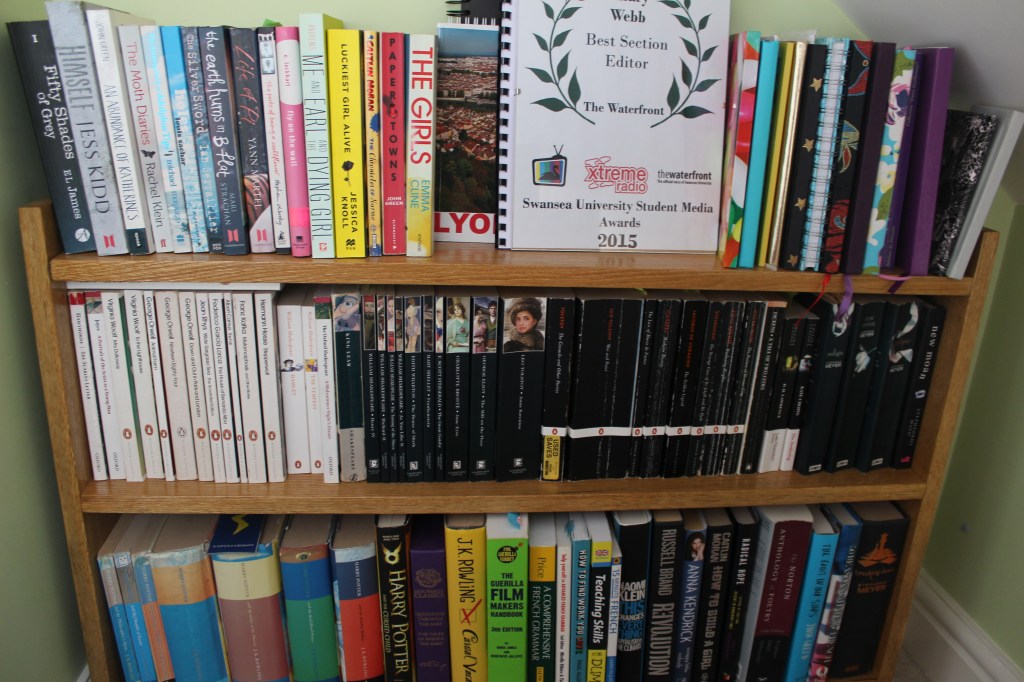
    And so we’ve come full circle. A year ago on New Year’s Eve, I posted the first blog on Fictitiously Hilary, titled “Reading Resolutions”. I recapped what I read in 2017 (a whopping 42 books) and I set my reading resolutions for the year. One of these resolutions was to blog about what I’m reading, why I’m reading it and what I think about it. While #Periodically appeared in the spring and took a section of this blog in a very different, very vaginal direction, I like to think I’ve relished this first resolution.

    full circle
    Full circle – get it? If you know, you know.

    So what about numbers then. My resolution for 2017 was to read 36 books, including 12 books in French. As I mentioned in my earlier blog this week, I am somehow on my 60th book of 2017!  However… I’m really disappointed that I didn’t stay true to the French resolution. While in the last few months I’ve honed in on it, between exams and travelling I really let my French literature habits slip, meaning I have only read 8 books in French this year. Reading Harry Potter in French has really relit that spark, so I hope it’s something I can address in 2018. (Side note: I have been watching Mystère du Lac on All4, does that make up for my shoddy reading efforts?)

    2018 Resolutions

    The first resolution I have had in my mind for some months now and I’m really determined to put it in motion. While the convenience of Amazon and Waterstones is undeniable, I would really like to support more independent booksellers and to buy second hand where possible. So with that in mind, my first resolution for 2018 is to primarily buy books from independent bookshops, charity shops and book fairs. I only want to use the mainstream booksellers when absolutely necessary (i.e. I have vouchers, or there’s an unavoidable difference in price). Not only is this going to be a great way to support indy businesses and charities, it should get me adventuring a bit more. I’m really excited about this, so I’ll let you know how I get on. I also have a huge TBR pile after Christmas so technically I shouldn’t need to buy any books for a while.

    Numbers wise I don’t know what to suggest. Is it realistically possible for me to surpass 60 in 2018? I assume my current uphill reading rate is bound to plateau at some point? I guess there’s only one way to find out, so let’s just aim for 65 and see what happens. I want to keep my French reading goals ambitious but realistic and I’ll admit I’m not entirely sure how to do that. Since I never reached it, I’m going to say 12 again and make a bigger effort to read at least one French book a month. Hold me to this one please, I clearly need inspiration mid-year.

    The final resolution is something I touched upon in a recent blog post, Non Fiction Reads 2017; to diversify my non fiction reads in 2018. My fiction has always been a little broader but there’s no harm in expanding what I read there too – open your world to different books and you’ll open your mind to a different world, right?

    Happy New Year folks! Thanks for sticking around for so long, especially when many of you are here for books and all I give you is uteruses! I have some writing related news too, so look out for a blog about my writing resolutions soon. In the meantime, I’m trying desperately hard to be welcomed into the Bookstagram universe, so take a look at my Instagram if you enjoy (un)aesthetically pleasing pictures of books and a closer look at my Christmas book haul and 2017 reads. Here’s to a bigger and better second year of book blogging!

    2017-18
    I find the administrative cross over to a new year very satisfying, just me?
  • Review: The Cincinnati Tin Trunk – Richard Hopkins

    Review: The Cincinnati Tin Trunk – Richard Hopkins

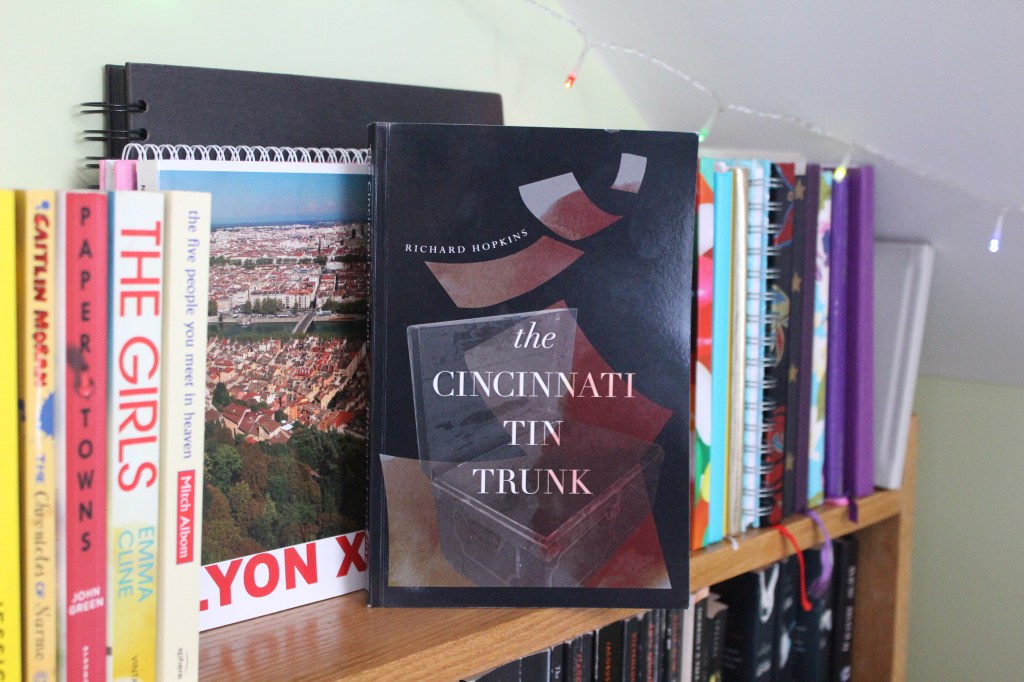
    Those who have been around for the long haul might remember that in my 2016 Favourites I mentioned the first book written and published by my friend Richard Hopkins – Interleaving. It’s now my pleasure to let you know that the second book in what is going to be a trilogy is out now!

    “Readers are taken on a historical treasure hunt”

    It’s always nice to be able to give a friend’s projects some airtime, and it’s even nicer when I really enjoyed the book. The Cincinnati Tin Trunk is like Interleaving in many ways, and totally different in others. I’ve talked before about how my relationship with historical fiction has been a bit rocky, but Richard’s books are a really great way to ease yourself into history – by literally immersing yourself in the past. Inspired by the life and work of a real nineteenth century Dutch photographic Assistant, Nicolaas Henneman, the novel follows the journey of one twenty-first century historian’s physical, literary and photographic quest to learn more. Together with Tom, his wife Libby and adult daughters, readers are taken on a historical treasure hunt across the US, Holland, France, the UK and back again.

    Both a product of its time (2016 – yikes!) and a captivating exploration of early photography, nineteenth century life and migration The Cincinnati Tin Trunk can’t help but take you on a walking tour of Henneman’s life. Like Interleaving Richard drops you into London, both then and now, and guides you around the places that you might otherwise not have noticed. The book is both a form of escapism and a reminder that every story have many sides, some of which still need to be uncovered.

    Despite the fact that the characters are all new in this second instalment of the trilogy, it does what all good middle trilogy books do – it leaves you pondering about the third. Once again the profits from the book are going towards charities that help homeless people in London. Both Interleaving and The Cincinnati Tin Trunk are available on Amazon in Kindle and paperback format, so check them out if you’re interested!

    The book I reviewed last week (Tigerish Waters)  is also giving its profits to charity – Christmas presents with a side of social justice anyone?   

    IMG_9837


  • History in Context: From hating history to, well what exactly?

    History in Context: From hating history to, well what exactly?

    I despised history lessons when I was at school. For the most part, it was limited to British history and I was more interested in the rest of the world. For the other part, I took the attitude ‘why are we focussing on the past?’ or, as the SSX Tricky character would yell, ‘the past is gone, now is all there is!’ Of course every right minded person, usually my dad, would fire back with ‘you have to learn about the past to stop us from making the same mistakes’. From where I was sitting, however, humankind kept making even worse mistakes than those I learnt about in history class, so it couldn’t be that effective. Tired of this age-old philosophical argument, I instead just decided to adopt the easier excuse; that I thought history was boring (of course that only pissed off people (my dad) tenfold).

    The moment I didn’t have to study history I stopped, or at least, I thought I had. In fact I found I got sort of a thrill out of how irritated saying I ‘hated’ history made people. While I was done with history, history it seemed, was not done with me.

    I remember the moment, in A Level English where my teacher Miss O’Neil, started talking about how the character of Serena Joy in Margaret Atwood’s The Handmaid’s Tale was based on a real woman, Phyllis Schlafly, from the age of Thatcher and Reagan. ‘It’s context like this that will really push your grade up in your coursework’. I remember thinking, ‘cool, what is this mysterious context business?’ like it was a new found entity. I plodded my way through A Level revelling in the moments where I got to bring in context or even ‘cultural context’ to explain why a novel was written a certain way, or the parallels that could be drawn between the book and the ‘real world’.

    Then I got to university and something truly horrible happened. In our first and only compulsory module (that didn’t go well for me for other reasons) Monsters and Transformations, the slide show in the introductory lecture paired the words ‘history’ and ‘context’ together. Historical context? What is that supposed to mean? As the module progressed I began to become more and more suspicious that historical context might actually be the same damn thing as context. You can imagine my horror, in learning that one of my favourite parts about my chosen subject was actually rooted, in its entirety, in my least favourite subject.

    Eventually I accepted it. In fact, I started to really enjoy it. I even opted in for French modules our lecturers called ‘cultural modules,’ that I now realise were often European and French history classes. When my sister finally agreed to read Harry Potter last year she said it was under the condition I read something with history in it, and gave me Captain Corelli’s Mandolin. Did I still think history was boring? Did I really never read historical novels, I asked?

    I loved The Handmaid’s Tale and that was packed full of historical context, as was Nineteen Eighty-Four which I studied alongside it. The same was true with The Scarlett Letter and King Lear. Even biblical books like Impossible Saints drew me in (questionable re: history, though) and hell, my dissertation was packed full of context of the 1960s and 70s, if that counts as historical yet. OK so maybe I like historical novels, but not ones about war? Nope that wasn’t it. Milan Kundera’s The Unbearable Lightness of Being led me to read Anna Karenina, which set me on a path to War and Peace and The Kossacks. To my horror, I’d become a Tolstoy fan, which meant that war clearly wasn’t the problem. In these French cultural modules we studied art, literature and film in context, meaning we would explore cultural artefacts from one specific period or place, and I loved it. When Les Misérables was made into a film, I loved that even more and read A Tale of Two Cities (even though I would quickly learn that it was about a different French Revolution).

    Last month I finally read Captain Corelli’s Mandolin, and surprise to no one, I really enjoyed it (except the ending, don’t get me started). The entire time I was reading though it I was thinking, am I over my hatred of history? Last month I went to the Imperial War museum, it was certainly heavy in content but boring it was not. I’ve been to Anne Frank’s house, I wasn’t bored, insensitive or uninterested. If I went back to school now to study history, would I still be distraught with boredom?

    Honestly? Yes. Sitting down and learning about history is not how my brain processes the past. I need history in context. Learning about the past for past’s sake doesn’t fire me up, I need human stories to realise it. The worst parts of history don’t hit home until you understand the impact they had on someone’s life. Take Captain Corelli for example, before I read it I had no idea of Italy, Greece or the Ionian Islands’ involvement in World War II. The novel only gives you four or five perspectives and of course there are so many more, but really understanding how transformative one event can be on one person’s life, gives you a crazy amount of perspective when you zoom out and think about how many different lives were effected by the same event. Even the best events from history, like the sexual revolution, they’re no good without the personal stories. When I’m reading a novel with a real context, I find myself googling and reading simultaneously, and for some years now, that’s how I’ve learnt to enjoy learning about history.

    Last week I had the extraordinary opportunity to hear Margaret Atwood speak at New Scientist Live. Known for her science and speculative fiction, often set in dystopian futures, I always associated her work with the future. She talked about how she couldn’t have predicted how relevant her novels would have become, given the election of Trump and its effects of reproductive rights and the environment. Talking about how his election ‘framed’ the Hulu adaptation of The Handmaid’s Tale, Atwood said how if Hillary Clinton had been elected the show would have been the same but it would have been viewed differently. “Even if you’re writing a historical novel, you’re still writing about now,” she said. This was after I’d written this blog but I had to come back and add that quote in. I think it would be equally true to say “even if you’re reading a historical novel, you’re still reading about now”.

    That’s what I’ve learnt from historical novels. History is relevant and interesting and not boring because it’s always, however subtly, applicable to the current world. So if you ever hear a kid saying they don’t like history, I strongly recommend giving them a good book. Because any good book tells a story about a place, a people and a time and historical context is just part of that. (Hey that’s sounds like Christian in Moulin Rouge, another example of history sneaking into my world without me knowing).

    IMG_7229
    Thank you Margaret Atwood, for putting this blog in context