Tag: Pain Management

  • Prospects of living with and without endometriosis

    Prospects of living with and without endometriosis

    Last month, one single doctor’s appointment had three very significant firsts. Two of these firsts, I knew were coming. I spent the days before the appointment trying to dissuade myself of its significance, knowing from past experiences that keeping my expectations low is a necessary assurance. It was impossible though, impossible to deny that this was the first time I was seeing an endometriosis specialist and the first time I was seeing a gynaecologist who wasn’t a man. 

    The third, surprise first, was that they, the doctor and midwives, made a plan for me. For the first time, the plan isn’t just ‘do x, if it doesn’t work then I can’t help you’. It’s a plan for investigation, treatment and pain management, there’s even a plan for supporting me while I wait for other parts of the plan to be put in motion. Parts of the plan were presented to me unprompted, word for word in the way I had written them on my wishlist before the appointment. It was quite overwhelming and has left me in a confused haze. I’ll write about the plan itself another time maybe but this blog will instead address how I am mediating my peace with chronic pain with a new prospect for relief. 

    During my masters, the first chapter of Alison Kafer’s Feminist, Queer, Crip (2013) was on the reading list for a class on body politics. The chapter, and eventually book, left a profound mark on me and I find myself unable to resist going back to it time and time again. Kafer describes the temporal qualities of queerness and disability, whether or not they overlap and how, or whether they have been the same thing all along. Straight time can be seen as a normative pathway, an expected route through life. Illness is an unavoidable obstacle, usually painted within a curative, diagnostic or prognostic timeline – how long have you been like this? When will you be better? How long until you make a full recovery? How is life different pre- or post-accident or illness? There is a compulsory nostalgia for the lost able mind/body’ (42). In crip and queer time, deviations to the normative pathway are welcomed and celebrated. ‘Rather than bend disabled bodies and minds to meet the clock, crip time bends the clock to meet disabled bodies and minds,’ (27) Kafer writes. 

    With chronic, hard-to-diagnose conditions like endometriosis, the spirit of crip time is helpful. It’s helpful because it allows you to stop constantly comparing your present experience with a past before you were unwell or a future when you are cured. It is liberating to accept that your timeline isn’t curative and is instead more crip in nature. With cure-all hope off your radar, energy can be spent on accessibility, accommodation and prosperity. Throughout the pandemic, disabled people and people with chronic pain or fatigue conditions have spoken about how much more accessible work, events and experiences have become thanks to a need for people to work from home en masse. I know I am not the only one that fears that the idea of going back to ‘normal’ (cough curative time cough) also means a return to struggling to fit my body into a normative schedule that never worked for me in the first place. 

    My own appreciation for crip time is part of the reason I recently decided to live on my own (that and the important fact I had the resources to do so for the first time). Living with other people, I found, applies a certain pressure to dealing with chronic illness, both in the fact you can’t help but compare the activities of your day with those immediately around you but that there is also a pressure to be less sick to make others more comfortable. Lara Parker writes about her decision to live on her own with endometriosis in Vagina Problems. She writes, ‘it somehow makes me feel worse when someone is there and forced to witness it all. As badly as I crave someone being there with me, telling me I can get through it, it also often feels easier to face it alone… I can’t tell them how to help me or what to do because there is nothing I can do’ (48). For me, living on my own hasn’t exactly been easy (mainly due to problems caused by the pandemic and poor plumbing) but in terms of allowing myself to be really sick, allowing myself to rest, allowing myself to enjoy feeling good when I do feel good – it’s a freedom I didn’t know I was missing.

    But, and here comes a big but, endometriosis is part of a family of chronic, incurable conditions that have historically been under-researched, underfunded and out of the spotlight due to the people they affect – in this case, it is women and people assigned female at birth. It is possible that with adequate research, time and funding endometriosis could become a treatable, curable, even preventable, condition. Did I just apply a curative timeline to the condition itself? I think so.

    So there I was, a year or so after beginning to accept that endometriosis was going to be an ever-present part of my life and finding ways to be happy and comfortable with that fact, sitting across from my new doctor, a professor working on radical and innovative new methods of diagnosis and treatment of endometriosis, listening to the first treatment plan I’ve ever been offered. Part of the plan involves being in a clinical study – my data, images of my insides, will contribute to finding better ways to diagnose endometriosis. 

    I’m not going to bullshit you, I am both thrilled and frustrated by the whole thing. I’m frustrated that it comes to this, frustrated that this all ends in even more surgery, frustrated that I am once again setting my watch to a curative clock, frustrated that despite finding ways to accommodate endometriosis into my life, I am still attracted to the idea of living without it. Thrilled that by following this plan someone else might not have to go through so many pointless, harmful procedures as me, thrilled to have a doctor who, for the first time, knows what she’s talking about, thrilled that I might be able to have a sex life again, that I might be able to run again. 

    There are limits to all of this. I am incredibly grateful and excited that this could result in a significant and long-term reduction in pain but I’m not sure I really believe it will happen. That is to say, although the new plan might put me back on a curative timeline, I’m taking it with a pinch of salt. A big one. Doctors have made me promises in the past but I try not to take them to heart anymore, some things just aren’t on the cards for me and that’s OK. In many ways, it’s the safest attitude I’ve ever had, interested and active in the plan, invested in its results but confident that if it fails, I’ll be more than fine. For now, I’m finding an unexpected comfort in the knowledge that while some recent pain days have been so awful that I feel like I would do anything to eradicate endometriosis from the universe, that I wouldn’t be who I am today if it hadn’t manifested in my body. Maybe all this is a way to queer crip time, by occupying crip and curative temporalities simultaneously. 

    Like many my thoughts recently have been with India as it faces a brutal wave of COVID-19 and with Palestinians threatened with yet more violence. If you’re an EU citizen, I urge you to sign the European Citizen’s Initiative ‘No Profit on Pandemic’ to urge the EU to make coronavirus vaccines a global public good. Donate to a number of important charities helping on the ground in India via this fundraiser set up by students at one of my alma maters here. For educational resources as well as ways to help Palestinians, I recommend this helpful carrd.
  • When will I learn? 

    When will I learn? 

    I spent much of the last blog complaining that one problem with endometriosis is that eyeing it up as a suspect for any new or re-emerging symptom is unhelpful because treatment = surgery and waiting times = incredibly long, especially at the moment. Shortly after I wrote that, the universe said ‘hold my beer.’ The pace has picked up. Significantly. That gynaecologist appointment I had scheduled for September, the one I’ve been on the waiting list for since last September? Well, that’s now been rescheduled for April. (April 2021 – I checked). Why the sudden change of plans? Because the colonoscopy revealed, as much as I don’t want to hear it, that actually, it is the endo.

    Let’s step back a second. I went into the colonoscopy highly stressed. I was already anxious about it, in part because in Belgium colonoscopies are performed under general anaesthetic as standard and I’m currently separated from my family by a pandemic and a new political border. This meant I had to turn to my wonderful friends in Brussels to chaperone me home from the procedure. But then of course, the day before the procedure everything that could have gone wrong went wrong. From the first set of laxatives making me pass out, to my neighbour’s radiator leaking into my flat and my dear friend and chaperone getting covid. It all culminated in one very strange and stressful afternoon of me sitting at my desk, trying to work, sipping laxatives, lining up another angelic friend to escort me home from hospital while two men smashed a hole through the ceiling. 

    By the time it came to the procedure, I was suddenly grateful I’d be under general anaesthetic, a chance to sleep – at last! A good thing about the stressful build-up was that I didn’t have time to dwell on the outcomes of the colonoscopy, although I will say I had rather cynically decided that it was yet another unnecessary and invasive procedure that would more than likely result in absolutely nothing. This was also along the same lines as the last thing the gastroenterologist said to me before I went under.

    When I came round, not only was I thrilled to find that my anus still felt relatively normal but I was greeted by a surprised and slightly confused gastroenterologist. She had found something after all – a lone ulcer in my colon. She said it was strange. If it were Crohn’s or Ulcerative Colitis, then there would be more than one ulcer. She said it could be that we’d found one of the two inflammatory bowel diseases very early on, but that it seemed unlikely. Either way, it was a serious answer to why I have been experiencing rectal bleeding. She handed me a letter to give to my GP, with some options to explore.

    It’s fair to say that I’ve been miserable company since then – it’s a good job I live on my own at the moment. My GP took the reins and has been brilliant, communicative and actively exploring scientific papers and new hypotheses with me. But the day after the procedure she rang me to inform me that whatever happens now, I cannot take ibuprofen. It’s hard to describe how significant this is without sounding completely OTT. For the last five years, pre and post diagnosis, through every treatment I’ve tried, ibuprofen has been the only reliable pain relief I have had that doesn’t send me to sleep, mess with my head, make me lactate (yes, really) and that actually reduces the pain enough for me to enjoy myself or concentrate for a few hours. To be told that the solutions to new and old problems are still unknown while having my main crutch taken away… it’s really tough. 

    Tough even more so because as much of my social bubble gets excited about the potential end of lockdown life in the UK, I’ve already been feeling nervous about a return to normality. Working from home has been much easier for pain management, the idea of working in the office without ibuprofen is terrifying because I know I can’t do it. Things in Belgium are very different from the UK though, and a return to ‘normality’ is further out of reach. My GP is taking my concerns about pain management seriously though and promises that we’ll have a new plan by the time office life, all-day weddings and adventures begin again.

    We (my GP and I – a team, at last! This is how it should be!) both did a lot of work to follow up on the colonoscopy. My doctor chased the biopsy results and asked them to test for endometriosis if they could. They weren’t able to unfortunately but they have, thankfully, ruled out Chron’s and colitis. This means with some certainty that the ulcer in my colon is caused by endometriosis: either a secondary cause in that the ulcer was caused by too much ibuprofen or a primary cause, meaning that it might not be an ulcer at all, but an endometriosis lesion. Both these theories are backed up by the fact the rectal bleeding tends to happen the day after an uptick in ‘period’ pain. My job was to let my new gynaecologist’s office know of the news and our concerns around it, hoping that it might lead to a bump up the appointment list. And it did! 

    This is good news because it’s a step forward, rather than just standing still as I’ve been for the last 18 months. However, it could mean that more surgery is on the horizon sooner than I expected and I do not relish that thought. 

    I’ve found this month so far, which is also Endometriosis Awareness Month, difficult and emotional. When I found out about the ulcer, I realised I’d been doing it again, telling myself that I’d imagined the symptoms. I understand why I’ve developed this behaviour but the come down from realising that something is wrong and that I did the right thing by asking for help is still quite a shock to the system. The day after the colonoscopy I joined the Vaginismus Network’s meeting. I always find these meetings moving but Sarah Rose McCann, whose own experience is not dissimilar to my own, spoke and had me sobbing. It was super cathartic and her talk and the whole event was incredibly inspiring, but I was just overwhelmed with some kind of grief. I was really, really sad that so many of us are still in so much pain, still searching for answers, still not being taken seriously, and now, it seems, I’m not even taking myself seriously. I hope my blog is part of the collective action that will raise awareness of and soon see the back of so much suffering. 

    The British government is running a consultation on the future women’s health strategy for England. Like many, I’m deeply sceptical and am still waiting to see policy changes and, more importantly, improved health outcomes. Yet if we don’t complete the consultation then our voices will go unheard. So I will be completing the consultation and I hope you will too. It’s also important as many voices as possible are represented in the consultation, and if it’s just a bunch straight, white women like myself taking part then it will be about as useful as a chocolate teapot. So share it with all the womxn you know, let’s give the government more than they bargained for and demand change. 

  • Vindication, endometriosis & some Douglas bloke | Pleasure Moans #3

    Vindication, endometriosis & some Douglas bloke | Pleasure Moans #3

    In my last blog I detailed my hesitation and resistance to my gynaecologist’s suggestion that I have a second diagnostic laparoscopy (keyhole surgery) to look for endometriosis. It feels weird then, almost two months later, to be writing that this week I had that surgery.

    My hesitations varied from not wanting to repeat another painful and probably pointless surgery like the one I had in August 2017, to wanting an endometriosis specialist to be the one to go in for a second look, rather than a general gynaecologist. Once I received a date for the operation I was more certain than ever that I was going to be withdrawing my name from the waiting list, but I had an upcoming appointment with a different doctor that I had set as the deadline for my final decision.

    This other appointment was a bit of a cock-up – I was supposed to have been referred to a specialist gynaecology clinic in London but wires were crossed and somehow I ended up with a referral to a sexual health clinic in London that specialises in sexual pain. The problem was, the only female sexual pain the clinic deals with was superficial pain, relating to pain that occurs externally or on entry, like vaginismus and vulvodynia. While I have had some run-ins with superficial pain, my most persistent symptom over the last few years has been deep dyspareunia – that’s deep, internal pain during vaginal penetration.

    When I got to the appointment I was, as expected, greeted with, ‘why have you been sent here? We don’t deal with deep pain, that’s gynaecology.’ But I was kind of hoping I might be referred to that hospital’s gynaecology department because it’s one of the best. He decided to examine me anyway, and I realised this was going to be something of a new experience when he said, ‘oh we use stirrups a little differently here…’ One bizarre examination later and he agreed with me that superficial pain was not a primary issue but that it was present. He also said I appear to have some pelvic floor dysfunction which doesn’t surprise me at all. Physio is something I’ve been increasingly curious about over recent months.

    When it became clear that he wasn’t going to refer me to the hospital’s gynae unit, I just decided to ask, ‘do you think I should have a second laparoscopy?’ He took a sharp inhale and said something along the lines of, ‘I’m sure you get this a lot and are pretty fed up of it, but it sounds like endometriosis to me.’ He was right, I have been getting that a lot, increasingly so. He suggested some urological and gastrointestinal causes too, but then he went on to explain endometriosis to me in a way no one else ever had before. He said, ‘some women will be struggling with infertility, have absolutely no pain and a laparoscopy will find endometriosis in abundance. Other people will have serious, chronic pain and yet when endometriosis is found it will be a really small, localised amount, probably on or very near a nerve.’

    This, pardon the pun, really struck a nerve. My symptoms have improved so much since going on the pill that it seemed to me that if I did have endometriosis after all then there couldn’t be very much of it. So I started to focus in on the one symptom that hadn’t changed – deep dyspareunia. I asked around, did a lot of research (I’m particularly grateful for the resources on the Nancy’s Nook Endometriosis Education Facebook page) and discovered that deep dyspareunia is often associated with rectovaginal endometriosis and endometriosis found in the Pouch of Douglas (POD).

    Image result for rectouterine pouch

    ‘POD’ struck a chord. Why did I know those letters? I started sifting through my (now finally organised) records of appointments, examinations and scans and discovered that on one of my more troubling scans, where a persistent hemorrhagic cyst (commonly associated with endometriosis) was found, a very small, uneventful comment was written: ‘some free fluid seen in POD.’ The POD, evidently named after some Douglas bloke, is also known as the ‘rectouterine pouch’ or the ‘posterior pouch.’ It’s the seemingly useless ‘cul de sac’ between the uterus and the rectum. Intelligent design, eat your heart out. The more I read about endometriosis-related dyspareunia the more it all seemed to marry up with my symptoms (retroverted uterus, constipation after sex, deep dyspareunia).

    It was this discovery, as well as my first debilitating period in a year, that pushed me to say I would have the surgery in April after all. I was pretty steady in this decision, up until a week before where I promptly freaked out. My initial fear was that I going to die and it was all going to be my fault, but most of all, I was crippled by the fear of going through the entire process again to be told there was nothing wrong but to continue to be told that my symptoms sound like endometriosis. It’s an incredibly frustrating cycle. Once I talked myself off of that ledge I was determined to be as prepared as I possibly could be for the surgery. Looking at it now, I think I did a pretty good job.

    I had a full sheet of questions and concerns that I wanted to run by my gynaecologist before I let him operate on me, all of which he respectfully and sincerely answered. A few included:

    1. Please don’t stretch my vagina, as you suggested you might – OK
    2. Since deep dyspareunia is my most persistent symptom can you please check my POD and look out for rectovaginal endometriosis – it’s unlikely but sure, I would have looked anyway
    3. Will you open up my old scars or create new ones? A bit of both, personally I prefer going in from the left, so that would mean a new scar
    4. If you find endometriosis how will you treat it? Burn it
    5. Is excision surgery not an option? I hear that it’s better. If it’s significant then I would excise it, yes.

    Ecetera, etcetera.

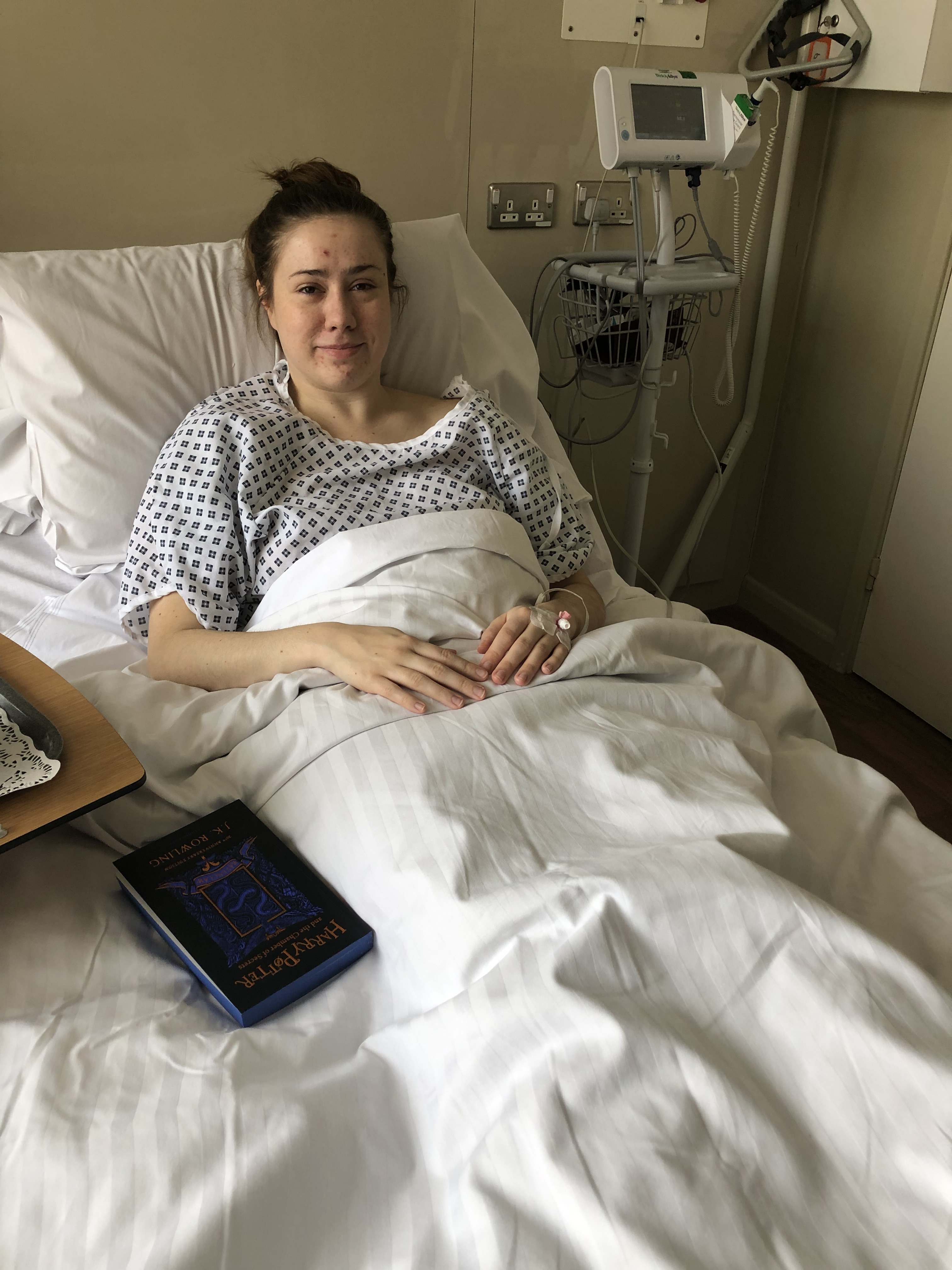
    Reassured by his answers and our rapport, I was readied for surgery and sat reading Chamber of Secrets until they came and got me.

    Inhale.

    A couple of hours later, exactly 20 months after my first disheartening surgery, my gynaecologist swaggered into recovery (where I was crying and swearing because my drugged-up self had come to the conclusion they hadn’t found anything) to tell me, ‘I found endometriosis in your Pouch of Douglas, it’s not in your head!’

    Exhale.

    IMG_7403
    Sore, surprised and a little smug

    It’s only been a few days and I’m still processing. It was a really tiny amount of endometriosis, but as I’ve been reminded time and time again, the severity of endometriosis does not correlate to pain. Giving myself endometriosis imposter syndrome at this point will help nothing.

    I can’t help but wonder what role my own advocacy and research played in finally get an, albeit tentative, answer. Would he have double-checked my POD if I hadn’t specifically done the research and asked him to? Would painful sex ever have been the symptom my doctors focussed on if I hadn’t forced them to? A widely touted statistic about endometriosis is that on average it takes 7.5 years to get a diagnosis, but that’s actually contested between 7 and 12 years. I’ve got here, where I’m not sure I have a diagnosis exactly but where I have had endometriosis discovered and treated, in three and a half years. But reaching this point has been a hell of a lot of hard work, physically and emotionally. I’ve been misdiagnosed with vaginismus, spent months attending psychosexual counselling, been placed on a pill that’s wreaked havoc with my skin and mood, taken anti-depressants for pain management, stopped running, stopped having sex, stopped socialising like a normal twenty-whatever-year-old. I’ve gained a lot too, knowledge, friends, writing gigs, a novel, job opportunities, a post-grad pathway I didn’t expect, a blog – but I am constantly curious about what the last three years might have looked like if my pain had been believed earlier, taken seriously sooner and treated promptly – by myself and by others.

    It’s not yet clear whether this is the beginning or the end of this particular experience. I have a million questions for my post-op appointment and I won’t know if the surgery has actually improved anything for months. But to have had the hysteria label lifted is hugely gratifying. Honestly, I feel vindicated because in my head the pain was never in my head. If that makes any sense at all.

    IMG_2795
    Of course, summer arrived the day after my op so I’ll be sporting some DVT stocking tan lines this year!