Shortly after I made the decision to name this blog Fictitiously Hilary I suddenly became aware that I was in a non-fiction phase. Smart thinking Webb. The phase came to somewhat of a startling halt in the last couple of months where the escapism benefits of fiction have been required. Having said that, non-fiction has still accounted for about a quarter of my 2017 reads – so I think the books in question deserve a blog!
At present, my non-fiction TBR (to be read) pile does not exist, which is a really nice position to be in going into Christmas and the New Year. There are several reasons why I’m happy about this, which I’ll explain at the end of this blog, but let’s go through my 2017 Non-Fiction Reads first, shall we?

Scrappy Little Nobody – Anna Kendrick
As I’ve badgered on about before, I have an unexplainable love for actresses’ autobiographies and Scrappy Little Nobody was no exception. I’ve always been a fan of the sarcastic Anna Kendrick and it was nice to have some insight about her extraordinary childhood and remarkably ordinary young-adulthood. Her discussion about revealing magic numbers at the beginning of relationships was a high point for me. My review of SLN can be found here.
Fifty Shades of Feminism – Lisa Appignanesi, Rachel Holmes & Susue Orbach
I’ve read a few feminist essay collections and this is definitely one of my favourites. The discussions are intersectional as they cover, like the title suggests, the many shades of feminism that can, do and must exist. I also talk about FSOF here.
Hunger Makes me a Modern Girl – Carrie Brownstein
I still think I got this book by accident, thinking it was something else, but it was a happy accident. I really enjoyed Carrie’s life story and the positive messages she takes from it. My review is here.
Animal – Sara Pascoe – Hilary’s 2017 Non-Fiction Fave
Gah, I just loved this book. Being able to write about evolutionary and social factors of human sexuality and relationships in a funny, readable and understandable way is a rare talent and Sara Pascoe does it so well. I hope I can write a book like this one day! I mention this in here.
Doing It – Hannah Witton
Like I said in my review, I didn’t learn anything new in Doing It but it’s a book I wish I could have had as a teenage girl. If young people had access to a book like this I think they would grow up with a much healthier, sex positive and safe attitude towards sex.
Girl Up – Laura Bates
I’ve followed Laura Bates and the Everyday Sexism movement for years and while I did enjoy some parts of Girl Up a lot, like Doing It, I didn’t learn much but would have appreciated having it when I was younger.

Wishful Drinking – Carrie Fisher
Shockaholic – Carrie Fisher
The Princess Diarist – Carrie Fisher
The late great Carrie Fisher dominated the non-fiction reads I took to South America on my Kindle last summer and I couldn’t have taken a better companion. My love of Star Wars and actresses’ autobiographies has nothing to do with why I love Carrie’s writing. It is so unique, so funny and so dark in a really intimate and brave way. Only makes you even sadder that Carrie and Debbie Reynolds are no longer with us. WEEP. (P.S. I saw the Last Jedi last week and, unsurprisingly, Carrie was amazing).
Curious Pursuits – Margaret Atwood
I bought this book years ago and only read the couple of chapters relevant to my coursework but I finally got around to reading it cover to cover this year… and I didn’t quite make it cover to cover. The first two thirds of the book I loved, but the last one I skimmed through the essays and articles I found the most interesting. It’s weird, with Atwood’s stuff I’m either totally bowed over and in love or a little “meh”. Hearing her talk at New Scientist Live this year was a definite highlight though!
Radical Hope – Letters of Love and Dissent in Dagnerous TImes – Carolina de Robertis
I read this as I was recovering from the disappointing laparoscopy in August and it was really nice to distract myself from the horrors of my uterus to the horrors of Trump, mostly because the letters in the book are written with such a profound sense of hope that thing’s will be OK, good even. If you want your faith in humanity restored, this is the one.
Where Am I Now? – Mara Wilson
Here we go again with another actress’ autobiography… except Mara Wilson is so much more than just the girl who played Matilda. This book is testament to her talent as a comic and a writer. Really enjoyed it. She is also ace on Twitter if you weren’t aware.
Sweetening the Pill – Holly Grigg-Spall
I wrote a blog discussing my mixed reaction to this book. While at the time it really motivated me and made me realise that I don’t have to feel guilty for not liking the pill anymore, I do think it’s important to be sceptical about this subject – to ask more questions. It’s hugely sensitive and it would be foolish to write-off the huge benefits hormonal contraception has offered the world, but equally foolish to accept that it’s the best we can do.
Sex at Dawn – Christopher Ryan and Cacilda Jethá
I was so excited for this book – science in action, learning about human sexuality and the flaws with it, but I was actually really disappointed. Like I said with Animal making these topics understandable and enjoyable is a hard task, one that I’m not sure this book achieves. However, I did enjoy the evolutionary observations between humans and bonobos when it comes to sex and relationships.
The Female Eunuch – Germaine Greer
As I’m sure you can tell by this point, my non-fiction hype had really distinguished and The Female Eunuch didn’t help. I was, again, really excited to read this, as I’d been promised a book that had awoken a generation of women to the feminist cause. I wish I had read it a few years earlier because so many of the ideas seemed a bit samey, which is obviously because the book, and Greer herself, inspired much of what has been written since. Yet the stuff since has developed, and those developments are vital.
Unfinished Business – Anne-Marie Slaughter
I really didn’t like this book at first. Slaughter repeatedly addresses the privileged point she is writing from but then continues to write from it and some of the issues discussed seem a little trivial because of that perspective. However, later on in the book she makes a few interesting points about art creation and human creation, flexible work and freelancing, which was actually kind of insightful. But I still wish I had a pound for every time she writes “my Atlantic article”…
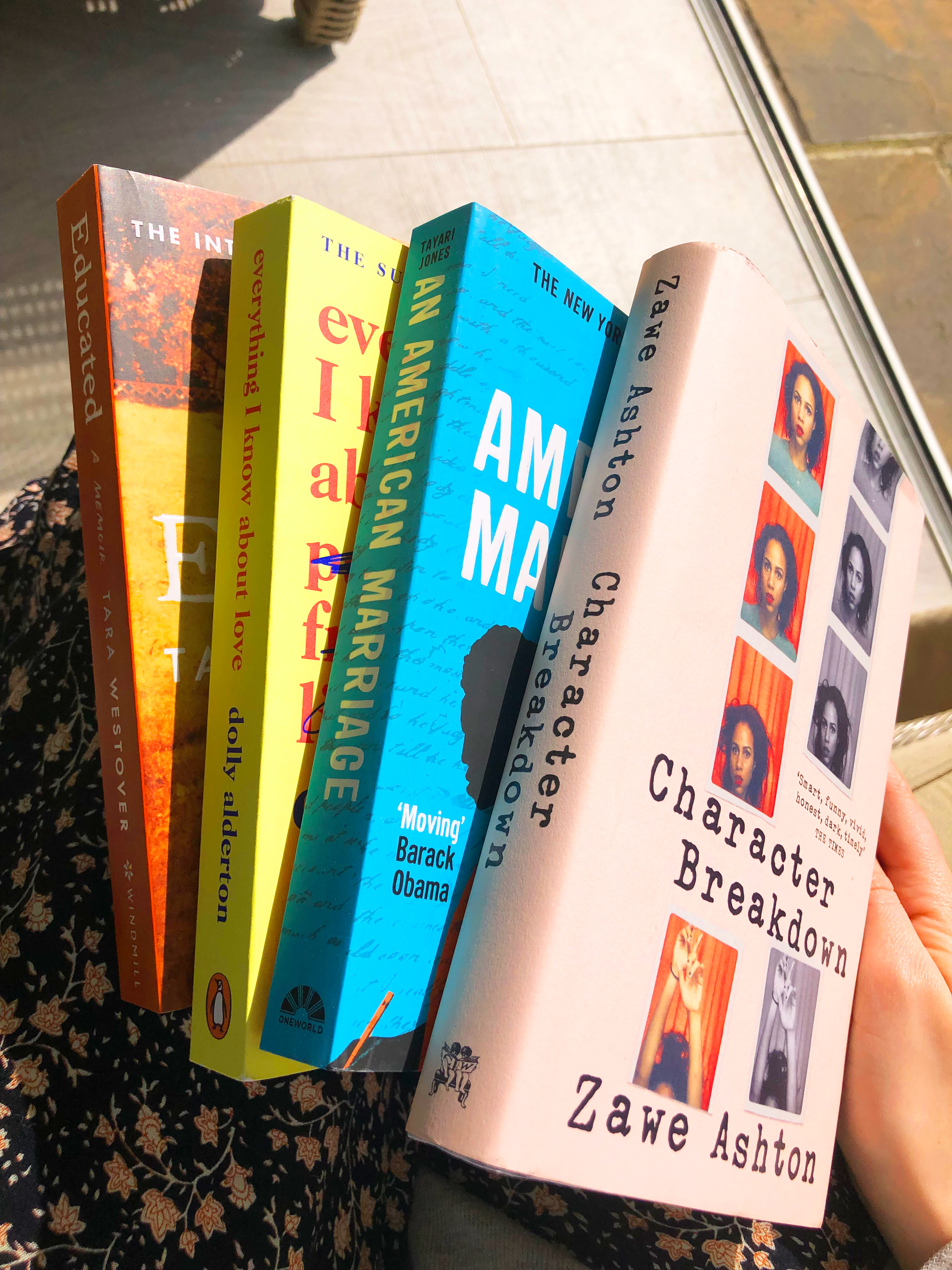
My early frustrations with this last read further irritated my feelings towards all the non-fiction I’ve read this year. What’s my problem with it? For the most part, it’s all really white and fairly heteronormative. I think it’s understandable to write from your perspective, but to only read from that same perspective is small-minded and, quite frankly, boring. So in 2018 I hope my non-fiction reads will be more intersectional in every way possible – we can’t change the world if we don’t escape our own little bubble, can we? Recommendations for 2018 are greatly appreciated!
Let me know what you think by sharing, commenting, or getting in touch on Twitter or Instagram!



 fictitiouslyhilary.com