Tag: mental health

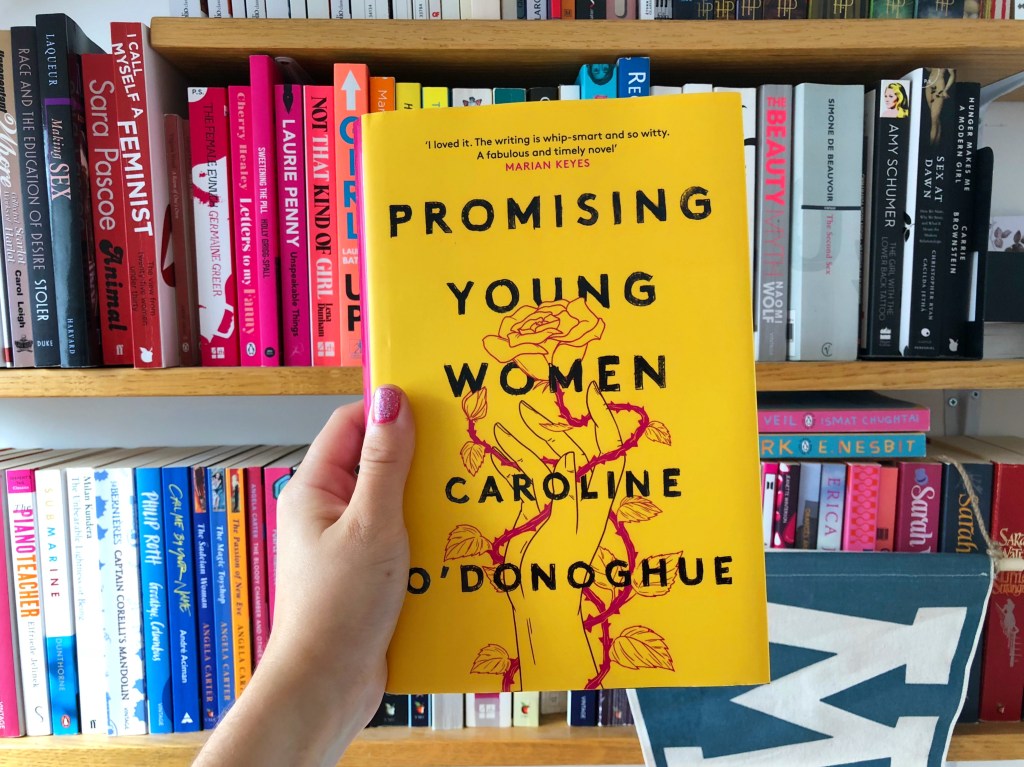
  • Review: Promising Young Women

    Review: Promising Young Women

    Like with most stories that start with a twenty-something London-based office worker navigating the breakdown of a long-term relationship, your mind settles in for a harmless piece of Chick-Lit. And then Caroline O’Donoghue’s Promising Young Women knocks you off-centre by turning into something else entirely.

    The praise on the book’s sleeve repeatedly uses the word “gothic.” Thanks to a module I did in my final year at Swansea (brilliantly named Uncanny places and cyberspaces: Gender and the fantastic) I’m well aware that gothic tropes aren’t limited to stories set in haunted houses in the nineteenth century, but even so Promising Young Women does something totally refreshing with ideas of uncanniness. It’s a novel that proves how relevant gothic images, like starving women fading away, mirrors, periods and other bodily fluids, continue to be relevant and effective at portraying contemporary crises.

    “I don’t have a boyfriend or a fabulous career, and I think she’d like some better adjectives to describe me to her friends with.” – Promising Young Women

    At first, the book doesn’t have the most groundbreaking plot you’ve ever heard of (woman’s anonymous blog seeps into her real life) but O’Donoghue gradually gets under your skin as she tells Jane’s story. A story that while almost fantastical is likely to be relatable and understandable for any young working woman.

    The darkness and depth of this book creep up on you and by the time you’ve realised, you can’t put it down. Dealing with power imbalances (professional and romantic), mental illness and the false security of the Internet’s anonymity, this debut novel makes O’Donoghue one to watch.

  • One Year of #Periodically: Sharing is Caring | #Periodically 27

    One Year of #Periodically: Sharing is Caring | #Periodically 27

    Fanfare alert: it’s been one whole year since I published the first #Periodically blog on Fictitiously Hilary. This marks my 27th blog about my menstrual, gynaecological and all together grossly overshared health. If truth be told, I can’t believe it’s only been a year, it’s been a bit of a mad one.

    So much has happened in the last 12 months, and, as I mentioned last week, writing the #Periodically blogs has given some really awful situations a positive edge. Writing about this never-ending shit-storm has meant I’ve actually got something from the shit-storm. The year would have been a bit of a downer without it.

    Health wise, the last twelve months have seen me hate the pill, have eliminating surgery, an infected bellybutton (nice!), cysts, cyst, no cysts, vaginismus (that was a curveball), counselling, stop running, start yoga, give up sex, several very painful pelvic exams, four very painful ultrasounds, anaemia (another curveball), one trip to the emergency gynae unit, going back on the pill, almost liking the pill, hating the pill again and going on pain eliminating antidepressants. It’s remarkable, but not all that surprising, that I have had so much medical intervention in the last 12 months without reaching a stable diagnosis or any reliable resolution. It’s also pretty distressing to think that things at this point are probably a little worse than they were a year ago. On the bright side, I’m incredibly fortunate that all this medical intervention, except prescriptions since leaving Wales, hasn’t directly cost me a penny! #SaveOurNHS 

    I say directly because my health has cost me financially. The increase in doctors appointments and pain last autumn undoubtedly influenced my decision to go freelance but I don’t regret that decision for a second. I graduated last July, spent four weeks in South America (including a struggle with altitude sickness that makes so much more sense now I know I was anaemic), before having the op and then deciding to go freelance.

    Going freelance straight from university was an awful idea, I knew it was at the time, but #Periodically has been a huge part of my freelance “success” (as in I’m still alive). While I haven’t monetized the blog, #Periodically has opened up so many doors, from top-secret projects that are going to change the world, to helping me get accepted onto the masters course I’ll be starting in September. It’s also let me meet some amazing people, from Period Poverty activists like Mandu Reid and Gabby Edlin (who I met in a toilet of all places), to entrepreneurs and game-changers in female health.

    From time to time, #Periodically has also veered away from my personal experiences and into other things, like femtech and menstrual cup reviews, as well as reviews of books like Sweetening the Pill and It’s Only Blood. The most popular blogs, ‘Does being anti-pill make me a bad feminist?’ and ‘My experience using Natural Cycles,’ combine review and personal experience — something I hope I can do more of in the future.

    In the first #Periodically I wrote, “I don’t want to write about it after the fact, because after the fact might not be for a long time. I want to write about it while it is happening,” and THANK GOD I had that mentality. Who knows when the end of this saga will come, but by sharing my experience, often in TMI detail, collaborating and campaigning I feel like I’ve got so much more from this year than just pain and frustrating doctors appointments. I hope the blogs can help make a few more people sit up and take female health, particularly menstrual health, even the tiniest bit more seriously.

    Thank you so much for reading and sharing the #Periodically blogs, especially if you were only here for book-talk. I have no idea where me or #Periodically will be in another 12 months time, but I can say with some confidence that things are probably going to get weird. 

    My favourite #Periodically is still #Periodically 4, check it out here: “Conversations with Doctors That Shouldn’t Have Happened”. 
  • Review: It’s Only Blood – Anna Dahlqvist #Periodically 25

    Review: It’s Only Blood – Anna Dahlqvist #Periodically 25

    Last week I attended the launch of gender, sexuality and human rights journalist Anna Dahlqvist’s book It’s Only Blood: Shattering the Taboo of Menstruation. The conversations on the night, between Dahlqvist, the founder of Bloody Good Period Gabby Edlin and the audience were interesting enough, but the book itself stands out as an enlightened piece of writing about the profound impact that period taboos, period poverty and poor menstrual hygiene have on menstruators’ lives.

    The book was originally published in Swedish and has been translated into English by literary translator Alice E. Olsson. Olsson was at the launch and discussed the fun (and struggle) of translating some of the menstrual colloquialisms.

    https://www.instagram.com/p/BjJ2uqLFo_-/?taken-by=baraliteblod

    It’s Only Blood is not a list of historical period myths, instead it’s a contemporary assessment of how reinforced menstrual shame continues to cause harm on a monumental scale. “Even though shame and silence are experiences shared by menstruators all over the world, the consequences become far more serious when an additional dimension is introduced: poverty,” Dahlqvist writes.

    The testimonies, many from school girls and activists from Uganda, Kenya, Bangladesh, India, America and Sweden, are combined with Dahlqvist’s research of UN legislation to highlight the fact that inaction when it comes to menstrual hygiene, education and resources means that many human rights are being violated, and yet, there’s a distinct lack of retaliation by politicians. The book is also coloured with Dahlqvist’s personal anecdotes and descriptions, which makes this serious book palatable – it’s rare to get a non-fiction book that you can’t put down.

    “Power over the period is a necessity, a precondition for participation in public life,” Dahlqvist writes, in reference to the serious social and educational issues poor menstrual hygiene can bring about. When school girls don’t have access to running water or locking doors, their options are rather bleak. If they bleed in public they’ll experience immense shame (the weight of which is only heavier when menstrual myths maintain that seeing or touching menstrual blood is bad luck), returning home to secretly clean and change a cloth at lunchtime, avoiding school entirely or hoping, at risk of infection, that one cloth or pad can survive a whole school day. Unsurprisingly, this has a profound and direct impact on their education. The book also explores how, contrary to popular opinion, these problems don’t go away as menstruators leave school.

    One particularly interesting part of It’s Only Blood is the connection Dahlqvist draws attention to between infections, like UTIs and Bacterial Vaginosis, which can be caused by poor menstrual hygiene, with HIV and HPV (leading to Cervical Cancer). Society, including period product providers, encourages menstruators to aspire to be clean and fresh while simultaneously not letting anyone around them know that they are bleeding. With all this shame and secrecy, it’s no surprise then that students in Malawi dry their menstrual protection under their mattresses or that in Bangladesh, one women hides her cloths in the roof, rather than drying them in sterilising sunlight. It’s a public health issue, why aren’t we treating it as such?

    Not only is Dahlqvist’s book intersectional in the stories that it tells, it also covers the intersections of menstrual hygiene with poverty, politics, commercial business and cultural and social stigmas. If you’re already active in combatting period poverty It’s Only Blood will spur you on and if you’re new to the discussion, the book will motivate you to join the ranks. Activists’ stories of feats large and small show how desperately change is needed, but also how in some cases, how little it takes to dramatically improve things.

    It’s Only Blood perfectly showcases how menstrual shame causes problems for everyone and why shattering the taboos will undoubtedly improve individuals’ lives and society in broader terms.

    Buy It’s Only Blood from Wordery by clicking here.