Tag: Menstruation

  • Does being ‘anti-pill’ make me a bad feminist? #Periodically 13

    Does being ‘anti-pill’ make me a bad feminist? #Periodically 13

    As discussed at great length (sorry) in A Tale of Two Pills I consider my relationship with hormonal contraceptives to be over. It is an unpopular opinion, one I’ve struggled to conclude myself for a long time.

    In my world, the pill has always been seen as this great feminist tool. It sat on its pedestal throughout my childhood promising independence, reproductive freedom, sexual liberation and professional advancement. All my feminist icons raved about it, my sisters took it, my friends’ acne had been cleared, boobs had flourished, pain had lessened and my school despised it – by the time I was a teenager it was the most attractive piece of candy I had ever laid my eyes on. It symbolised maturity and being a strong, no nonsense woman. Until of course, I started taking it.
    IMG_9726

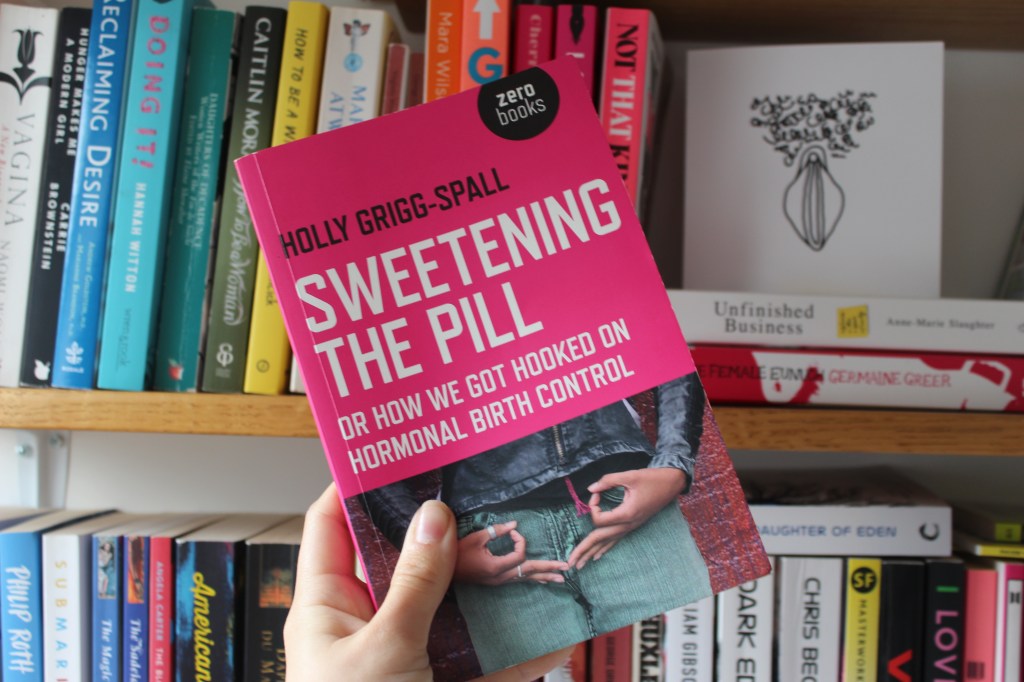
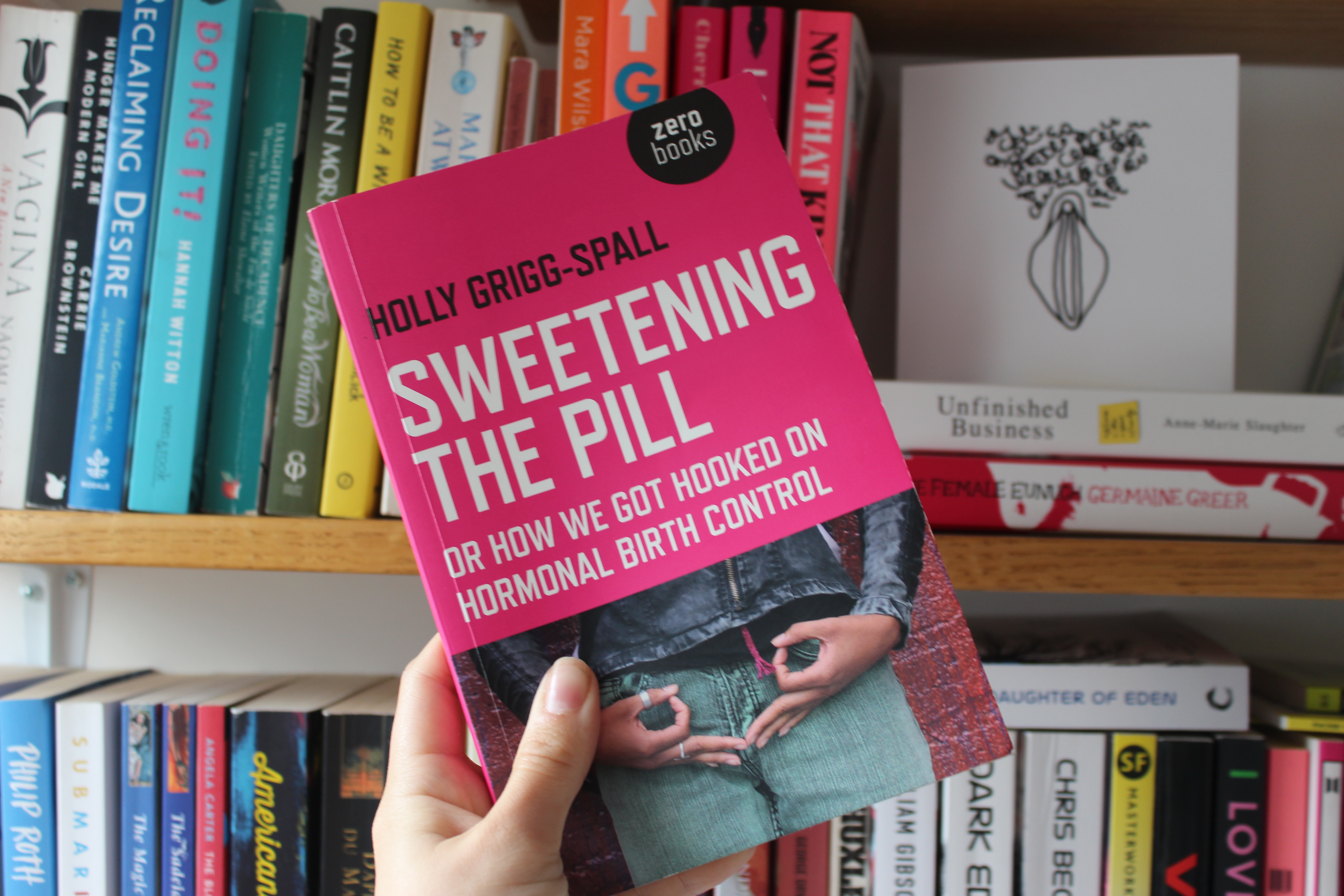
    Last week I read Sweetening the Pill: or How We Got Hooked on Hormonal Birth Control by Holly Grigg-Spall. I’ve been following Holly’s stuff for a couple of years or so now, but it took my longer than I care to admit to get to the book itself. While I can’t say I agree with everything suggested in Sweetening the Pill there were dozens and dozens of moments where I found myself saying ‘so it’s not just me!’

    “The pill is a rejection of femaleness. In swallowing the tablets women are swallowing the negative connotations that are attached to female biology,” Page 34. 

    When you strip the pill back of all the obvious benefits our doctors, and in America, the pharmaceutical companies rave about, you begin to realise that what the pill actually offers is a cure to femaleness. Hormonal acne? Take the pill. Horrible PMS? Take the pill. Heavy bleeds? Pill. Time of work due to menstruation? Pill! Period pain? Pill. And that’s before they start saying ‘hey you don’t need a period at all’ (to which the answer is the mini pill, implant or injection).

    “In lowering the hormonal levels and flattening out the fluctuations the pill takes away the natural peak of libido women experience in connection with ovulation and sometimes pre-menstruation,” page 50.

    I think the most poignant moment of Sweetening the Pill for me was the idea that when you try to suppress the natural lows of a menstrual cycle, you also inadvertently begin to suppress the natural highs. Menstrual cycles are (duh!) cyclical – that doesn’t have to be a bad thing. Good skin and hair days are often just as common as bad ones, randy days can be just as common as days when you don’t want anyone to come near you. In fact, your cycle can work for you, it’s not always a question of fighting it. Problem is, we don’t get to know how our cycle works. It can take up to six years for a menstrual cycle to mature, I was on the pill just over two years after I started my period and it took a year to become regular after I came off the pill. For many women, life on the pill is all we really know and the withdrawal from it can be so scary that it frightens us back onto the pill.

    It’s scary because when you start to think about it, you can’t not think about it. Why are we taking a pill every day when we’re only actually fertile for a few days every cycle – ought we not limit our scope a bit?

    As the book discusses at the length, the ‘anti-pill’ rhetoric has always been dominated by the Religious Right. It’s what put me off. I always assumed being opposed to the pill meant be anti-feminist, sexist and backwards. Thinking that people who spoke against the pill must be religious nuts was an opinion I held for a long time. It remains an unpopular opinion. When I talk to others about my experience with the pill I’m always sure to add the disclaimer ‘not that I’m at all suggesting you stop taking the pill,’ when actually I think that might be exactly what I’m suggesting.

    “FAM is absolutely not the same thing as the ineffective Rhythm Method, which tries to predict fertility based on the length of past cycles. Don’t believe those who tell you that FAM doesn’t work; women using it can achieve effectiveness rates as high as the pill – 99.4 percent.” Toni Weshler quoted in Sweetening the Pill, page 157. 

    What women, like myself, who have had issues with hormonal contraceptives need to do is demand more options, non-hormonal ones. Being done with hormonal birth control is not the same thing as being done with birth control. The book talks a lot about the Fertility Awareness Method (FAM). I had always associated it with the Rhythm Method, unsurprisingly preached about at my catholic school, that has been proven time and time again, not to work as a contraceptive method. Learning how FAM is different was really interesting, and it’s definitely something I’ll be looking into in the future. It’s fascinating to see how FAM and Femtech are beginning to offer an alternative.

    When the pill was released women had to stand up to their doctors to get the pill, today they must fight to get off it,” page 61. #RELATABLE 

    I want more options for female reproductive rights and I think we have the technology to find them – the research just isn’t happening as much as it should be, YET. Rejecting the pill from my own life hasn’t been an anti-feminist act but rather, it has been a feminist act of defiance for the benefit of my own quality of life, and the quality of life of other people in similar situations. In Sweetening the Pill Holly makes reference to hoards of other articles, journals and books, many of which I have now added to my reading list. Sadly, a lot of the evidence for hormonal birth control making women depressed, feel different (worse) and less libidinous is anecdotal and is rarely taken seriously. I’m hopeful that the more anecdotal evidence we report to our doctors, the more likely it will be that quantifiable research projects will take place.

     

  • Good news, bad news & speculation #Periodically 10

    Good news, bad news & speculation #Periodically 10

    Know that feeling of relief when you worry about a worst case scenario but when push comes to shove everything is OK? I do, I had it for about half an hour after my surgery, but that was all.

    Last week my lovely mum managed to get me to Swansea, operated on and back to Essex in 27 hours. It was my last rendez-vous with the Welsh NHS system (that I already miss) and it was a diagnostic laparoscopy – keyhole surgery to look for signs of endometriosis on my uterus. My biggest fear, as I discussed last week, was that the doctors would tell me that there was ‘nothing’ wrong.

    IMG_6640
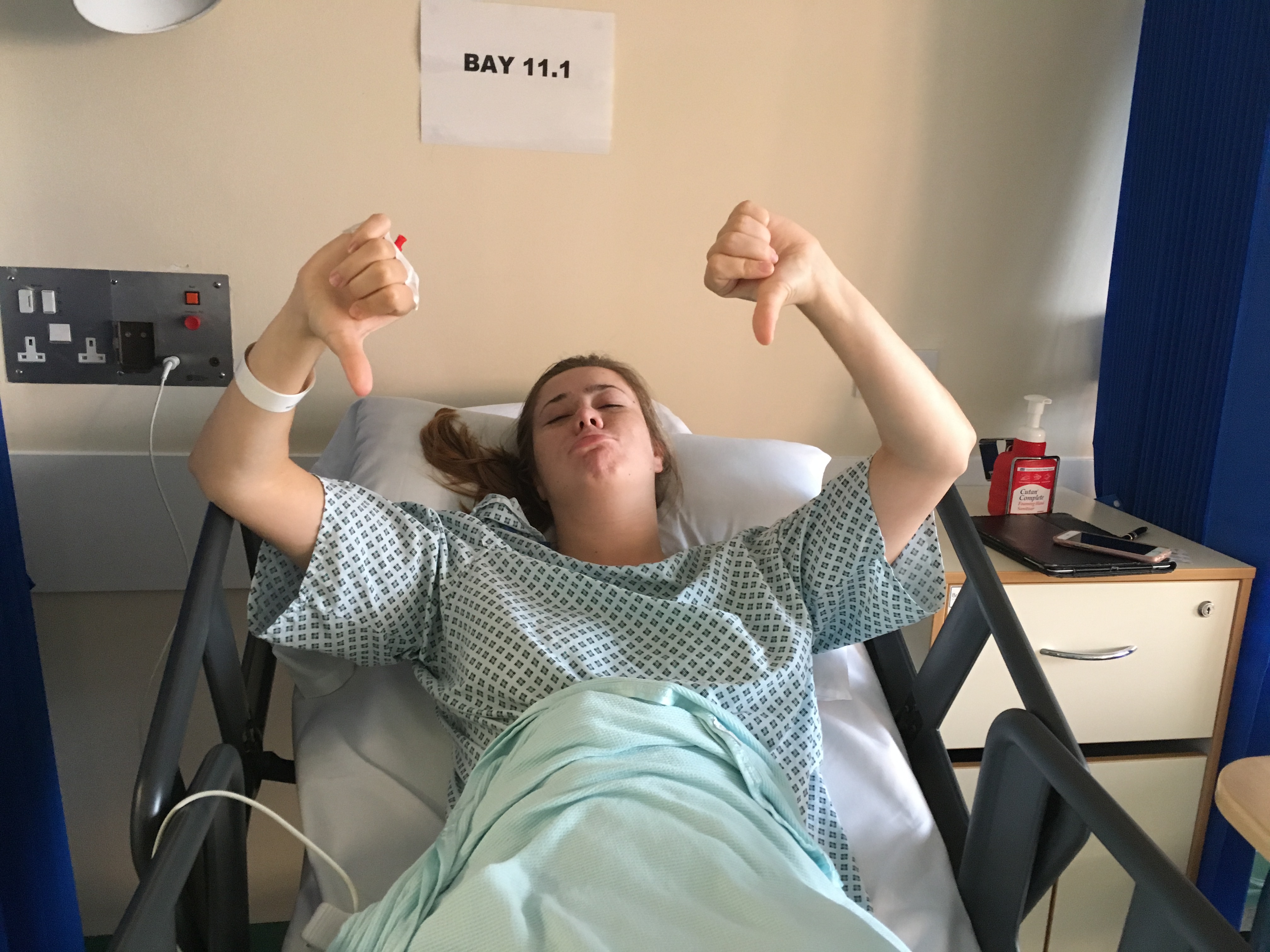
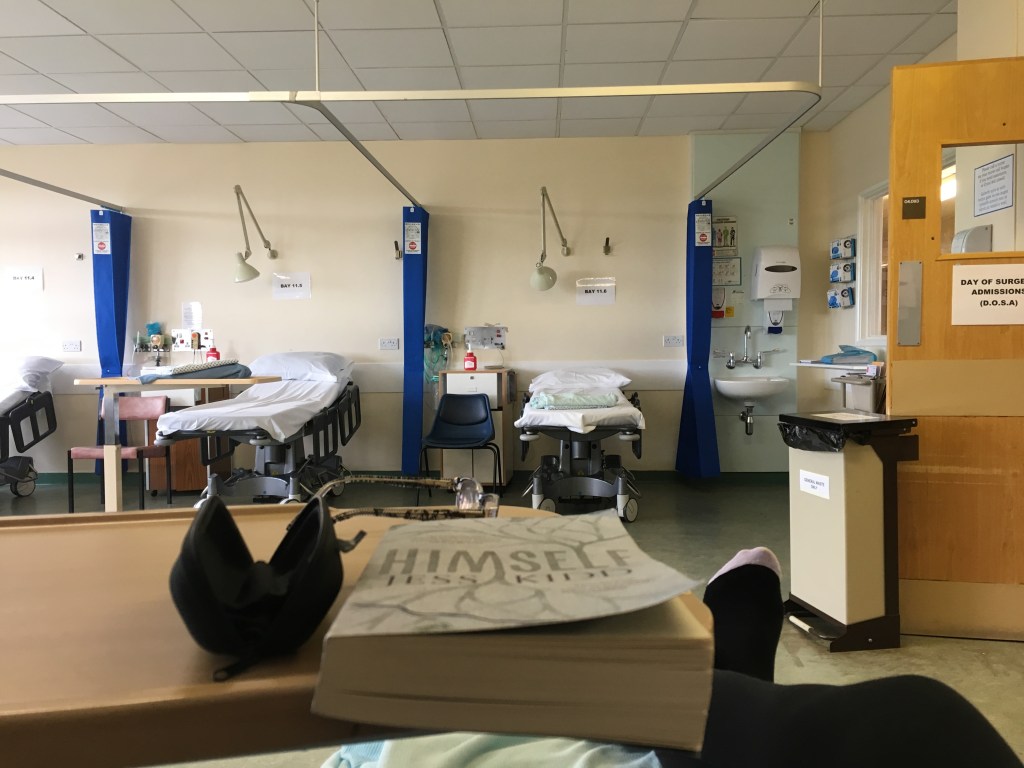
    A whole bay to myself

    We arrived at the hospital bright and early at 7:30am and they promptly told me I was first on the list of two – thank you summer holidays! I was actually relieved to find myself in pain on this particular morning. By my logic, if it was causing me pain then they would be able to see whatever was causing it in action. My anaesthetist Dr G and his student came to see me first – they were super friendly and informative throughout the whole day. Then Dr M’s registrar, so my second gynae, who I hadn’t met before showed up and we rewrote my consent form and ran through what was going to happen. They would go in for a look, if there was nothing I would only have the one incision, if there was anything wrong it could be up to four. Then I got to see Dr M who would be performing the laparoscopy. He is not a man of many words, our second and final meeting was brief.

    Gowned, naked and exposed I was wheeled down to the prep room where people stuck various things to me and in me while asking what I write about – “female health, actually!” Dr G was hosting an A level student and so everything was explained above me as they administered painkillers and then anaesthetic to my cannula, before Dr G said “see you in half an hour – or an hour if we find anything! Think of nice dreams now and you’ll wake up to nice things’.

    IMG_6627
    Gowned, naked, exposed and HOPEFUL

    ‘OK’ I thought, ‘I’ll dream of a diagnosis…’

    Opening my eyes in recovery I immediately clocked (literally) that it had been over an hour. First shot of relief. The nurse was asking me questions but I had zero interest in them so I immediately asked ‘how many holes?’ Understandably confused she asked what I meant, to which I very eloquently clarified ‘how many pokey holes?’ while pointing at my belly. She lifted my blanket and gown and confirmed, ‘two pokey holes’. Second shot of relief. ‘Looks like you’ve had a couple of cysts removed, love’ were her next words. TWELVE SHOTS OF RELIEF.

    Cysts! I can handle cysts. I’ve tested negative for polycystic ovaries so if it’s just a couple of cysts that might rectify everything. This was the best case scenario! Hurrah! Contented with relief I now answered her actual questions. Yes, I did feel sick, but only because I’d had a breathing aid down my throat. Yes, I would like some pain relief. No, I didn’t have a headache. She then handed me and my file to my ward manager Viv with the words ‘she’s had a cyst removed’. Hmm, ‘cyst’ singular this time. First shot of doubt.

    IMG_6642
    Cysts? No cysts? Who cares when you’re this good looking?

    Wheeled back to my mum I said ‘cyst! Or cysts! I’m not sure’. Then it was my mums turn for relief, she also knew that in this case no news was not necessarily good news. She called my dad and let my sisters know what was going on while we waited for the gynaes to come and talk to us. I was in a fair bit of pain at this point, but it seemed, it was worth it. And then in marched the gynaecological registrar, no Dr M. I smiled at him, waiting for confirmation that I wasn’t insane. ‘So the surgery all went well, we didn’t find any endometriosis. There was a 2cm cyst but obviously that’s just a normal ovulation cyst. So yeah, good news really because nothing’s wrong, bad news because we don’t know what’s causing your pain’.

    Oh.

    So I didn’t have any cysts removed. But I did have a cyst, an ovulation cyst. I’m ovulating. I could’ve bloody told them that from Clue which had already notified me of that very fact. I just frowned at my mum while she asked actual questions. I was, am, gutted. ‘Whatever it is, it’s not gynaecological,’ he informed us. Apparently, after everything, my uterus is a ‘nice and healthy looking uterus’. Even my ovaries are in the right place.

    IMG_6630
    Alive, but unimpressed

    Worried about my risk of clots on the drive back to Essex, Dr G ordered a blood thinner, but otherwise, a few more painkillers and lunch and we were on the road by 2pm. I love lasagne and rice pudding, but they only marginally cheered me up.

    A few days on, I’ve had time to process and I am realising how grateful I should be that whatever the problem is, it doesn’t lie in my reproductive health. Maybe whatever is wrong will be more treatable than the unknown entity of endo. But I am equally disillusioned with the idea of having to start this entire process all over again, in Essex of all places where GP appointments are much harder to come by than in Swansea. #ToryBritain.

    It is difficult to go through such an invasive procedure and to be none the wiser afterwards. Endometriosis needs an easier diagnosis method. I knew that before, but if there had been a less invasive way to rule endo out of the equation, it would have saved a lot of heartache. Not receiving a diagnosis initially felt like I needed to just bounce back, having wasted everyone’s time. But I have had two pokey holes poked, and the hope being taken as quickly as it was given has left me with a bit of emotional whiplash. Besides, the surgery didn’t reveal nothing. I know now that this pain isn’t gynaecological and that my reproductive health is in fact, healthy – though it would be nice if I could actually use it. What pain I do have is calmed down by paracetamol but is noticeably worse in the evenings.

    Physical recovery wise, I’m starting to feel good. I’m sleepy, moany and achey but I’m walking around and irritating my family with little hindrance. During a diagnostic laparoscopy they fill your abdomen up with carbon dioxide, which has left for some interesting bloating. The wounds are seemingly healing well but the area is very sore and my belly button no longer looks like my belly button. It looks a bit like they’ve untied it and then retied it differently. I’ve had some vaginal bleeding but nothing major. I was shocked back into sanitary towel usage when I discovered a pad literally wedged between my legs after surgery. They assure me tampons and cups will be fine to use for my next period though.

    FullSizeRender
    Proof that they really fill and tie you up like a balloon…

    Chances are, if it’s not my womb then it’s probably my bladder or bowel. Already, my right side, where most of my ‘period/ovulation’ pain is focussed, has swollen and is much more painful than the left following the surgery, meaning I’m still very suspicious of the area. I daren’t speculate, especially since the registrar, who made a point of saying he would not speculate, proceeded to speculate far enough to suggest I might need to go gluten-free (The horror!) I have had a plethora of bladder issues from the age of two till eleven, that restarted around the age of eighteen, so I think we will first explore the bladder.

    What for this blog then, you ask? Well I think things are likely to get less menstrual (though who are we kidding, probably not). Whatever the problem is, it is either worsening or being worsened by my menstrual cycle so I don’t think we’re done there. But while we wait for hospitals, doctors, practices and two countries to sort their shit out transferring and referring me, I think it’s likely that these blogs might begin to take up the other meaning of Periodically – in that they will occur from time to time.

    Thank you everyone for the well wishes over the past couple of weeks. Even if it’s reluctant, I’m looking forward to exploring yet another part of my body in the hope of a future with a bit less pain.

    IMG_6662
    For now though: walkies, reading and puppy snugs!


  • The menstrual cup is disgusting – until it’s not #Periodically 7

    The menstrual cup is disgusting – until it’s not #Periodically 7

    Sorry mum – you’re really going to hate this one. It’s your least favourite topic my large repertoire of vaginal related discussion – the menstrual cup. 

    I started reading articles and blogs, even watching vlogs, about people with uteruses’ experiences with menstrual cups probably about a year ago, when I began to get a period every month. Given the torment of my bleed I was buying at least one box of tampons and one pack of sanitary towels every month, and it was adding up. The financial benefits of the cup were very attractive.

    However, I despised those who sang the praises of the blessed bloody cup. There were dozens of articles and blogs where people lamented about how ‘once you try the cup there’s no going back’. How lives had been changed, transformed, improved. “What a load of bollocks,” I thought. Of course there were positives, but the emotion being expressed towards a piece of silicone that gets shoved up ones vagina, was bonkers.

    Instead, I relished in the, often comedic, articles about how horrific trial runs of cups had derailed. Women who had to call in the aid of flatmates, boyfriends and mothers to fish cups out of there apparent venus fly traps. “I tried a menstrual cup and NEVER AGAIN EVER NO NEVER” were often the type of headline that went along with such stories. They were very funny, but also sounded quite traumatic – they were very much how I imagined my experience going.

    And I wasn’t wrong. I first tried, after internet advice, to use the cup a few days before my period was due – no joy, I couldn’t get the damn thing in. Even though I knew full well that I hadn’t the foggiest idea how I was going to insert it, a few days later I tried while I was on my period. What a mistake. Total carnage. Texts were sent, tears were shed, photos were taken (don’t worry – I can’t even bring myself to look). Somehow, I thought I had actually inserted the cup – well, no I had inserted it but the point is I had inserted it badly – and an hour after sitting at my desk thinking how well it was all going I went to check and that’s when the bathroom fast transformed into a crime scene.

    I don’t know how or why but the cup made my period heavier and more painful that it already was, leaving me doubled up in more ways than one and swearing that I would never go near the damn thing again. But, a bit like labour actually, four weeks later I had put the turmoil, and the photo, behind me and I was ready to try again – but this time towards the end of my period (a much better idea). YouTube propped up on the bath, I relaxed my body and followed the YouTuber’s instructions on several ways to fold the cup. Some forty odd minutes later I had FOUND MY FOLD. That should be a hashtag, maybe it is – but hell, you really do discover which one is for you. #FindYourFold

    The next issue came in that I couldn’t get the ruddy thing to open up inside me, but again a little more YouTubing and foruming led me to the answer. I had no idea the pelvic floor muscles were equally as strong as pulling things into the vagina as they are at expelling them…

    The next couple of cycles were a bit hit or miss but gradually, the cup and I are beginning to become good friends. We’ve even been on holiday together! I still, for some unknown reason, have unexplainable leakage on day three every month but it’s nothing a pantyliner can’t handle and otherwise I am starting to understand why all those people loved their cups so much. I haven’t bought a box of tampons or towels in four months, I saved on some serious packing room in South America, the space I need to occupy in the bathroom has reduced, I can wear it while I anticipate my period and while it’s dying off (comfortably!), my environmental impact has been reduced and I no longer have to deal with overcrowded sanitary bins or making sure the pockets of every bag I own are sufficiently stocked. I’ve even gotten to know a lot about my wonky cervix and how often it moves (and oh how I gagged when I realised that was what had happened). What’s not to love?

    The answer to the latter question is the process. That’s what I think was missing from all those articles I read. Everyone either hated or loved their cup. I didn’t read a single article that said “stick with it, it’s going to be rough (read: disgusting) for a couple of cycles, but when you figure it out the benefits are really quite impressive”. So I’m going to say it. The menstrual cup? Stick with it, it’s going to be rough (read: disgusting) for a couple of cycles, but when you figure it out the benefits are really quite impressive.

    My period is always a weird time of the month for me, and it’s often quite painful – but the faff of actually having to deal with my period is gone now, and it’s a welcomed change to my cycle when so many other things make me want to hate it.

    Hilary’s menstrual cup recommendations (there’s something I never thought I’d write!)

    Where I purchased my cup (I have a meluna): http://www.femininewear.co.uk/ 
    The brilliant YouTube channel that got me where I am today: https://www.youtube.com/channel/UC5jJ_1US1DjRYJF_WU4sQ5w
    My fold! #FindYourFold: https://www.youtube.com/watch?v=m25SKJwWARY