Tag: laparoscopy

  • ‘It’s probably just the endo!’

    ‘It’s probably just the endo!’

    Recently, my body has been treating me to some different symptoms than I’m used to. Some are blasts from the past, others are brand new. Both have left me feeling more acutely unwell. My GP is on maternity leave so while I navigate these new bodily (mal)functions, I’ve been getting to know a couple of new doctors, or rather they’ve been getting to know me, in alarming detail… 

    Meeting a new doctor always brings up some sore feelings for me and involves going through the motions of doubt even the most well-meaning doctors seem to have, especially, but not limited to, believing women’s testimonies of pain. Once I got the endometriosis diagnosis confirmed, I remember thinking that although it was bad news, at least now doctors would have to believe me. Yet the last three times I’ve told a doctor that I have endometriosis, it has been met with scepticism. ‘So why do you think you have endometriosis?’, ‘we can’t know that for certain without surgery,’ ‘and has that been confirmed by laparoscopy?’ are the responses I’ve received. Perhaps I’m paranoid and I’m as suspicious of them as they are of me, but it immediately makes me cringe, knowing that what they’re really asking is: ‘is that a self-diagnosis?’ It stings all the more after I deliberately made a point of never saying ‘I have endometriosis’ before a surgeon found it – hell, didn’t I call it dementors? Another side to this is the uncomfortable truth that actually, I did think it was endometriosis, I did self-diagnose and I was right, it just took three and a half years and two surgeries for a doctor to concur. 

    At one of these appointments the doctor wanted to perform a pelvic exam. I asked if there was a way I could do what needed to be done myself and when she said no, I explained my hesitation around pelvic exams, the associated pain and my pelvic floor dysfunction. Minutes later, when I’m crying in pain and she can’t find my cervix, the doctor looked up between my legs in panic and said,  ‘oh god, is it like this for you every time? I’ll try to be quick!’ She was visibly quite shocked and suddenly started asking more questions and taking me seriously. I just sat there thinking about how the examination didn’t need to be like that, if only you’d listened to, believed and processed what I said before it. Why else would I have said it? I would love to know the answer to this question because I reckon it’s steeped in unconscious biases. Doctor friends, enlighten me! Let’s fix this! 

    Back to the present day, I’ve still got eight months until my appointment with my new gynaecologist, the first endometriosis specialist I’ll have ever seen. I’m also a month away from a colonoscopy. After months of recurrent rectal bleeding I had a slightly more serious ‘episode’ (it was actually hours after the aforementioned pelvic exam). Apparently I should have taken myself to A&E, instead I went home, freaked out and went to sleep. I’m now in a sense of heightened anxiety about going to the loo, because if there is a repeat of this episode, then I’m under strict instructions to take myself straight to hospital. My GP went through the possible outcomes of the colonoscopy, many of which are a little scary, before ending rather perkily with the alternative outcome: ‘it’s probably just the endometriosis!’ 

    While I’m patiently waiting for this mystery to be solved or at least identified, of course my body decided to help me along by giving me a UTI followed by the familiar feeling of kidney pain, sending me to the out of hours doctor on a Saturday night with a suspected kidney infection. The doctor concluded it was either the beginning of a kidney infection or the end of a serious UTI and to keep an eye on it, and then, just as I was leaving the consultation room, she added, ‘it’s also probable it’s just the endo. It can cause a lot of pain, you know.’ 

    I’ve heard that logic twice in two weeks. ‘It’s probably just the endo!’ Is it supposed to reassure me? I don’t want it to be the endo. I don’t want to have to deal with the fact that endometriosis has taken over my bowels and urinary system as well as my sexual and reproductive organs, mostly because, in all likelihood, no one will know what to do with that information. At least we know how to treat kidney infections. Saying, ‘it’s probably just the endo,’ however true it might be, is not particularly helpful or likely to result in relief any time soon. 

    The doctor I will see later this year recently appeared on a Flemish documentary about endometriosis and I was very happy to hear her say that she works together with gastroenterologists and urologists, knowing that more than one expertise is needed to deal with endometriosis. This gives me a lot of hope in the case that these unexpected symptoms are ‘just the endo.’ I just hope my body can cool the drama until then. In the meantime, the colonoscopy will take place in French and my new gynaecologist is in Flanders, so I have some vocab to swot up on… 

    Next month is endometriosis awareness month! Endometriosis UK are running an #EndoTheStigma campaign and are running lots of great online events including this one on Endometriosis and Sex during COVID-19, get involved!   

    Also, did you hear? The Birthrights charity is convening a national inquiry into racial injustice in maternity care. This is a long time coming, follow its progress here

  • Vindication, endometriosis & some Douglas bloke | Pleasure Moans #3

    Vindication, endometriosis & some Douglas bloke | Pleasure Moans #3

    In my last blog I detailed my hesitation and resistance to my gynaecologist’s suggestion that I have a second diagnostic laparoscopy (keyhole surgery) to look for endometriosis. It feels weird then, almost two months later, to be writing that this week I had that surgery.

    My hesitations varied from not wanting to repeat another painful and probably pointless surgery like the one I had in August 2017, to wanting an endometriosis specialist to be the one to go in for a second look, rather than a general gynaecologist. Once I received a date for the operation I was more certain than ever that I was going to be withdrawing my name from the waiting list, but I had an upcoming appointment with a different doctor that I had set as the deadline for my final decision.

    This other appointment was a bit of a cock-up – I was supposed to have been referred to a specialist gynaecology clinic in London but wires were crossed and somehow I ended up with a referral to a sexual health clinic in London that specialises in sexual pain. The problem was, the only female sexual pain the clinic deals with was superficial pain, relating to pain that occurs externally or on entry, like vaginismus and vulvodynia. While I have had some run-ins with superficial pain, my most persistent symptom over the last few years has been deep dyspareunia – that’s deep, internal pain during vaginal penetration.

    When I got to the appointment I was, as expected, greeted with, ‘why have you been sent here? We don’t deal with deep pain, that’s gynaecology.’ But I was kind of hoping I might be referred to that hospital’s gynaecology department because it’s one of the best. He decided to examine me anyway, and I realised this was going to be something of a new experience when he said, ‘oh we use stirrups a little differently here…’ One bizarre examination later and he agreed with me that superficial pain was not a primary issue but that it was present. He also said I appear to have some pelvic floor dysfunction which doesn’t surprise me at all. Physio is something I’ve been increasingly curious about over recent months.

    When it became clear that he wasn’t going to refer me to the hospital’s gynae unit, I just decided to ask, ‘do you think I should have a second laparoscopy?’ He took a sharp inhale and said something along the lines of, ‘I’m sure you get this a lot and are pretty fed up of it, but it sounds like endometriosis to me.’ He was right, I have been getting that a lot, increasingly so. He suggested some urological and gastrointestinal causes too, but then he went on to explain endometriosis to me in a way no one else ever had before. He said, ‘some women will be struggling with infertility, have absolutely no pain and a laparoscopy will find endometriosis in abundance. Other people will have serious, chronic pain and yet when endometriosis is found it will be a really small, localised amount, probably on or very near a nerve.’

    This, pardon the pun, really struck a nerve. My symptoms have improved so much since going on the pill that it seemed to me that if I did have endometriosis after all then there couldn’t be very much of it. So I started to focus in on the one symptom that hadn’t changed – deep dyspareunia. I asked around, did a lot of research (I’m particularly grateful for the resources on the Nancy’s Nook Endometriosis Education Facebook page) and discovered that deep dyspareunia is often associated with rectovaginal endometriosis and endometriosis found in the Pouch of Douglas (POD).

    Image result for rectouterine pouch

    ‘POD’ struck a chord. Why did I know those letters? I started sifting through my (now finally organised) records of appointments, examinations and scans and discovered that on one of my more troubling scans, where a persistent hemorrhagic cyst (commonly associated with endometriosis) was found, a very small, uneventful comment was written: ‘some free fluid seen in POD.’ The POD, evidently named after some Douglas bloke, is also known as the ‘rectouterine pouch’ or the ‘posterior pouch.’ It’s the seemingly useless ‘cul de sac’ between the uterus and the rectum. Intelligent design, eat your heart out. The more I read about endometriosis-related dyspareunia the more it all seemed to marry up with my symptoms (retroverted uterus, constipation after sex, deep dyspareunia).

    It was this discovery, as well as my first debilitating period in a year, that pushed me to say I would have the surgery in April after all. I was pretty steady in this decision, up until a week before where I promptly freaked out. My initial fear was that I going to die and it was all going to be my fault, but most of all, I was crippled by the fear of going through the entire process again to be told there was nothing wrong but to continue to be told that my symptoms sound like endometriosis. It’s an incredibly frustrating cycle. Once I talked myself off of that ledge I was determined to be as prepared as I possibly could be for the surgery. Looking at it now, I think I did a pretty good job.

    I had a full sheet of questions and concerns that I wanted to run by my gynaecologist before I let him operate on me, all of which he respectfully and sincerely answered. A few included:

    1. Please don’t stretch my vagina, as you suggested you might – OK
    2. Since deep dyspareunia is my most persistent symptom can you please check my POD and look out for rectovaginal endometriosis – it’s unlikely but sure, I would have looked anyway
    3. Will you open up my old scars or create new ones? A bit of both, personally I prefer going in from the left, so that would mean a new scar
    4. If you find endometriosis how will you treat it? Burn it
    5. Is excision surgery not an option? I hear that it’s better. If it’s significant then I would excise it, yes.

    Ecetera, etcetera.

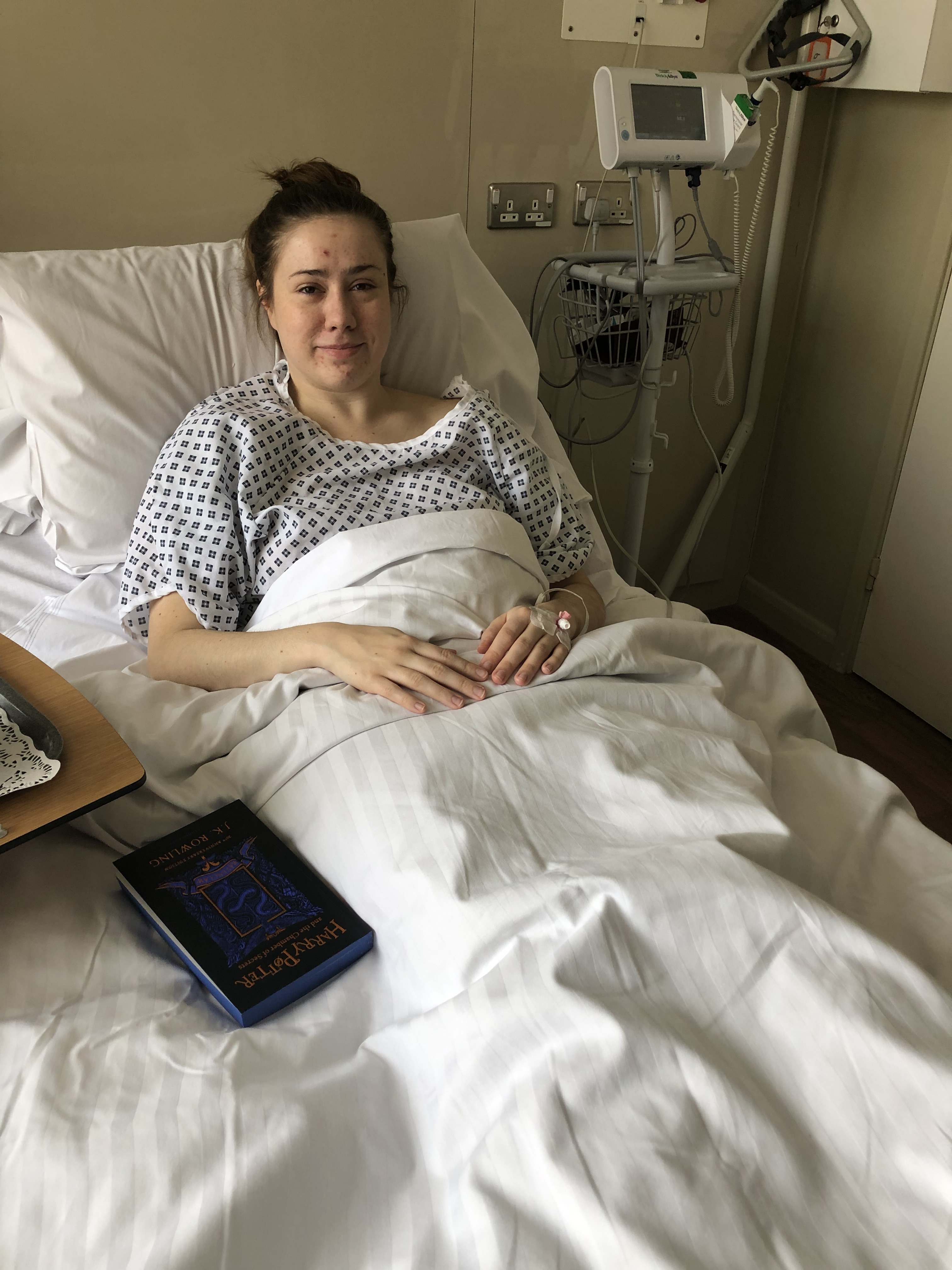
    Reassured by his answers and our rapport, I was readied for surgery and sat reading Chamber of Secrets until they came and got me.

    Inhale.

    A couple of hours later, exactly 20 months after my first disheartening surgery, my gynaecologist swaggered into recovery (where I was crying and swearing because my drugged-up self had come to the conclusion they hadn’t found anything) to tell me, ‘I found endometriosis in your Pouch of Douglas, it’s not in your head!’

    Exhale.

    IMG_7403
    Sore, surprised and a little smug

    It’s only been a few days and I’m still processing. It was a really tiny amount of endometriosis, but as I’ve been reminded time and time again, the severity of endometriosis does not correlate to pain. Giving myself endometriosis imposter syndrome at this point will help nothing.

    I can’t help but wonder what role my own advocacy and research played in finally get an, albeit tentative, answer. Would he have double-checked my POD if I hadn’t specifically done the research and asked him to? Would painful sex ever have been the symptom my doctors focussed on if I hadn’t forced them to? A widely touted statistic about endometriosis is that on average it takes 7.5 years to get a diagnosis, but that’s actually contested between 7 and 12 years. I’ve got here, where I’m not sure I have a diagnosis exactly but where I have had endometriosis discovered and treated, in three and a half years. But reaching this point has been a hell of a lot of hard work, physically and emotionally. I’ve been misdiagnosed with vaginismus, spent months attending psychosexual counselling, been placed on a pill that’s wreaked havoc with my skin and mood, taken anti-depressants for pain management, stopped running, stopped having sex, stopped socialising like a normal twenty-whatever-year-old. I’ve gained a lot too, knowledge, friends, writing gigs, a novel, job opportunities, a post-grad pathway I didn’t expect, a blog – but I am constantly curious about what the last three years might have looked like if my pain had been believed earlier, taken seriously sooner and treated promptly – by myself and by others.

    It’s not yet clear whether this is the beginning or the end of this particular experience. I have a million questions for my post-op appointment and I won’t know if the surgery has actually improved anything for months. But to have had the hysteria label lifted is hugely gratifying. Honestly, I feel vindicated because in my head the pain was never in my head. If that makes any sense at all.

    IMG_2795
    Of course, summer arrived the day after my op so I’ll be sporting some DVT stocking tan lines this year!

  • Recovery & do I Regret Having the Laparoscopy? #Periodically 12

    Recovery & do I Regret Having the Laparoscopy? #Periodically 12

    I am now over three weeks post-laparoscopy. I’ve started working, from home happily, and I could be doing a lot worse. But for the sake of record, I thought I better write about how everything’s healing up.

    Badly, is the answer.

    In my blog about the surgery itself I included this picture of my stomach’s ‘transformation’.

    FullSizeRender

    Unfortunately, I think shared my before and after photos a little prematurely. Ten days after the surgery my belly button, for want of a less disgusting word, exploded. Quite literally. But it was a bank holiday weekend and we were on the way to a party, so I slapped on a plaster and carried on. Towards the end of the party my belly button was so incredibly itchy, and as I changed the plaster I discovered the explosion had continued. Hoping it would go away I stuck another plaster on and continued with my life.

    IMG_6856
    I’ll spare you the close up, the live show made my sister gag, #sexy, but here’s how much worse it is from two days post-op.

    The Tuesday after the bank holiday I decided it was looking too suspicious and so I went to see a nurse at my new/old GP. She poked it a bit and said it wasn’t infected, covered it with an iodine gauze and said don’t shower or take the plaster off until I see you on Friday.

    Friday rolls around slowly with a lot of itching, moaning and stinging. When the nurse and the doctor remove the plaster, hoping to see a nice, dried up wound, they instead find three blisters where the lower half of the wound had been. ‘Huh, I’ve never seen that before’ is yet another thing I had never hoped to hear about my body.

    Still not convinced that this new mass growing out of me, like something from Alien, was infected, the doctor umed and ahed before saying ‘it’s the weekend – give her some antibiotics’. So the weekend went by with me being pumped full of penicillin, taking awkward half body showers, all while the delightful wound continued to blister and get redder and angrier.

    Another Tuesday later I’m back at the doctors being inspected and prodded. Still not thinking its infected, the doctor concluded it must be some sort of ‘skin reaction’ and so then I was prescribed Fucidin H (an antibiotic + steroid combo) to rub on this, the world’s most disgusting wound. During this appointment the doctor asked about my pain and pushed on my abdomen. Since my files haven’t correctly transferred from Swansea, trying to explain ‘yes it hurts but it often hurts anyway’ was a little longwinded.

    As I write this I’ve returned from the doctors again where this time two doctors had a gander. It looks like I have hyperkeratosis, meaning that the skin is out overgrowing itself. The result is that I might have a bit more of a scar than expected.

    SO THE PHYSICAL RECOVERY IS GOING GREAT. Anything too strenuous still hurts, jumping and such, and long walks conjure up some stomach pain on top of the preexisting pelvic pain so that’s nice. Meanwhile the other wound is acting quite proper and is healing up nicely. An actual nice surprise was that my cycle hasn’t been effected by the surgery at all. My period came rather promptly and behaved fairly normally.

    Given the increasingly bizarre situation of my belly button my mum said to me the other day ‘I wish you’d never had this laparoscopy’. I’ve been mulling that sentence over for a few days now. Do I regret having the surgery? After all, it didn’t find the cause of my pain and it has temporarily deformed and possibly permanently scared my abdomen.

    I can’t bring myself to regret having the surgery. Firstly, it was never really a choice. I was handed from doctor to doctor and they said ‘hey next step is surgery’ and I said ‘hey OK’. It was never an active decision, it was medical practice and advice. Every single one of my symptoms points, or pointed, towards my reproductive health. Checking my uterus out surgically when an ultrasound had displayed nothing, was the next logical step. In fact at that point in time, it was the only step. Now that we know my reproductive health is in tip top condition, we can re-giggle my symptoms and look at my body in a ‘well we know it’s not that so could it be…’ kind of way. The final reason is that to wish I’d never had the surgery achieves literally nothing. I’ve had it, it happened, we know what we know. I wish I knew more, but I don’t BUT I will. Of course it’s frustrating, but powering on is the only fruitful attitude to have.

    Besides, no one ever really saw my belly button anyway – I’ve never been one for crop tops.