Tag: Health

  • Gynaecological Whiplash #Periodically 15

    Gynaecological Whiplash #Periodically 15

    I feel like I should start this blog with a “Previously on #Periodically…” but it might just be easier to read Periodically 10, 11 and 12 if you’re new. If you (understandably) can’t be bothered, here’s the gist: in August I had laparoscopic surgery to look for endometriosis, they found nothing but a regular (functional/ovulation) cyst on my right ovary and said there was “no gynaecological cause of pain”. While my belly button took some recovery meanders, I readied myself for my first doctors appointment since moving back to Essex and to look beyond gynaecology (towards bowels and bladder) to find a cause for my pelvic pain. Since then I’ve processed the news and the language issues I was worrying about in Articulating Pain – saying “dementors” instead of pelvic pain has stuck pretty firmly in my vocabulary.

    I must confess, trying to find the words to articulate how confused I am at the moment is proving difficult. Every time I process one fact, something contradicts it and I’m in a new hole of confusion and disillusion. So bear with me. 

    October started with September’s late period and a whole load of nauseating, black-out pain. And it really surprised me. I was surprised because by linguistically and medically disassociating my pain from my menstrual cycle, I think I thought the gynaecological symptoms would disassociate themselves too. Foolish, of course, but that period was a bit of a wake up call.

    Before my first GP appointment I had my symptom spiel ready, I’d checked that my discharge letter from Swansea had transferred and I was ready to start the process once again. Dr C, my new GP, listened to my symptoms, felt my abdomen, read the “no gynaecological cause of pain” letter, then turned to me and said “I am not convinced”. Excuse me? “I am not convinced that it is not gynaecological. You don’t experience painful periods or painful sex unless there is a gynaecological problem”. He ordered an ultrasound and some blood tests and said he would refer me to a gynaecologist.

    I was pissed off. I’d been jokingly forecasting that the doctor was going to refer me to a gyane in this appointment for weeks but I had been joking. I was mad, and my general attitude was “it has taken me 12 months to get to where I am now (which is nowhere) and now we’re going to start all over again from the same place”. Basically, I sulked for a fortnight. Until…

    This week, I headed to the ultrasound with my mum, confused as to why they hadn’t told me to drink a litre of water like last time. The reason I didn’t need any water was because it happened to be an internal ultrasound. Now they had my attention – I’d be moaning for months that it seemed strange to me that I’d never had one of these. While Dr T, who carried out the ultrasound, and the chaperone described the device as a “wet tampon”, I would describe it as a very solid USB dildo that’s plugged into a computer being watched by two doctors and your mum. To my surprise, it hurt almost as much as sex and has left me in the same horrible post-sex pain, but perhaps we now know why.

    I can’t believe I’m writing this. I have a cyst! Two actually, on my right ovary. Yep, what the fuck? Sorry I can’t be more eloquent about this but I am so beyond confused and conflicted at this point that the words in sentence putting is falling out of nick. (What?) One is a small 2cm functional cyst – potentially an ovulation cyst but where I was in my cycle would suggest otherwise. The other cyst however is over 4cm and looks like an hemorrhagic cyst, meaning it has been bled into, which is, get this, potentially an endometrioma or endometrioid cyst. Hmm, those words sound familiar, don’t they?

    Once I had my nickers back on my mum and I expressed our shock upon this discovery to Dr T, explaining the fruitless laparoscopy results just two months earlier. Dr T said: “what and the laparoscopy didn’t find any endometriosis? That’s funny because all your symptoms point towards that”. We all laughed and I went home with the promise that we’ll check to see if the cyst is still there and whether it has grown in six weeks.

    I say laugh but I mean a sort of hysterical confusion and shock induced gurgle. Now, to answer some question my friends have hit me with since the Great Cyst Discovery of October ’17:

    What does this mean? I don’t know.
    Why didn’t they find it in the surgery? I don’t know. It’s possible that it wasn’t there, or that cysts have come and gone and during the lap things just happened to be clear.
    Is this PCOS? I don’t know.
    Is this endometriosis? I don’t know.
    Will they take it out? I don’t know – seems unlikely given my favourite sentence “sometimes you just have to live with it” was uttered during this appointment.
    If they do, would you want to go through surgery (belly button nightmares) all over again? I don’t know.
    Did they actually do anything in the laparoscopy or did they just cut you open, have a cup of tea and then stitch you up (badly)? Maybe. No. A lot of my frustration earlier this week was directed at the surgeons in Swansea, but I know that’s unfair. They knew what they were doing, things must’ve been clear in August. Or maybe the functional cyst they saw was not as functional as they thought.

    I don’t know whether to be mad, happy or upset – I am just very confused. I guess I can say “ovulation pain” rather than “dementors with knives” again now? Plus there’s the fact the whiplash might continue if in six weeks the cyst has disappeared without a trace. I almost begin to get that fuzzy “I’m not imagining it all!” feeling, before I begin to wonder if I imagined the whole surgery in the first place.

    So things are once again painfully up in the air, but for now I am just grateful that despite my obvious doubt, Dr C listened to his gut.

    A bit lost? Don’t blame you. Find the rest of the #Periodically blogs here. Or if it’s a little too TMI for you, I blog about books too here and, finally, last week’s blog can be found here.

    wth

  • What I learnt at Clue last week #Periodically 14

    What I learnt at Clue last week #Periodically 14

    Nearly everyday I learn something new from the cycle tracking app Clue. Usually it’s about my own body, a new trend the app has noticed, a connection I thought was a coincidence that actually might be cycle related, or a fact that the app provides in its educational features. Last week however, I was lucky enough to make it to two of Clue’s events, as the blossoming company organised a week of talks in London.

    IMG_7099
    Tuesday at Facebook London

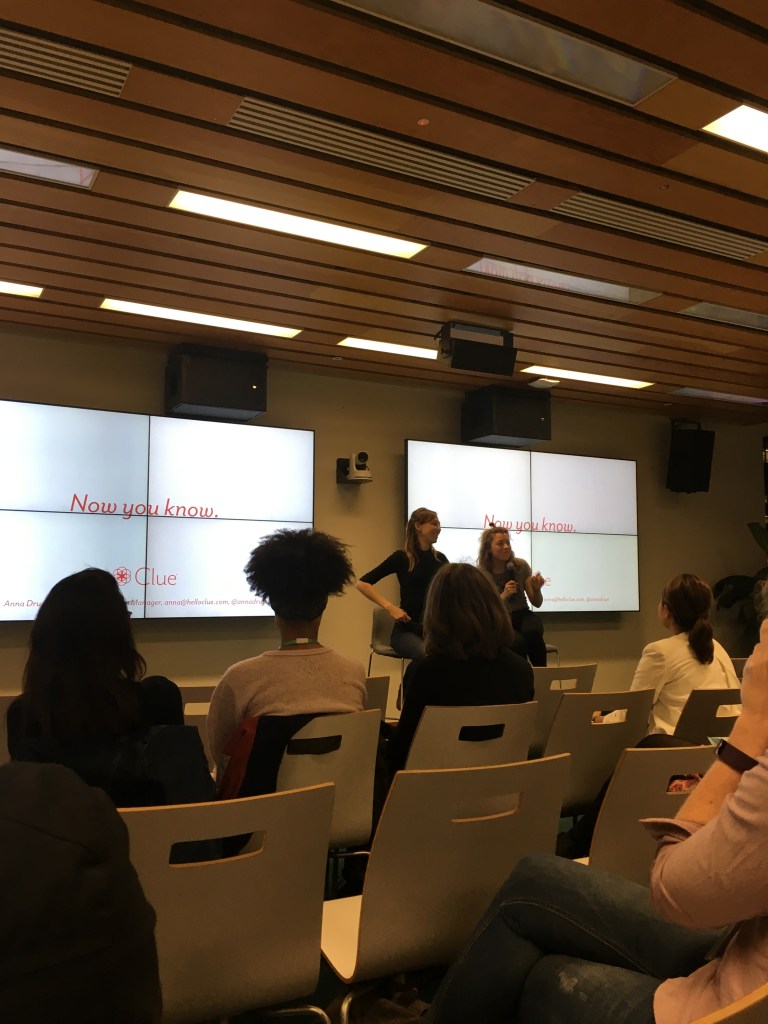
    On Tuesday evening I went to Facebook’s London HQ for a talk entitled ‘Hormones and the Cycle’ and on Wednesday I went to a ‘Lunch and Learn’ session on ‘Sex and the Cycle’. The events were brilliant and provided an opportunity to meet people from all walks of life, with one common interest – a desire to learn more about the menstrual cycle. The events were hosted by Clue’s Ambassador Program Manager, Maddie Sheesley, and its Researcher and Science & Education Manager, Anna Druet. This pair of brilliant FemTech advocates both fought the corner for how powerful education about reproductive health can be – teach a girl about her body and you can change the world.

    IMG_7116
    Runway East for Lunch on Wednesday

    So without further ado, here are a few things I learnt at Clue this week, that I didn’t know before.

    • PMS as a concept that was coined before we even knew about hormonal fluctuations in the menstrual cycle, and yet we still use the same information to talk about and categorise it. Clue have written about the rarely discussed positive effects of PMS. 
    • I knew that the cervix moved throughout the cycle (as I terrifyingly discovered when I was learning how to use the menstrual cup). What I didn’t know was that it moves up and down throughout your cycle, an occurrence that can improve, or at least change, how sex can feel. What’s more, the combined pill (that’s the standard birth control pill) stops the cervix from moving up and down, it potentially lowers slightly during a placebo week. There are also reports of cervical orgasms – who knew?!
    • Perhaps most interesting for me and my own health was learning that research strongly suggests that chronic pain is worse towards the end of the luteinising phase of one’s cycle – the run up to a period. I clarified at the event, was this reproductive chronic pains or all chronic pain? It is all chronic pain. So when I wrote a few weeks ago that ‘whatever the problem is, it is either worsening or being worsened by my menstrual cycle’ I was right on the money. Even if it’s my kidneys, my bladder, my bowels or elsewhere, it was always going to get worse around my period because pain tolerance goes down. Imagine how useful that knowledge would have over the last year if I’d had it. Knowledge of self is POWERFUL. 
    • Some research has suggested that a low risk of pregnancy can cause people to enjoy sex more – explaining potential peaks of sex drive near menstruation. I certainly know a lot of people that can attest that low risk of pregnancy is sexy.
    • Very early research suggests that the clitoris grows 1/5 of its size during ovulation. That is bonkers!
    • The level of Oestrogen in combined pills has been dropping over the years. Now they start low and build up if necessary.
    • Each time you’re late taking the combined pill the follicle grows slightly. So if you consistently, occasionally forget to take the pill on time, it can eventually lead to ovulation. That is terrifying (but also kind of cool). 
    • The Progesterone Only Pill (POP/Mini-Pill) stops pregnancy by changing the consistency of your cervical fluid to block sperm. I was on the mini-pill for two years and only now do I know how it works.
    • Emergency contraceptives aren’t all equally effective at every point in your cycle – also terrifying and not common knowledge.
    • Most methods (or all, I’m unsure) of tracking ovulation are retrospective –  we can’t yet predict when that moment is going to happen.

    Interestingly, many of the questions from the audience started with ‘I recently came off the pill…’ or similar. So it’s not just something I’m imagining, there is the demand for a contraceptive shake-up. The events did remind me how valuable and life-changing hormonal contraception can be, but if you ask me, there has to be a better way. One of my favourite things about Clue is that the data you input is used in research into the menstrual cycle, so while there’s so much more to learn, at least my data is helping the cause (I hope!)

    To keep up with what I’m doing, follow me on Twitter or Instagram for beautiful photos of my lunch with a side of condoms. Thanks, Clue! 


  • Does being ‘anti-pill’ make me a bad feminist? #Periodically 13

    Does being ‘anti-pill’ make me a bad feminist? #Periodically 13

    As discussed at great length (sorry) in A Tale of Two Pills I consider my relationship with hormonal contraceptives to be over. It is an unpopular opinion, one I’ve struggled to conclude myself for a long time.

    In my world, the pill has always been seen as this great feminist tool. It sat on its pedestal throughout my childhood promising independence, reproductive freedom, sexual liberation and professional advancement. All my feminist icons raved about it, my sisters took it, my friends’ acne had been cleared, boobs had flourished, pain had lessened and my school despised it – by the time I was a teenager it was the most attractive piece of candy I had ever laid my eyes on. It symbolised maturity and being a strong, no nonsense woman. Until of course, I started taking it.

    IMG_9726

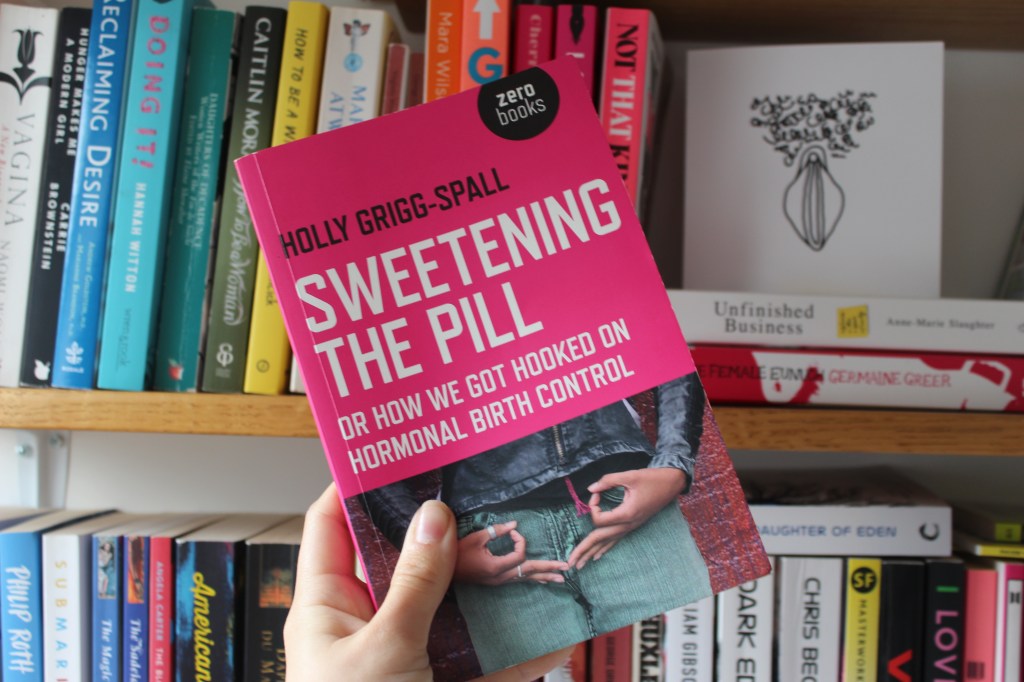
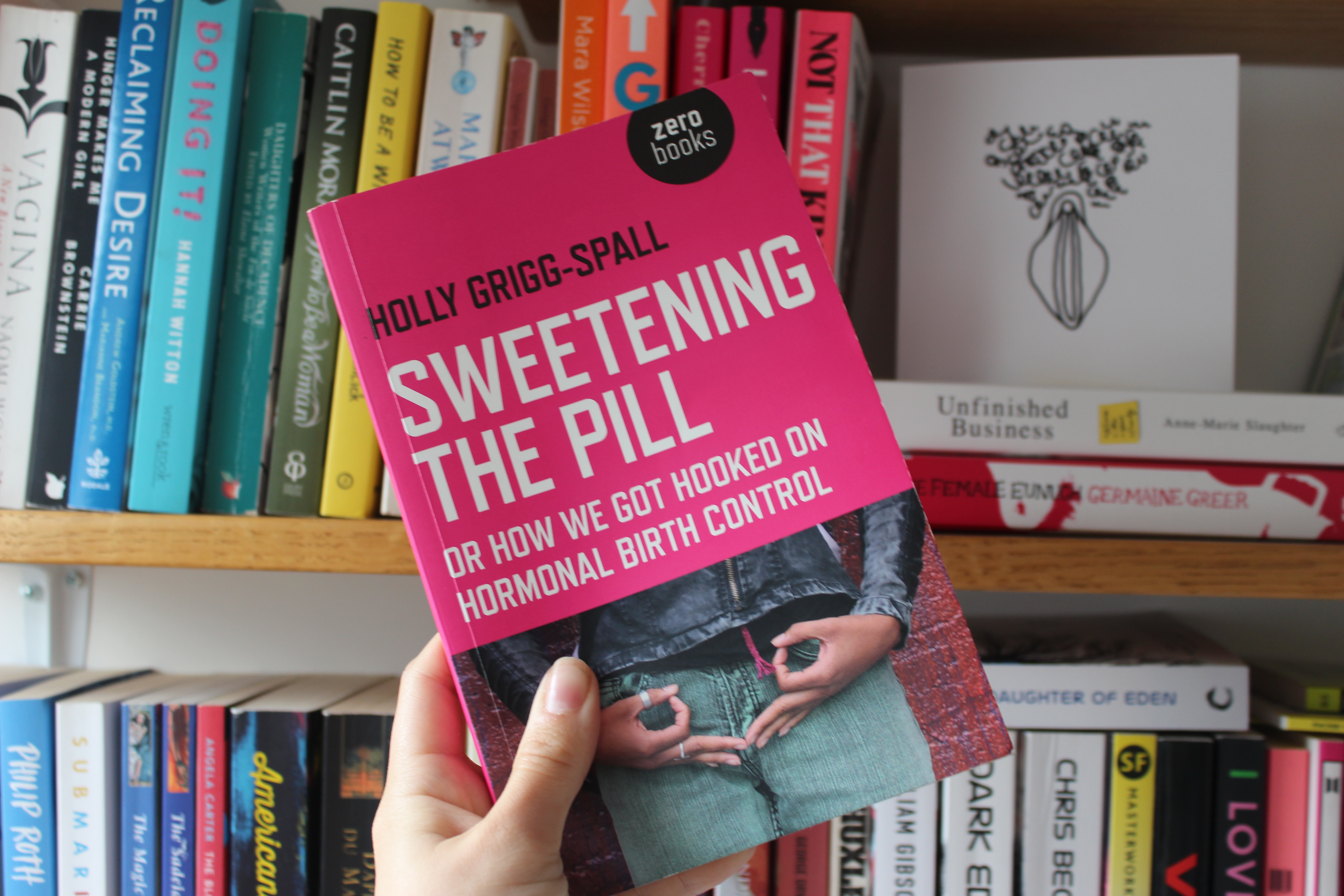
    Last week I read Sweetening the Pill: or How We Got Hooked on Hormonal Birth Control by Holly Grigg-Spall. I’ve been following Holly’s stuff for a couple of years or so now, but it took my longer than I care to admit to get to the book itself. While I can’t say I agree with everything suggested in Sweetening the Pill there were dozens and dozens of moments where I found myself saying ‘so it’s not just me!’

    “The pill is a rejection of femaleness. In swallowing the tablets women are swallowing the negative connotations that are attached to female biology,” Page 34. 

    When you strip the pill back of all the obvious benefits our doctors, and in America, the pharmaceutical companies rave about, you begin to realise that what the pill actually offers is a cure to femaleness. Hormonal acne? Take the pill. Horrible PMS? Take the pill. Heavy bleeds? Pill. Time of work due to menstruation? Pill! Period pain? Pill. And that’s before they start saying ‘hey you don’t need a period at all’ (to which the answer is the mini pill, implant or injection).

    “In lowering the hormonal levels and flattening out the fluctuations the pill takes away the natural peak of libido women experience in connection with ovulation and sometimes pre-menstruation,” page 50.

    I think the most poignant moment of Sweetening the Pill for me was the idea that when you try to suppress the natural lows of a menstrual cycle, you also inadvertently begin to suppress the natural highs. Menstrual cycles are (duh!) cyclical – that doesn’t have to be a bad thing. Good skin and hair days are often just as common as bad ones, randy days can be just as common as days when you don’t want anyone to come near you. In fact, your cycle can work for you, it’s not always a question of fighting it. Problem is, we don’t get to know how our cycle works. It can take up to six years for a menstrual cycle to mature, I was on the pill just over two years after I started my period and it took a year to become regular after I came off the pill. For many women, life on the pill is all we really know and the withdrawal from it can be so scary that it frightens us back onto the pill.

    It’s scary because when you start to think about it, you can’t not think about it. Why are we taking a pill every day when we’re only actually fertile for a few days every cycle – ought we not limit our scope a bit?

    As the book discusses at the length, the ‘anti-pill’ rhetoric has always been dominated by the Religious Right. It’s what put me off. I always assumed being opposed to the pill meant be anti-feminist, sexist and backwards. Thinking that people who spoke against the pill must be religious nuts was an opinion I held for a long time. It remains an unpopular opinion. When I talk to others about my experience with the pill I’m always sure to add the disclaimer ‘not that I’m at all suggesting you stop taking the pill,’ when actually I think that might be exactly what I’m suggesting.

    “FAM is absolutely not the same thing as the ineffective Rhythm Method, which tries to predict fertility based on the length of past cycles. Don’t believe those who tell you that FAM doesn’t work; women using it can achieve effectiveness rates as high as the pill – 99.4 percent.” Toni Weshler quoted in Sweetening the Pill, page 157. 

    What women, like myself, who have had issues with hormonal contraceptives need to do is demand more options, non-hormonal ones. Being done with hormonal birth control is not the same thing as being done with birth control. The book talks a lot about the Fertility Awareness Method (FAM). I had always associated it with the Rhythm Method, unsurprisingly preached about at my catholic school, that has been proven time and time again, not to work as a contraceptive method. Learning how FAM is different was really interesting, and it’s definitely something I’ll be looking into in the future. It’s fascinating to see how FAM and Femtech are beginning to offer an alternative.

    When the pill was released women had to stand up to their doctors to get the pill, today they must fight to get off it,” page 61. #RELATABLE 

    I want more options for female reproductive rights and I think we have the technology to find them – the research just isn’t happening as much as it should be, YET. Rejecting the pill from my own life hasn’t been an anti-feminist act but rather, it has been a feminist act of defiance for the benefit of my own quality of life, and the quality of life of other people in similar situations. In Sweetening the Pill Holly makes reference to hoards of other articles, journals and books, many of which I have now added to my reading list. Sadly, a lot of the evidence for hormonal birth control making women depressed, feel different (worse) and less libidinous is anecdotal and is rarely taken seriously. I’m hopeful that the more anecdotal evidence we report to our doctors, the more likely it will be that quantifiable research projects will take place.