Tag: Feminism

  • Clue Plus Review #Periodically 33

    Clue Plus Review #Periodically 33

    One of WordPress’ slightly creepier features allows me to see that a whole bunch of people have been coming to my blog looking for reviews of Clue Plus – the paid-for version of a popular menstrual tracking app. I reviewed it when it was called ‘premium’ and still super expensive, but now that the new and improved version has been rolled out I thought I would update you all on how I found two months using it.

    As mentioned, Clue has made its paid-for version much cheaper. In the UK it now only costs £0.83 a month if you buy a year at a time (£9.96), or £0.99 month-by-month, just a casual £33.03 cheaper than the original version – SO much more affordable. So what about the features, are they more interesting?

    Yes and no. I’ll get to the main feature, forecasts, in a minute but first I want to talk about what else is new. IMG_2986

    Sorry I couldn’t resist that picture placement… Other than the cheaper price and forecasts the only added feature on the paid-for version is that it now notifies you when your period or other menstrual symptoms are ‘out of normal range.’ This is pretty neat and it might help people take their problematic menstrual symptoms seriously, but it doesn’t (yet) consider other data you’ve inputted. For example, I got the alert below, but it didn’t take the fact I’d recently changed hormonal contraception into account and so a 22 day period threw my average off. But, I should add, this might be my fault for not taking advantage of the ‘exclude this cycle’ feature – which exists in the free version and is such a great idea.

    The main feature of Clue Plus is ‘forecasts.’ When Plus was first released it said ‘know the future’ on its call-to-action button, which completely undermined the meaning of the word ‘forecast’ (estimate) but that was soon gone. Unlike when I first trialled forecasts under Clue Premium I actually got forecasts this time – progress! Unfortunately,  notifications appeared sporadically and often in the evening, so I wasn’t sure if it was talking about today or tomorrow. They all come with one of several generic messages, meaning that if you get multiple forecasts one day things are likely to be repetitive, which ruins the great personalised feel Clue used to have. The cool thing about the forecasts feature is that it asks ‘did this happen today?’ and if you answer yes or no it will log it so you don’t have to.

    As for the accuracy of the forecasts… I’m not convinced but I think other forces are at play (in my body, not at Clue), and it makes me wonder: is there any point in tracking your cycle when you’re on hormonal contraception? When I was off the pill it was really interesting and almost fun to track my cycle because I could see how my mood, motivation, exercise habits, libido and acne all varied across it and how certain things, like staying up all night or having a cold, impacted my cycle. It was also vital in helping me spot trends that led me to seek medical help. But on the pill, there’s far less variation or ‘excitement’ and I find myself using and needing Clue less and less. I do use its pill reminder feature but annoyingly it’s been glitchy lately.

    There is one thing I’d love to see from Clue, that I *might* be willing to pay for, and that’s the ability to analyse two categories at the same time. I think this could really help people identify what’s causing pain or other symptoms. 

    So while Clue Plus is definitely an improvement on its last iteration, I’m not sure there’s much in it for someone on hormonal contraception like myself. I didn’t renew my membership but for now, at least, I still use the free version.

    Let me know if there are any other period or Femtech products you’d like to see me try and I’ll see what I can do! Check out my review of Natural Cycles here. 

  • Down a different rabbit hole… #Periodically 30

    Down a different rabbit hole… #Periodically 30

    For whatever reason, the area between my legs has always been a place of curiosity for me, perhaps not helped by my discovery of the vagina-brain connection theory discussed in Naomi Wolf’s Vagina. Recently, and with help from my psychosexual counsellor, I’ve realised that this ‘curiosity’ might have meant I always had a certain ‘vulnerability’ to something like vaginismus. Perhaps it was always lying in wait and it would just take an unfortunate combination of events to trigger it.

    But it’s not just the vagina that I’ve been curious about — for most of my life, the uninary system has caused the most trouble. The exploration into gynaecological causes of my pelvic pain over the last couple of years has overtaken a bit, especially since when I raised the subject of urology with my doctor last autumn, he said, “you don’t experience painful periods or painful sex unless there is a gynaecological problem.” It was only last winter, when I was clearing the loft with my mum and considering starting counselling, that I found some note cards from 2007 that made me wonder if my bladder might be playing a role in my present situation.

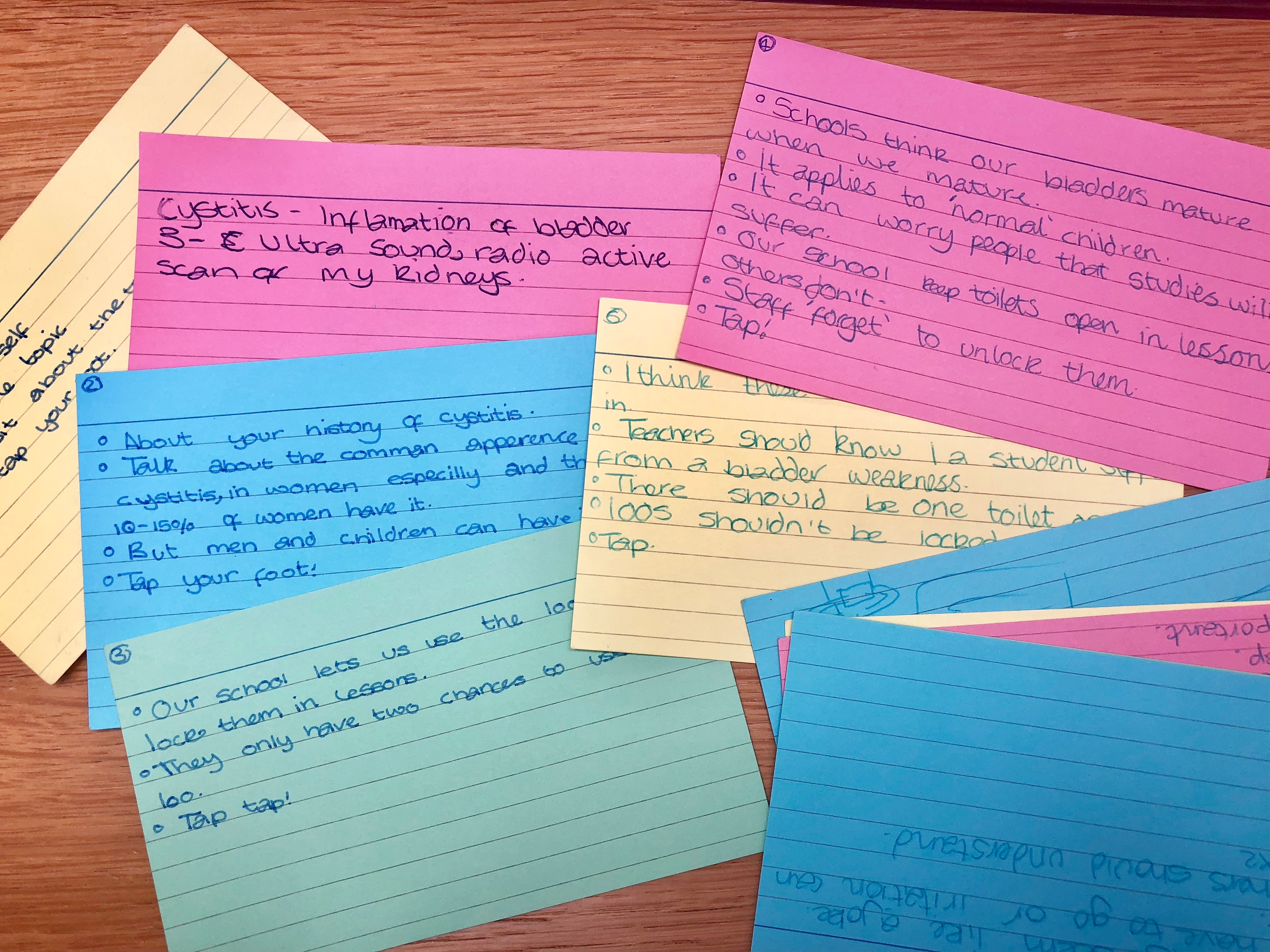
    IMG_2888
    Hilary’s obsession with bodily fluids circa 2007

    As part of a public speaking exercise, I chose to talk about cystitis and toilet access in schools. What inspires an eleven-year-old to give a speech about urinary tract infections (UTIs)? A long and complicated history with them and bladder weakness, even at eleven. I had a few kidney scans as a kid but the general consensus from my doctors back then was, “she’ll grow out of it.” Lo and behold I did not. The UTIs subsided during puberty, but once I started having sex they returned. I had a reputation as an obsessive pee-er as a kid, I planned my day around when and where I was going to wee, a habit I still sometimes catch myself practising now.

    Throughout this whole process investigating my bladder for something like interstitial cystitis seemed like such an obvious path to take and it’s finally happening. Last month I saw a urologist and, as always, I was armed with a list of things I thought relevant to mention, and for the first time ever, all the points on my list came up as a result of the doctor’s questions. I didn’t have to suggest anything myself. Dr K was immediately nodding and it was like my body was doing all the right (or wrong) things to have been sent to this department.

    Dr K has referred me for (yet another) ultrasound, took a urine sample and then started mentioning some elusive “other procedure” and because I’m a moron I didn’t actually ask what this third procedure was. And then a letter came in the post while I was on holiday informing me that fairly soon I’ll be having a camera up my urethra (flexible cystoscopy). OH GOOD.

    As always, I’m excited to explore another orifice (lol) but I’m worried about traumatising my body with another pelvic procedure, especially since I’ll be conscious for this one. I was given almost no information about what to expect or how to prepare other than to “bring some small change and a urine sample” — are the two connected? I rang the department to try and find out a little more and was told “it’s just like a smear test,” which is really helpful because a) I’ve never had one as I’m under 25, and b) pelvic examinations have been so painful in the past that I was diagnosed with vaginismus. So I wouldn’t say I’m feeling totally relaxed about the whole thing, but when I look back on the last two years with fresh urological eyes, there are a lot of unanswered questions. Like the fact my pain started around two memorable events, only my doctors chose to focus on one; a) a period so painful I left work to go home and vomit/cry and b) having a drink spiked and feeling like I was hungover for three months because of what turned out to be a bladder infection.

    My GP isn’t convinced that the answer to all my problems lies in my bladder, and neither am I. Going back on the pill certainly hasn’t ‘fixed’ me but my body’s reactions to it and the adjustments in how I take it have confirmed that there is undoubtedly something hormonally abnormal going on in my body. And yet I can’t shake the sneaking suspicion that a piece of the larger puzzle might be in my bladder.

  • Review: Promising Young Women

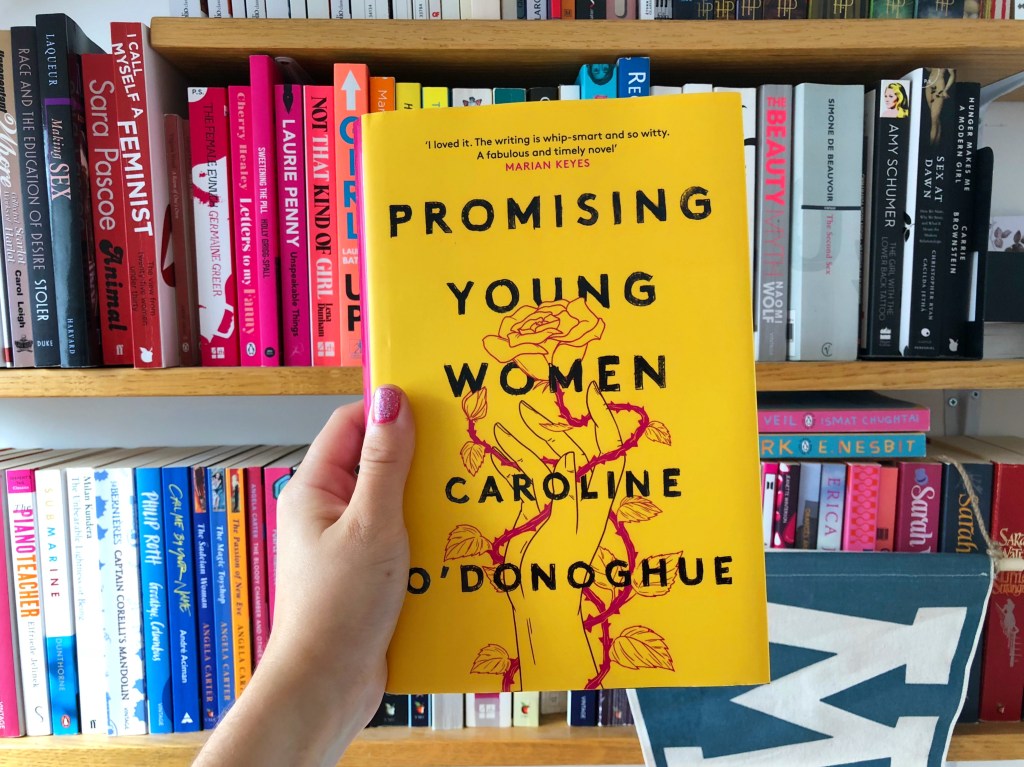
    Review: Promising Young Women

    Like with most stories that start with a twenty-something London-based office worker navigating the breakdown of a long-term relationship, your mind settles in for a harmless piece of Chick-Lit. And then Caroline O’Donoghue’s Promising Young Women knocks you off-centre by turning into something else entirely.

    The praise on the book’s sleeve repeatedly uses the word “gothic.” Thanks to a module I did in my final year at Swansea (brilliantly named Uncanny places and cyberspaces: Gender and the fantastic) I’m well aware that gothic tropes aren’t limited to stories set in haunted houses in the nineteenth century, but even so Promising Young Women does something totally refreshing with ideas of uncanniness. It’s a novel that proves how relevant gothic images, like starving women fading away, mirrors, periods and other bodily fluids, continue to be relevant and effective at portraying contemporary crises.

    “I don’t have a boyfriend or a fabulous career, and I think she’d like some better adjectives to describe me to her friends with.” – Promising Young Women

    At first, the book doesn’t have the most groundbreaking plot you’ve ever heard of (woman’s anonymous blog seeps into her real life) but O’Donoghue gradually gets under your skin as she tells Jane’s story. A story that while almost fantastical is likely to be relatable and understandable for any young working woman.

    The darkness and depth of this book creep up on you and by the time you’ve realised, you can’t put it down. Dealing with power imbalances (professional and romantic), mental illness and the false security of the Internet’s anonymity, this debut novel makes O’Donoghue one to watch.