Tag: Female Reproductive Health

  • Does being ‘anti-pill’ make me a bad feminist? #Periodically 13

    Does being ‘anti-pill’ make me a bad feminist? #Periodically 13

    As discussed at great length (sorry) in A Tale of Two Pills I consider my relationship with hormonal contraceptives to be over. It is an unpopular opinion, one I’ve struggled to conclude myself for a long time.

    In my world, the pill has always been seen as this great feminist tool. It sat on its pedestal throughout my childhood promising independence, reproductive freedom, sexual liberation and professional advancement. All my feminist icons raved about it, my sisters took it, my friends’ acne had been cleared, boobs had flourished, pain had lessened and my school despised it – by the time I was a teenager it was the most attractive piece of candy I had ever laid my eyes on. It symbolised maturity and being a strong, no nonsense woman. Until of course, I started taking it.
    IMG_9726

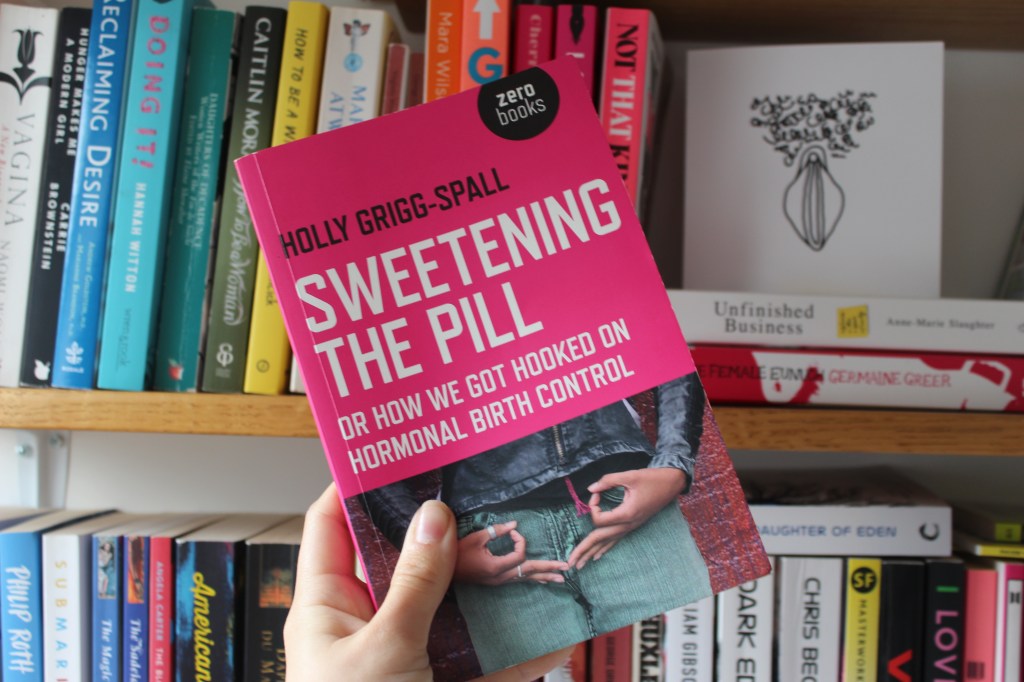
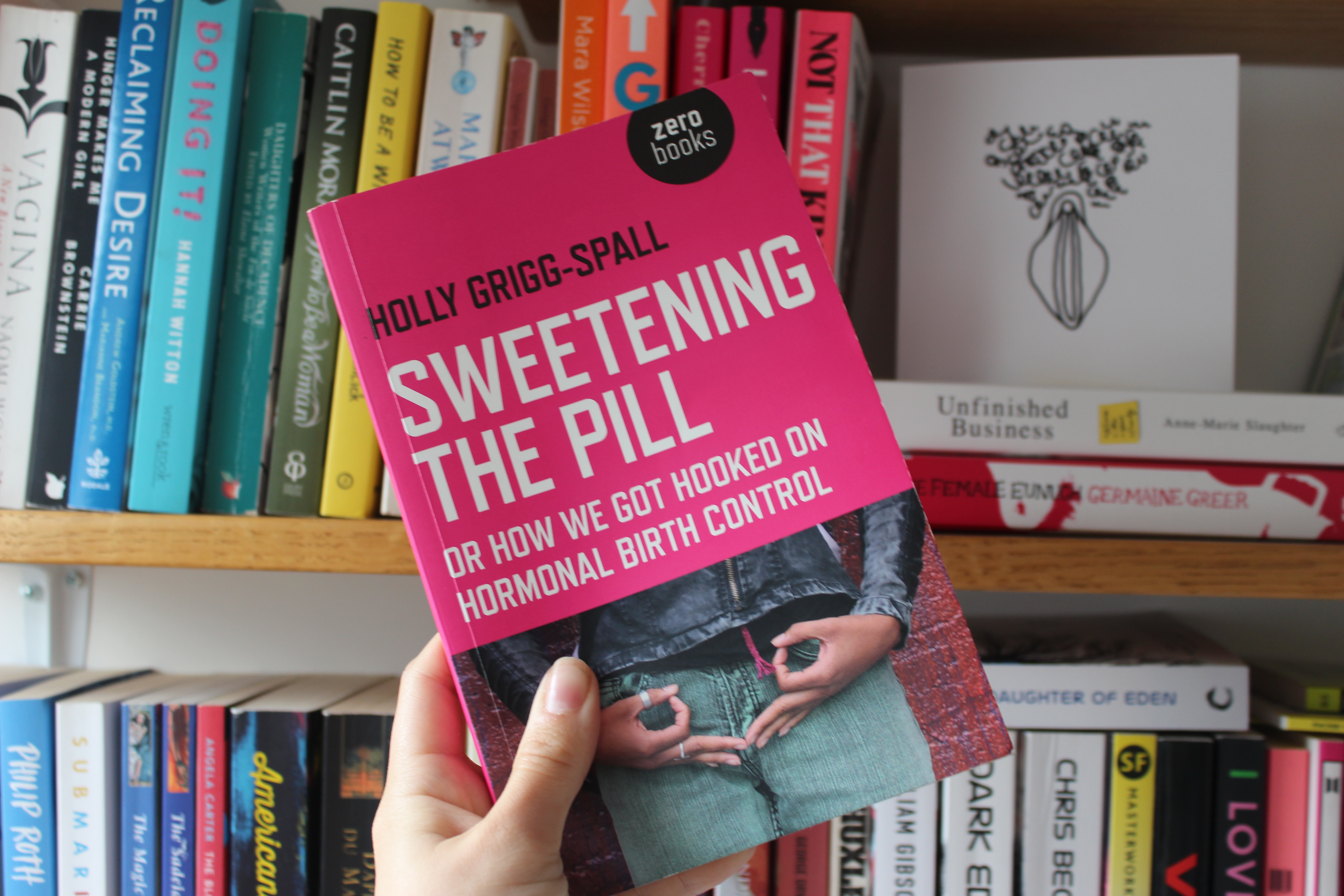
    Last week I read Sweetening the Pill: or How We Got Hooked on Hormonal Birth Control by Holly Grigg-Spall. I’ve been following Holly’s stuff for a couple of years or so now, but it took my longer than I care to admit to get to the book itself. While I can’t say I agree with everything suggested in Sweetening the Pill there were dozens and dozens of moments where I found myself saying ‘so it’s not just me!’

    “The pill is a rejection of femaleness. In swallowing the tablets women are swallowing the negative connotations that are attached to female biology,” Page 34. 

    When you strip the pill back of all the obvious benefits our doctors, and in America, the pharmaceutical companies rave about, you begin to realise that what the pill actually offers is a cure to femaleness. Hormonal acne? Take the pill. Horrible PMS? Take the pill. Heavy bleeds? Pill. Time of work due to menstruation? Pill! Period pain? Pill. And that’s before they start saying ‘hey you don’t need a period at all’ (to which the answer is the mini pill, implant or injection).

    “In lowering the hormonal levels and flattening out the fluctuations the pill takes away the natural peak of libido women experience in connection with ovulation and sometimes pre-menstruation,” page 50.

    I think the most poignant moment of Sweetening the Pill for me was the idea that when you try to suppress the natural lows of a menstrual cycle, you also inadvertently begin to suppress the natural highs. Menstrual cycles are (duh!) cyclical – that doesn’t have to be a bad thing. Good skin and hair days are often just as common as bad ones, randy days can be just as common as days when you don’t want anyone to come near you. In fact, your cycle can work for you, it’s not always a question of fighting it. Problem is, we don’t get to know how our cycle works. It can take up to six years for a menstrual cycle to mature, I was on the pill just over two years after I started my period and it took a year to become regular after I came off the pill. For many women, life on the pill is all we really know and the withdrawal from it can be so scary that it frightens us back onto the pill.

    It’s scary because when you start to think about it, you can’t not think about it. Why are we taking a pill every day when we’re only actually fertile for a few days every cycle – ought we not limit our scope a bit?

    As the book discusses at the length, the ‘anti-pill’ rhetoric has always been dominated by the Religious Right. It’s what put me off. I always assumed being opposed to the pill meant be anti-feminist, sexist and backwards. Thinking that people who spoke against the pill must be religious nuts was an opinion I held for a long time. It remains an unpopular opinion. When I talk to others about my experience with the pill I’m always sure to add the disclaimer ‘not that I’m at all suggesting you stop taking the pill,’ when actually I think that might be exactly what I’m suggesting.

    “FAM is absolutely not the same thing as the ineffective Rhythm Method, which tries to predict fertility based on the length of past cycles. Don’t believe those who tell you that FAM doesn’t work; women using it can achieve effectiveness rates as high as the pill – 99.4 percent.” Toni Weshler quoted in Sweetening the Pill, page 157. 

    What women, like myself, who have had issues with hormonal contraceptives need to do is demand more options, non-hormonal ones. Being done with hormonal birth control is not the same thing as being done with birth control. The book talks a lot about the Fertility Awareness Method (FAM). I had always associated it with the Rhythm Method, unsurprisingly preached about at my catholic school, that has been proven time and time again, not to work as a contraceptive method. Learning how FAM is different was really interesting, and it’s definitely something I’ll be looking into in the future. It’s fascinating to see how FAM and Femtech are beginning to offer an alternative.

    When the pill was released women had to stand up to their doctors to get the pill, today they must fight to get off it,” page 61. #RELATABLE 

    I want more options for female reproductive rights and I think we have the technology to find them – the research just isn’t happening as much as it should be, YET. Rejecting the pill from my own life hasn’t been an anti-feminist act but rather, it has been a feminist act of defiance for the benefit of my own quality of life, and the quality of life of other people in similar situations. In Sweetening the Pill Holly makes reference to hoards of other articles, journals and books, many of which I have now added to my reading list. Sadly, a lot of the evidence for hormonal birth control making women depressed, feel different (worse) and less libidinous is anecdotal and is rarely taken seriously. I’m hopeful that the more anecdotal evidence we report to our doctors, the more likely it will be that quantifiable research projects will take place.


  • Recovery & do I Regret Having the Laparoscopy? #Periodically 12

    Recovery & do I Regret Having the Laparoscopy? #Periodically 12

    I am now over three weeks post-laparoscopy. I’ve started working, from home happily, and I could be doing a lot worse. But for the sake of record, I thought I better write about how everything’s healing up.

    Badly, is the answer.

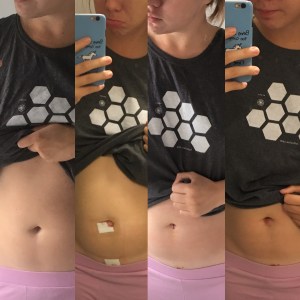
    In my blog about the surgery itself I included this picture of my stomach’s ‘transformation’.

    FullSizeRender

    Unfortunately, I think shared my before and after photos a little prematurely. Ten days after the surgery my belly button, for want of a less disgusting word, exploded. Quite literally. But it was a bank holiday weekend and we were on the way to a party, so I slapped on a plaster and carried on. Towards the end of the party my belly button was so incredibly itchy, and as I changed the plaster I discovered the explosion had continued. Hoping it would go away I stuck another plaster on and continued with my life.

    IMG_6856
    I’ll spare you the close up, the live show made my sister gag, #sexy, but here’s how much worse it is from two days post-op.

    The Tuesday after the bank holiday I decided it was looking too suspicious and so I went to see a nurse at my new/old GP. She poked it a bit and said it wasn’t infected, covered it with an iodine gauze and said don’t shower or take the plaster off until I see you on Friday.

    Friday rolls around slowly with a lot of itching, moaning and stinging. When the nurse and the doctor remove the plaster, hoping to see a nice, dried up wound, they instead find three blisters where the lower half of the wound had been. ‘Huh, I’ve never seen that before’ is yet another thing I had never hoped to hear about my body.

    Still not convinced that this new mass growing out of me, like something from Alien, was infected, the doctor umed and ahed before saying ‘it’s the weekend – give her some antibiotics’. So the weekend went by with me being pumped full of penicillin, taking awkward half body showers, all while the delightful wound continued to blister and get redder and angrier.

    Another Tuesday later I’m back at the doctors being inspected and prodded. Still not thinking its infected, the doctor concluded it must be some sort of ‘skin reaction’ and so then I was prescribed Fucidin H (an antibiotic + steroid combo) to rub on this, the world’s most disgusting wound. During this appointment the doctor asked about my pain and pushed on my abdomen. Since my files haven’t correctly transferred from Swansea, trying to explain ‘yes it hurts but it often hurts anyway’ was a little longwinded.

    As I write this I’ve returned from the doctors again where this time two doctors had a gander. It looks like I have hyperkeratosis, meaning that the skin is out overgrowing itself. The result is that I might have a bit more of a scar than expected.

    SO THE PHYSICAL RECOVERY IS GOING GREAT. Anything too strenuous still hurts, jumping and such, and long walks conjure up some stomach pain on top of the preexisting pelvic pain so that’s nice. Meanwhile the other wound is acting quite proper and is healing up nicely. An actual nice surprise was that my cycle hasn’t been effected by the surgery at all. My period came rather promptly and behaved fairly normally.

    Given the increasingly bizarre situation of my belly button my mum said to me the other day ‘I wish you’d never had this laparoscopy’. I’ve been mulling that sentence over for a few days now. Do I regret having the surgery? After all, it didn’t find the cause of my pain and it has temporarily deformed and possibly permanently scared my abdomen.

    I can’t bring myself to regret having the surgery. Firstly, it was never really a choice. I was handed from doctor to doctor and they said ‘hey next step is surgery’ and I said ‘hey OK’. It was never an active decision, it was medical practice and advice. Every single one of my symptoms points, or pointed, towards my reproductive health. Checking my uterus out surgically when an ultrasound had displayed nothing, was the next logical step. In fact at that point in time, it was the only step. Now that we know my reproductive health is in tip top condition, we can re-giggle my symptoms and look at my body in a ‘well we know it’s not that so could it be…’ kind of way. The final reason is that to wish I’d never had the surgery achieves literally nothing. I’ve had it, it happened, we know what we know. I wish I knew more, but I don’t BUT I will. Of course it’s frustrating, but powering on is the only fruitful attitude to have.

    Besides, no one ever really saw my belly button anyway – I’ve never been one for crop tops.

  • Articulating Pain #Periodically 11

    Articulating Pain #Periodically 11

    I think I have always been quite a moany person. When I was little I would moan about going to summer camp or after school club. As I got older I moaned about maths and music lessons. Then I started moaning about redundant news stories in prime time spots, the patriarchy and inequality, Brexit, tuition fees. Last week I was moaning about how annoying people were for moaning about Big Ben going quiet.

    I’ve also, from time to time, moaned about pain. I remember following my mum around the supermarket when I was eleven or so, complaining about a dull achey back ache. I moaned about the same pain when I started my period a few years later. I moaned about it even more when I started working at pizza delivery chains and the pain would present itself after an hour or so of a five hour standing shift.

    I have a family full of aches and pains. Moaning about back ache or knee pain is pretty normal business for us. Remarkably, given I have two older sisters, moaning about period pain wasn’t much of a thing in our house (until I hit puberty, that is). I remember texting my mum under the desk in French class the day after I started my period saying ‘I think I have period pain’ and she said ‘try to move around’. An answer I found very unhelpful at the beginning of double French.

    My friends say I moaned about my periods at sixth form. I can’t say I remember that – but it does sound like me. When I started university I was having monthly periods for the first time because of the pill, and that definitely made me more aware of my periods and the pain that accompanied them. I remember paracetamol, hot water bottles and bean bags becoming monthly essentials.

    Then of course I stopped having periods. I won’t go into that again. For the ‘fun’ of that adventure read A Tale of Two Pills.

    Fast forward a year and a half and I’m in Clermont-Ferrand, France. I’ve been off of the pill for three weeks and my boobs suddenly hurt. I moan about it and my parents and, quite rightly, tell me they don’t care. A week later I have my menarche 2.0. A week of tender breasts before my period starts is now a thing. It was never a thing before I was on the pill.

    This very second, I am using Clue and my old diaries to trace when exactly the pain got noteworthy. I had three periods that seemingly passed as nonevents and then we get to January 2015. After a 63 days cycle my period promptly started in a crêperie in Lyon three hours after a friend from home had arrived to visit. Two days later, I got up and began my long commute into the Rhône-Alps countryside and started to feel sick from some sort of new period pain. When I arrived at work I taught one class and then vomited in the toilet before going home – I never take sick days. Actually I’ll just quote my diary here, I think 2016 Hilary was quite eloquent about it:

    ‘I’m finally having a period but once I got to school I felt so faint and sick and there was basically blood pouring out of me. It was horrible. Very strange day, David Bowie died.’

    My next period, seven weeks later, appears in my diary as a divine event. It is the day I wrote a certain blood/vagina quote as discussed in Blood, Books and Vagina. I also wrote:

    ‘The more I learn about vaginas, periods, childbirth and motherhood the more my curiosity grows.’ 

    I was clearly on some sort of (hormone induced?) vagina trip. Though if you’ve read Blood, Books and Vagina you’ll know I had just read Naomi Wolf’s Vagina: A New Biography. 

    Right, so now we’re in March 2016. Once again I’ll leave it to past me (and Shania Twain, apparently):

    ‘Man, I feel like woman! Yesterday, for the first time in my life, I came on my period 28 days after my last period! Everything about this period is different but familiar… Today I feel like total shit and I cannot stop eating, but I know why and for the first time in three years I feel like me and my body are on the same page, yipee!’

    Oh young, naive girl. I don’t know where I got the idea that this was the dawn of a new age because this next cycle would go on to be 44 days, and the following would be 47. What is consistent on my Clue though, is the increase in cramps and ovulation pain. Around this time paracetamol stopped hacking it and I moved onto ibuprofen. Like sore boobs, ovulation pain was not something I experienced before I went on the pill. I have, until now, categorised it as sharp, often breathtaking pain, towards one side below my belly button, usually the right side.

    Once I started having sex again, the occurrence of these pains was no longer limited to where I was in my cycle. Suddenly I was having ovulation pain and period cramps three out of four weeks of a cycle, and recently four out of four (or five out of five). This includes weeks and months where I deliberately stop having sex, the pain continues regardless of my sex life, but is definitely worse when it’s active.

    Yet, it now seems that those pains are not ‘period cramps’ or ‘ovulation pain’. After last week’s ruling that whatever is causing my pain it is not gynaecological, I am stumped for how exactly I now talk about my pain. One option is to shut up and not say anything, quit a lifetime habit of moaning and leave my friends and family in peace. One thing that I’m learning to be really difficult about pain, especially chronic pain disorders, which it now seems is a group I may belong to, is that if you don’t say anything nothing happens. The only way anyone is going to know something is wrong is if you say something aloud.

    There is nothing, bar a heavy period and a bit of bloating, that projects my pain into the physical world. Which means everyone is going to think you’re fine unless you moan, but if you moan all the time then it’s fucking annoying for everyone. But how else do you express that you’re unwell? I need a metaphysical censor above my head. It’s a concept I find really tricky to get my head around.

    Now though, the language I have been using to express that pain is redundant and incorrect. I have focussed so much on my pain-cycle connection that it is incredibly difficult to disassociate my pain from my menstrual cycle. However, the raving pedantic within me can’t get on board with using now incorrect terms. I daren’t start saying ‘ow my bladder hurts’ because in a year’s time we’ll have probably moved onto my bowel or something else. It does of course all come under the category of pelvic pain but there’s something very clinical about ‘ow my pelvic area hurts’.

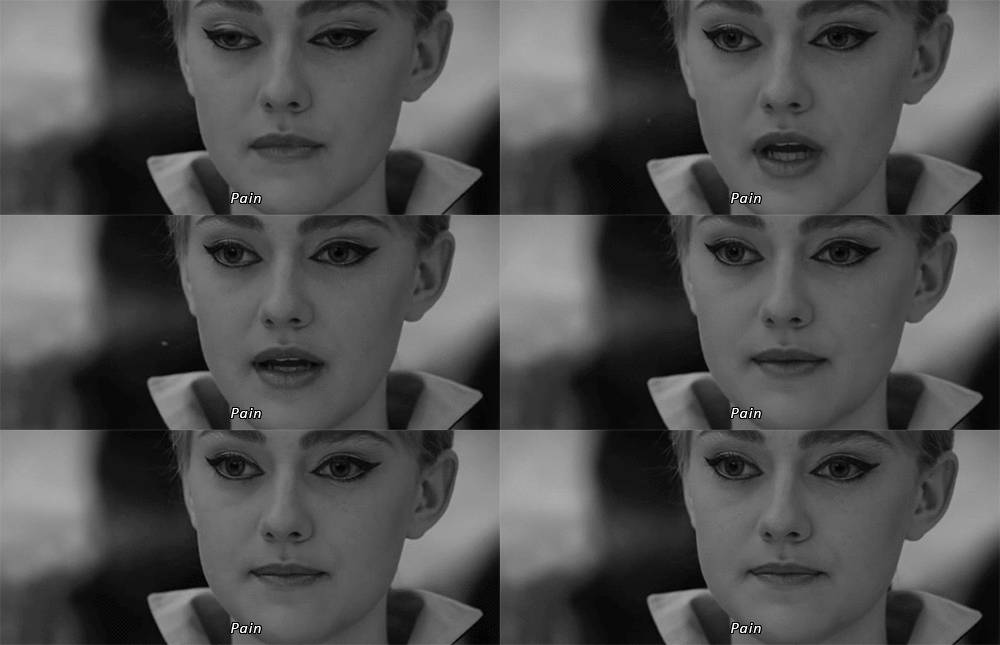
    I need to find a new language for articulating this pain – any suggestions would be greatly appreciated. So far all I have is Twilight Saga’s Jane blank staring while whispering ‘pain’.

    pain

    In the meantime, I might channel 2016 diary Hilary’s bizzaro way of articulating pain – with utter nonsense and writing a novel…

    Update: since I wrote this my sister showed me this picture. Could this be the language I’ve been needing to moan about my pain?! dementors

    Like travel and literature? Check out my City by the Book blogs here.