Tag: Books

  • City by the Book: Death at the Château Bremont

    City by the Book: Death at the Château Bremont

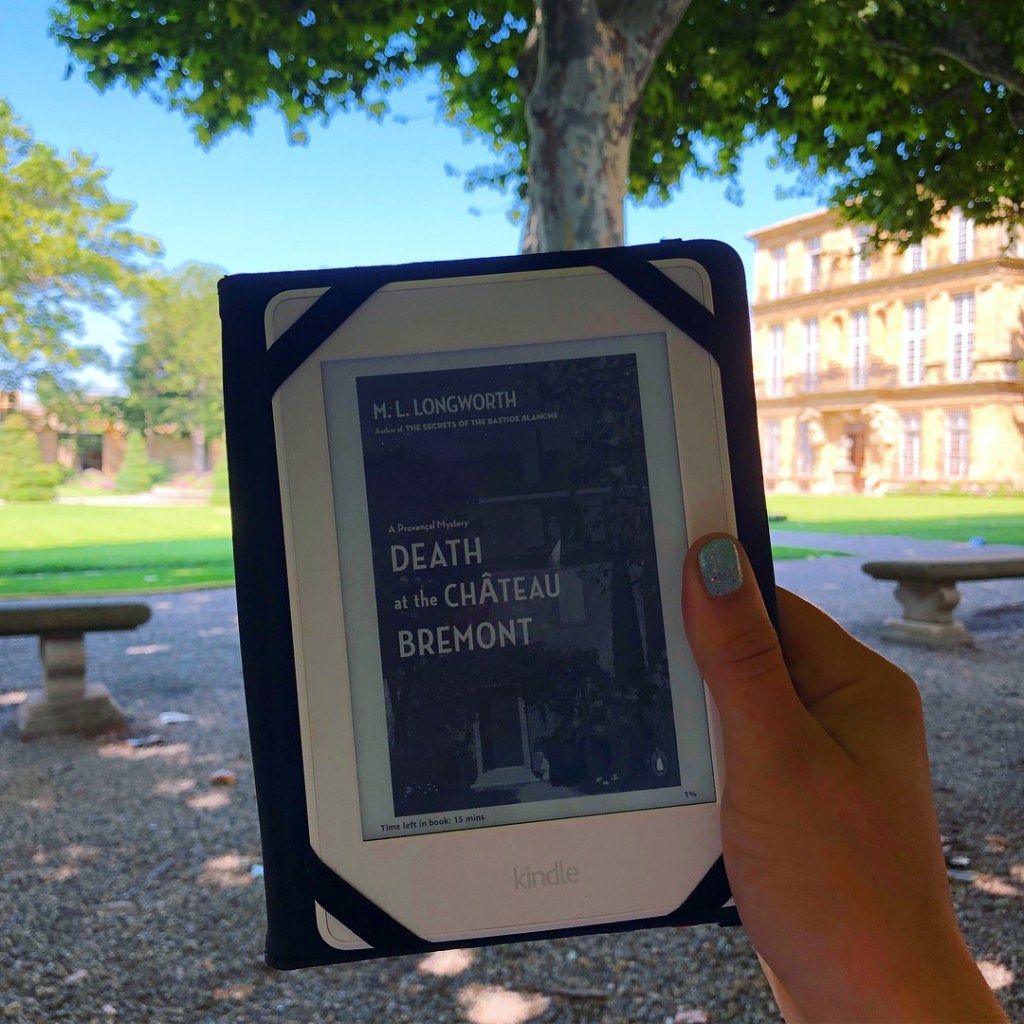
    The final City by the Book from my most recent trip takes us to Aix-en-Provence, a city my travel companion knew well, but that I didn’t know at all. Well, it’s much easier to get to know a city in two days when a) you have a private tour guide and b) you have a book as brilliant as M L Longworth’s Death at the Chateau Bremont. The book is actually the first in a series of provençal murder mysteries, all set in and around Aix-en-Provence. And I don’t mean loosely, I was recognising street names and restaurants all over the place thanks to Longworth’s book.

    I’m not a huge murder mystery reader, but living with my dad means that exposure to it is inevitable, so I’m always pleasantly surprised by how much I enjoy them. The series has the usual cryptic detective, Antoine Verlaque, who is clearly not handling some unknown inner turmoil, but refreshingly, he is joined by university professor Marine Bonnet.

    When we first hit cours Mirabeau in the daylight, Aix’s iconic street, my friend felt like something was different — the trees. The street wasn’t how she remembered it, lined with trees so densely that they formed a cover over the street itself. A few hours later, I think we might have been in Parc Jourdan, I read the following passage in Longworth’s book.

    “One hundred years ago double rows of plane trees had been planted on both sides of the street, and by the summer they would shade the sidewalks and the street itself. But the cours had been in a state of construction, or “decontruction,” as Slyvie, Marine’s best friend, a photographer and art historian, liked to say. No sooner was the top of the street completed than the workmen would start jack-hammering the bottom, and then someone at city hall would change his or her mind and the bottom would be hurridedly finished so the construction team could tear up the newly finished work at the top.” — M L Longworth, Death at the Chateau Bremont 

    It’s not a particularly happy anecdote, but isn’t it nice when a novel can fill in the blanks on why a landmark, plastered on every postcard and fridge magnet, looks so completely different?

    Books like Death at the Chateau Bremont are why I like writing the City by the Book blogs — it can transform how you experience a trip. It was also really easy for me to find thanks to the Aix Centric blog, which has a list of books set in Aix — I wish it was as easy for every city! The same blog also has a post about the tree situation, find it here.

    I expect I’ll read some more of the Verlaque and Bonnet series, but I almost want to wait until I can visit Aix again — reading becomes an even more immersive experience when you get to read a book in the city in which it’s set. 

    The last City by the Book looks at Toulouse, Montpellier and Henry James, read it here
  • City by the Book: A Little Tour in France

    City by the Book: A Little Tour in France

    As soon as my friend and I planned this summer’s France trip I was excited to get back on it with the City by the Book blogs, and here we are! I thought it’d be easy to find books by authors from the cities we were visiting, or at least set there, but it was much harder than I expected. Especially once I was limited to e-books for the sake baggage allowances.

    And then I came across a non-fiction book by Henry James – A Little Tour in France. Well that was exactly what we were doing, so it sounded like a good fit. I knew it reached Toulouse, which was our first stop, but I hadn’t expected our second and third stops, Montpellier and Aix-en-Provence, to come up too. There wasn’t much Aix coverage, but the book was a great companion for Toulouse and Montpellier.

    Toulouse

    James, it seems, wasn’t overly impressed with Toulouse. I was, but after the rest of the trip, it certainly wasn’t the high point.

    “But the city, it must be confessed, is less pictorial than the word, in spite of Place du Capitole, in spite of quay of the Garonne, in spite of the curious cloister of the old museum.” – Henry James, A Little Tour in France.

    At present, Toulouse is a city under construction. Undoubtedly, it’s very different from how James saw it, but for me, the city is now irrevocably associated with the sound of drills and piles of scaffolding, all, of course, surrounded by ancient churches and convents. I think I’ll have to return to Toulouse in a few years to see how the development has enhanced the city, rather than making it the dustiest and noisiest part of our trip.

    IMG_2330
    Hmm, Toulouse’s most spectacular church was presented a little differently to how James would have seen it…

    Montpellier

    Here’s where James and I agree. For some reason, I had it in my mind that Montpellier was a bit of a British tourist trap — how wrong I was. We could’ve spent all summer there, exploring and eating. We had snails and wandered its little streets — we even became incredibly frustrated when a shop we found one morning disappeared without a trace in the afternoon. It took a treasure hunt before our train left the next morning to find it (it had been hidden down a secret adjacent street the whole time).

    “I spent two days there, mostly in the rain, and even under these circumstances I carried away a kindly impression.” – Henry James, A Little Tour in France. 

    We popped into the museum (Musée Fabre) James loved so much but didn’t explore it with his level of unrestrained detail. It’s a really special city (with excellent seafood) and I don’t doubt I’ll be back for a longer visit at some point in the future.

    A Little Tour of France was published in the nineteenth century, but because history is such a key part of any holiday in France nearly everything James mentioned was still there, there was just more around it. It was fun to read his caricatures of the people he encountered in each city of his tour, which really puts the buildings and landscapes you’re visiting into a unique context.

    Another City by the Book from this trip will be coming soon! 

  • Review: Promising Young Women

    Review: Promising Young Women

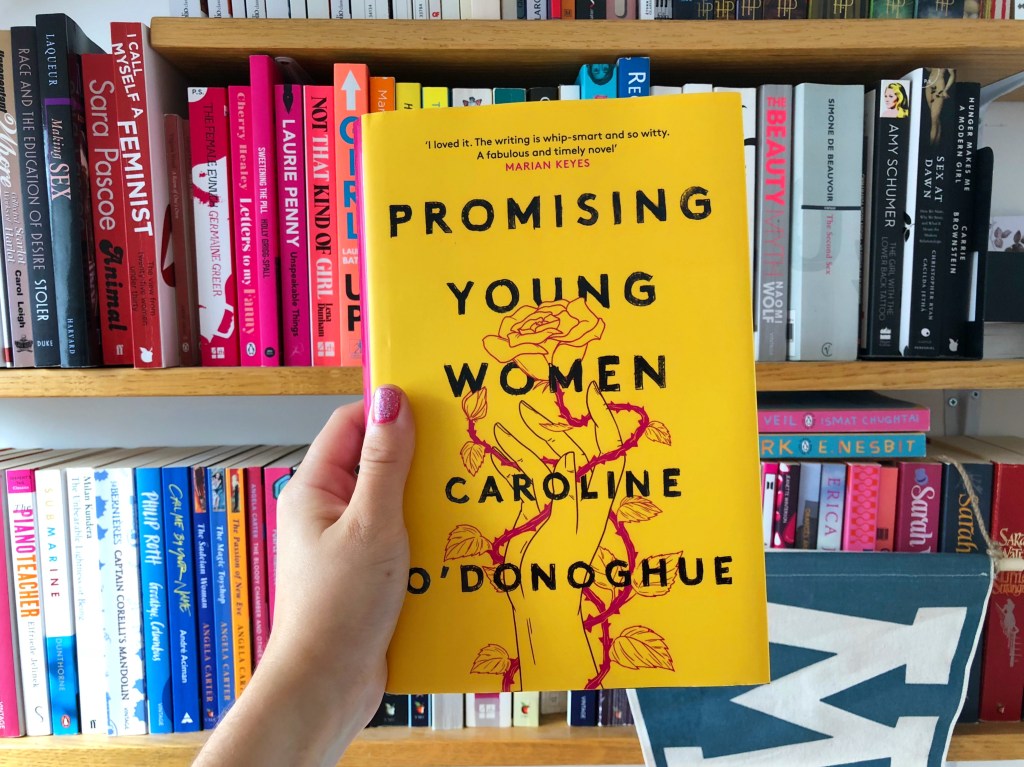
    Like with most stories that start with a twenty-something London-based office worker navigating the breakdown of a long-term relationship, your mind settles in for a harmless piece of Chick-Lit. And then Caroline O’Donoghue’s Promising Young Women knocks you off-centre by turning into something else entirely.

    The praise on the book’s sleeve repeatedly uses the word “gothic.” Thanks to a module I did in my final year at Swansea (brilliantly named Uncanny places and cyberspaces: Gender and the fantastic) I’m well aware that gothic tropes aren’t limited to stories set in haunted houses in the nineteenth century, but even so Promising Young Women does something totally refreshing with ideas of uncanniness. It’s a novel that proves how relevant gothic images, like starving women fading away, mirrors, periods and other bodily fluids, continue to be relevant and effective at portraying contemporary crises.

    “I don’t have a boyfriend or a fabulous career, and I think she’d like some better adjectives to describe me to her friends with.” – Promising Young Women

    At first, the book doesn’t have the most groundbreaking plot you’ve ever heard of (woman’s anonymous blog seeps into her real life) but O’Donoghue gradually gets under your skin as she tells Jane’s story. A story that while almost fantastical is likely to be relatable and understandable for any young working woman.

    The darkness and depth of this book creep up on you and by the time you’ve realised, you can’t put it down. Dealing with power imbalances (professional and romantic), mental illness and the false security of the Internet’s anonymity, this debut novel makes O’Donoghue one to watch.