Tag: Book Review

  • Favourite Reads of 2018 So Far

    Favourite Reads of 2018 So Far

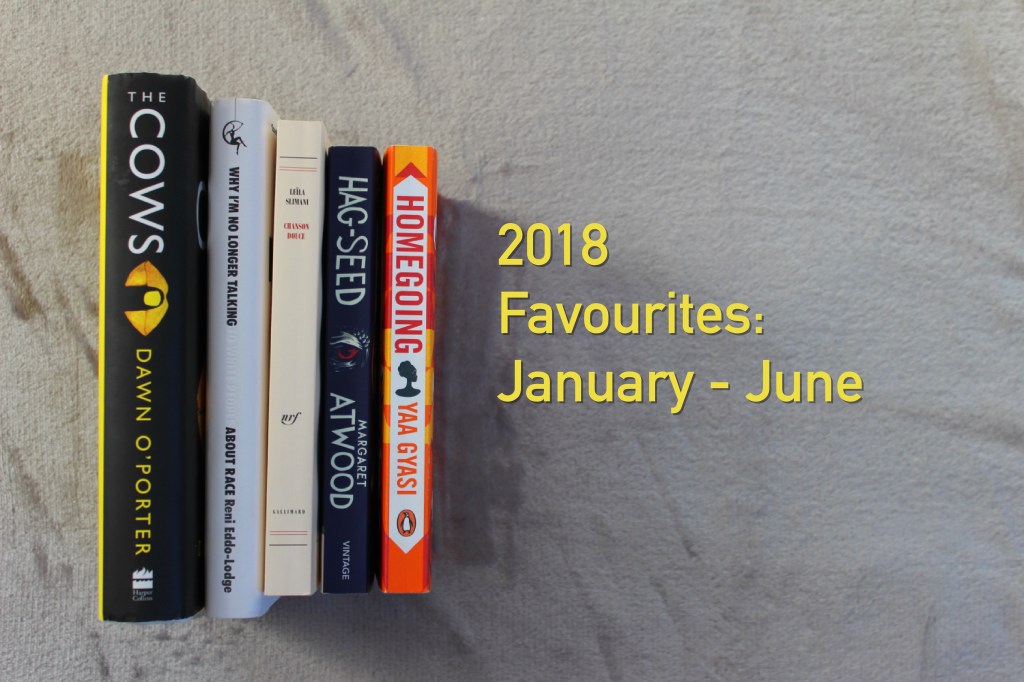
    Somehow, we’re already over half-way through 2018 and as the summer holidays approach I’ve had lots of people asking me what books they should read on holiday. So for this blog, I thought I’d try and pick my five favourite books from the first half of 2018, whether or not you fancy reading them on holiday is up to you.

    Homegoing – Yaa Gyasi

    Let’s start with one I actually read on holiday, shall we? My general rule is that if a book is recommended to me by two or more people in a short space of time then I should ignore the pile of unread books next to my bed and read it immediately. As was the case with this beautiful book. Homegoing traces two parallel family trees through every generation from the colonised Gold Coast to twenty-first century Mississippi. The stories in this book intertwine seamlessly, to reveal how slavery and colonialism leave indelible traces. So much happens in so many different places (in the world and in time) and yet every character in Gyasi’s book is fully formed and deeply complicated. Homegoing is a really special book.

    There’s also lots of interesting period commentary in this book if you’re here for the #Periodically blogs.

    The Cows – Dawn O’Porter

    I’ve talked about this book a lot since I read it in January, so why would I stop now? Everyone I’ve recommened The Cows to so far has loved it and it always kickstarts some really interesting conversations about motherhood, womanhood and, for want of a better word, unmotherhood. The book has a twist that literally dropped my jaw – I’ve had texts of shock as each of my friends have reached this page. Want to know what the twist is? Well, you’ll have to read it.

    Read my full review of The Cows here.

    Chanson Douce – Leïla Slimani

    In English this book is called Lullaby – you’ve probably heard of it as it’s been all over the place with headlines like, “The Killer-Nanny Novel that Conquered France.” It’s such an unusual, gripping and dark book. Thrillers are not usually my cup of tea, but I might have to reconsider that after Chanson Douce. The social, political and moral issues it explores give this book a real edge. This was one of the first contemporary French novels I’ve read and now I must read more. 

    Hag-Seed – Margaret Atwood

    This half-play half-novel is a retelling of Shakespeare’s The Tempest and is Atwood like you’ve never read her before. Set in a Canadian prison, this contemporary retelling uses Shakespeare’s themes and Atwood’s skill to create something brand new and brilliant.

    Read my full review of Hag-Seed here.

    Why I’m No Longer Talking to White People About Race – Reni Eddo-Lodge

    If you’re looking to swatt up on BME history in the UK this book is a great place to start. Eddo-Lodge’s voice is so refreshing and hard-hitting, informed yet digestible that it creates something truly unique. Her chapter on White Feminism was particularly poignant to me, as well as her discussion about how it’s no longer enough to simply just not be racist. I loved it so much that I then binged her podcast About Race, which I also recommend.

     Like the sound of these books? Buy them now from Wordery.

  • Review: It’s Only Blood – Anna Dahlqvist #Periodically 25

    Review: It’s Only Blood – Anna Dahlqvist #Periodically 25

    Last week I attended the launch of gender, sexuality and human rights journalist Anna Dahlqvist’s book It’s Only Blood: Shattering the Taboo of Menstruation. The conversations on the night, between Dahlqvist, the founder of Bloody Good Period Gabby Edlin and the audience were interesting enough, but the book itself stands out as an enlightened piece of writing about the profound impact that period taboos, period poverty and poor menstrual hygiene have on menstruators’ lives.

    The book was originally published in Swedish and has been translated into English by literary translator Alice E. Olsson. Olsson was at the launch and discussed the fun (and struggle) of translating some of the menstrual colloquialisms.

    https://www.instagram.com/p/BjJ2uqLFo_-/?taken-by=baraliteblod

    It’s Only Blood is not a list of historical period myths, instead it’s a contemporary assessment of how reinforced menstrual shame continues to cause harm on a monumental scale. “Even though shame and silence are experiences shared by menstruators all over the world, the consequences become far more serious when an additional dimension is introduced: poverty,” Dahlqvist writes.

    The testimonies, many from school girls and activists from Uganda, Kenya, Bangladesh, India, America and Sweden, are combined with Dahlqvist’s research of UN legislation to highlight the fact that inaction when it comes to menstrual hygiene, education and resources means that many human rights are being violated, and yet, there’s a distinct lack of retaliation by politicians. The book is also coloured with Dahlqvist’s personal anecdotes and descriptions, which makes this serious book palatable – it’s rare to get a non-fiction book that you can’t put down.

    “Power over the period is a necessity, a precondition for participation in public life,” Dahlqvist writes, in reference to the serious social and educational issues poor menstrual hygiene can bring about. When school girls don’t have access to running water or locking doors, their options are rather bleak. If they bleed in public they’ll experience immense shame (the weight of which is only heavier when menstrual myths maintain that seeing or touching menstrual blood is bad luck), returning home to secretly clean and change a cloth at lunchtime, avoiding school entirely or hoping, at risk of infection, that one cloth or pad can survive a whole school day. Unsurprisingly, this has a profound and direct impact on their education. The book also explores how, contrary to popular opinion, these problems don’t go away as menstruators leave school.

    One particularly interesting part of It’s Only Blood is the connection Dahlqvist draws attention to between infections, like UTIs and Bacterial Vaginosis, which can be caused by poor menstrual hygiene, with HIV and HPV (leading to Cervical Cancer). Society, including period product providers, encourages menstruators to aspire to be clean and fresh while simultaneously not letting anyone around them know that they are bleeding. With all this shame and secrecy, it’s no surprise then that students in Malawi dry their menstrual protection under their mattresses or that in Bangladesh, one women hides her cloths in the roof, rather than drying them in sterilising sunlight. It’s a public health issue, why aren’t we treating it as such?

    Not only is Dahlqvist’s book intersectional in the stories that it tells, it also covers the intersections of menstrual hygiene with poverty, politics, commercial business and cultural and social stigmas. If you’re already active in combatting period poverty It’s Only Blood will spur you on and if you’re new to the discussion, the book will motivate you to join the ranks. Activists’ stories of feats large and small show how desperately change is needed, but also how in some cases, how little it takes to dramatically improve things.

    It’s Only Blood perfectly showcases how menstrual shame causes problems for everyone and why shattering the taboos will undoubtedly improve individuals’ lives and society in broader terms.

    Buy It’s Only Blood from Wordery by clicking here.

  • Is there more to #Bookstagram than judging books by their covers?

    Is there more to #Bookstagram than judging books by their covers?

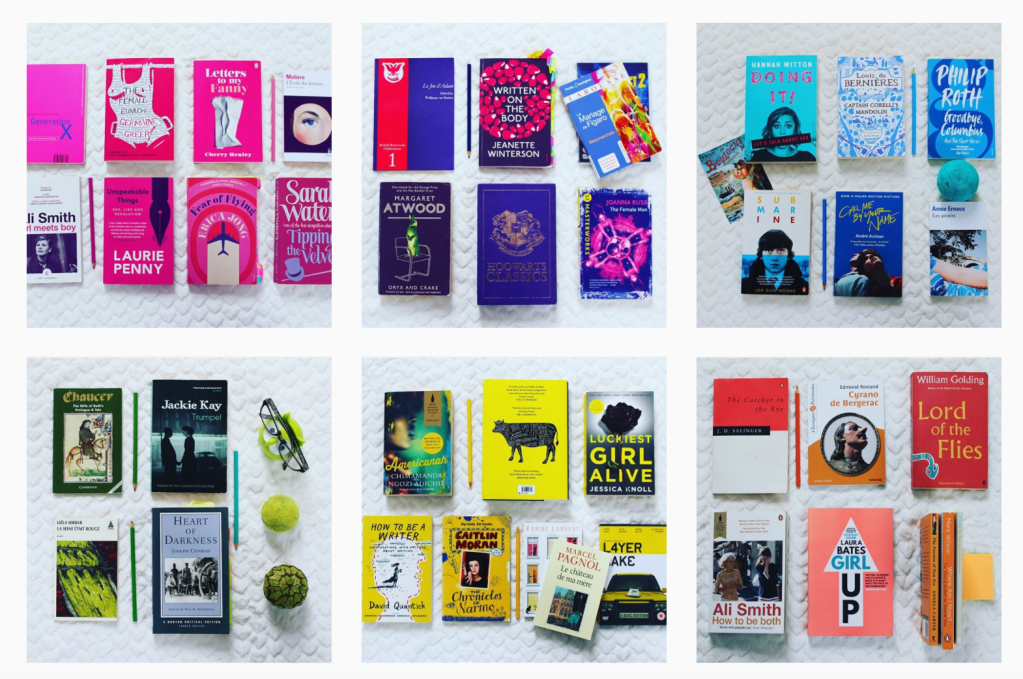
    If you have the misfortune of following me on Instagram, you might have noticed that since the New Year I’ve been making a pathetic, desperate and not entirely successful attempt at being accepted into the enigmatic world of #Bookstagram. Social networks have always fascinated me, I wrote 5000 words on Twitter for a project at school when I was 17, but with my latest adventure I didn’t expect a social media niche to feel so much like a hobby.

    What is Bookstagram, you ask? It is essentially a hashtag, or a group of hashtags, on Instagram where people share pictures of books. The Bookstagram tag itself boasts more than 18 million pictures of books, bookshelves and book lovers with their books. Other hashtags like #Bookish, #Bibliophile and #Shelfie also have hundreds of thousands, if not millions, of regular bookish users. Now most people when trying to enter the wicked world of an Instagram community will make a separate Instagram account. I however couldn’t be bothered with flicking between accounts, and expecting my venture with the fad to only run for a limited time I have, much to the annoyance of my family, just used my ‘personal’ account for this latest venture.

    My interest in ‘joining’ Bookstagram came from the question that kept hitting me as an observer: “is there more to Bookstagram than judging books by their covers?” In my experience so far, yes, but also no. It’s true that there are definitely accounts that seem to only share pictures of books they have never read (but that are indeed very pretty). Sometimes this can be with the really successful accounts that are inundated with advanced copies from publishers, so it is an understandable and perhaps unavoidable TBR situation.  There are, however, many more who are using the social media site to promote books they love, discuss books they hate, have sometimes very serious literary debate and explore how book publishing is going to survive in a digital age.

    That’s what I think is really interesting about the Bookstagram ‘craze’ – it’s giving new life to an ancient art form. When Kindles and other e-readers began to gain popularity a few years ago, I was one of many people throwing hissy fits about how you can’t beat a real book. After a while, I began to accept that e-readers must be the future of reading, but then I discovered Bookstagram. Maybe it’s just a big cooperate conspiracy by big publishing houses to sell books, but Bookstagram has put a twenty-first century twist on an potentially outdated art form. I may even be as bold as to say that it is saving the art of reading (not writing, reading) by making art of reading – and I don’t think there is anything wrong with that.

    The other thing I’ve learnt is that it’s bloody fun. Trying (and often failing) to think up and execute creative ways to photograph books that have already been shared thousands of times is an exciting challenge. While I’m not sure I can compete with the big-leagues or that the move will be permanent for my Instagram page itself, I have really enjoyed my foray into the Bookstagram universe so far. I think it also puts pressure on publishing houses to get really creative with their covers and it seems to be working. With every reprint of a book I already own I am getting serious book envy. The only major downside I have noticed, and perhaps experienced myself, is that members of the community seem to put a lot of pressure on themselves to read huge amounts annually and monthly. That ain’t good – quality over quantity, always.

    If you want to see what I’m talking about check out the #Bookstagram feed on Instagram, follow me or even better follow some of these brilliant account that post engaging and stunning bookish photos and entertaining captions on the regs – they are all super interesting and have book collections that will make you drool:

    Lotte: @lottelikesbooks

    Rima: @pardonmywritings

    Jack: @that.english.guy.who.reads

    Teisha: @girlwritesreviews 

    Jen: @bluestockingbookshelf

    Chrissy: @blackgirlsreadtoo

    Zoë: @readabilitea