Tag: Book Review

  • Review: So Hormonal

    Review: So Hormonal

    “A collection of personal essays detailing the various roles that hormones play in our daily lives” – SOLD! It was no surprise to those who know me that as soon as I learnt that this book – So Hormonal, edited by Emily Horgan and Zachary Dickson – was coming into existence through a crowd-funding campaign, during the pandemic no less, that I had to have it (or at least pre-order and patiently wait for it). And for those that don’t know me, in addition to my fascination with hormones on this blog, I also wrote my masters thesis on the feminist value of the ongoing cultural backlash against hormonal contraception, where I started to theorise a little something called Hormonal Feminism. So in short: I was keen.

    All this to say, I’ve read a lot of personal writing on hormones, but this is the most comprehensive anthology on hormonal experiences that I have come across. So often ‘the hormonal experience’ is pinned down to either cis women’s (often negative) experiences of menstruation, contraception, pregnancy and menopause or trans* people’s experiences of puberty and hormone therapy. And there are, of course, so many meaningful and important stories under those umbrellas, many of which are featured in this collection, but So Hormonal takes things a step further. It is deeply refreshing to find stories about hormones from cis men, next to essays about hormonal joy, fertility, pain, neurodiversity, osteoporosis, Addison’s disease, PMDD and so much more. The book represents ‘the hormonal experience’ for what it really is: bodies in flux, also known as being human.

    So Hormonal strikes a great balance between the personal and the medical, the technical, which matters, as is expertly explained in Sonja Erikainen, Andrea Ford, Roslyn Malcolm and Lisa Raeder’s essay Telling Hormonal Stories. They write:

    Hormones are ‘made’ and ‘remade’ in both scientific and cultural stories. Indeed, scientific and cultural stories are constantly in conversation with each other.

    Sonja Erikainen, Andrea Ford, Roslyn Malcolm & Lisa Raeder

    I will always be curious about the gendering of hormones, individually and collectively, and the above quote perfectly sums up why it is vital all hormonal stories are told, so that ‘hormonal’ can cease to be a negative adjective associated solely with women, femaleness and adolescence, because nothing could be further from the truth.

    This book is for everyone – it’s only shortcoming in that regard potentially comes in terms of location, though it isn’t always clear. There might be stories where you relate to something directly. For example, in Sonali Misra’s essay ‘Ten Years in the Making: conversations with partners about polycystic ovary syndrome’, she writes:

    I’ve been forced to add an extra step in the dating timeline, a disclaimer of sorts, due to the PCOS.

    Sonali Misra

    Something I know oh too well, thanks to endometriosis and vaginismus. Again with Aifric Kyne’s essay ‘I’m wearing Docs, Michael: on thyroids, tallness, and teenage suffering’ I was blown away by how Kyne seemed to have perfectly described some of my feelings towards height, eating, control and ignoring my body. Yet still, if you find nothing you relate to personally, the book is full of stories that will move you in ways you cannot anticipate. Some of my favourite essays in the collection I can’t even begin to relate to. While I could honestly just list the contents page, some stand out, including: Tyler Christie’s ‘Getting Off the Back Foot with Male Fertility Health’, James Hudson’s ‘Wanna see my Party Trick? *Stops Taking Testosterone*’, ‘Rianna Walcott’s ‘Banana-Poultices: Black British Attitudes to Healthcare and Medication’.

    And then there is the political, burning its way through the book like a hot flush. Many of the essays were written during the COVID-19 pandemic, and it shows. Healthcare systems that have time and again failed in regards to hormonal care, have struggled to deliver the very basic care needed even more during 2020. Jo Ross-Barrett’s essay ‘A period piece: on PCOS, PMDD, and the NHS in 2020’ closes with a powerful call for the UK’s healthcare system to do better: “I wanted to share my story so that people could see the human impact of intersectional feminist failings within the NHS. The NHS needs to offer timely and appropriate person-centred care that focusses on the individual in a holistic manner”. And then in the piece ‘Roaccutane Tubes: On navigating puberty hormones and bodily changes in the wake of sexual abuse’, Madeleine Dunne boldly writes:

    Until a point in time where healthcare providers and medical science are prepared to actually see female bodies, trans bodies, and Black bodies as being valid, to listen to the voices coming from those bodies, and to hear, act on, and validate those experiences, I worry that we are trapped in a cycle of gatekeeping, dismissal, misdiagnoses, inappropriate treatments, and loss of lives.

    Madeleine Dunne

    The quote speaks for itself, as does the entire book, and I recommend you read it.

    So Hormonal is published by the independent publisher Monstrous Regiment, based in Edinburgh, you can buy the book directly from them here.

    While I have you, I’ll take the chance to implore you to support the #ButNotMaternity campaign, which is lobbying for change in regards to the hypocritical and sexist measures than remain in place for people giving birth in the UK during the COVID-19 pandemic, measures that are leading to traumatic birth experiences. You can learn more about the campaign here and sign a related petition here. I’d also like to draw your attention to this article about a U.S. study where black babies were found to be more likely to survive when cared for by black doctors, demonstrating just how much work is still to be done in rallying against conscious and unconscious biases in medicine.

  • Review: Character Breakdown – Zawe Ashton

    Review: Character Breakdown – Zawe Ashton

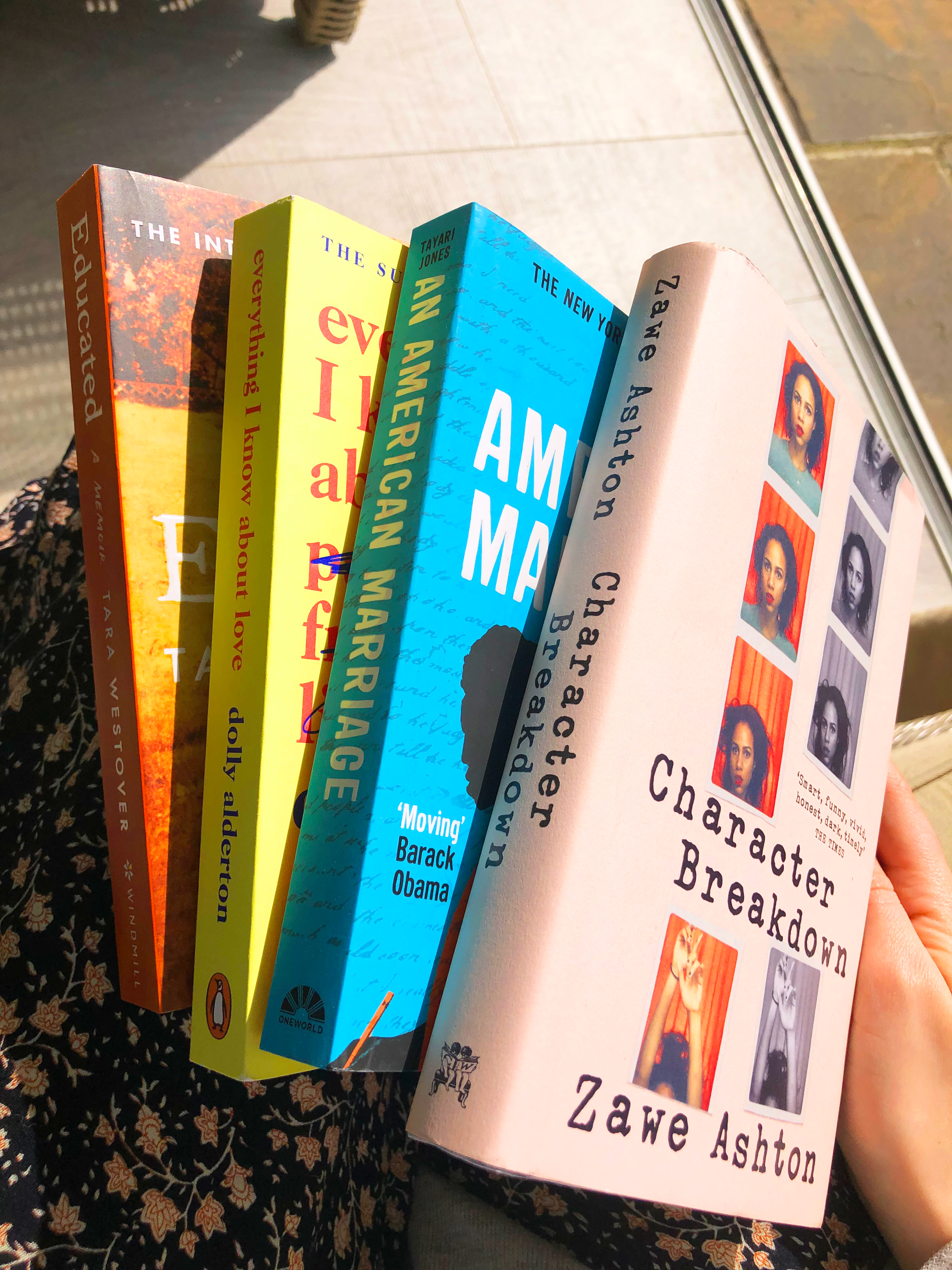
    It’s been a while since inspiration struck for a book-related blog but after the operation last week I treated myself to a stack of books I’ve been desperate to read for ages. One of them, Character Breakdown by Zawe Ashton, is like nothing I’ve ever read before and it immediately warranted a whole blog to itself.

    post op books
    I splurged…

    I have always had a soft spot for actresses’ autobiographies as is well documented on this blog that is *supposed* to be about fiction, but Character Breakdown occupies a wonderful space between fiction and non-fiction, which is kind of the whole point. The stories told in this book come in one of two forms: a script following the world of ‘Actress,’ or a casting character breakdown with a narrative. Don’t try to work out what’s ‘real’ and what’s not, it’ll ruin the fun.

    character breakdown

    Ashton, who you probably know best as Vod from Fresh Meat, is a really gifted writer, partly because she possesses the extraordinary talent of being able to say a lot by either saying very little or by saying nothing at all. The blank spaces of this book speak as loudly as the text, perhaps even louder. Some of the most striking parts of Character Breakdown come in the shortest of stories that are simply an interaction between an actress and a casting call, but the entrenched racism and sexism of the theatre/film/TV/showbiz industries scream off the pages so obnoxiously that no commentary is required.

    The book gives off the vibe of a strained inner monologue but the liminal nature of its genre keeps you on your toes about whose monologue it is. This book is in a world of its own and I didn’t want to leave. Five stars from me.

  • My Favourite Reads of 2018

    My Favourite Reads of 2018

    Happy almost-Christmas-and-New-Year! It’s been a busy few months and blogging took a back seat while I got my teeth into the first semester of my masters but I wanted to take the time to reflect and chat about what I’ve read this year. My goal was to read 65 books including 12 in French and I actually did it! I hit 65 in September, and 12 French books in November. There’s still a few weeks left in December but I’ve been reading much slower since I started studying again so I’m currently on my 80th book of the year (and have been for a while). But 80 is ridiculous and points to the fact that I had a lot of down-time earlier this year. Still, I’m chuffed with it because, for the most part, it’s been really good, proper reading.

    Halfway through 2018 I wrote about my favourite books of the year so far and I’m sure there might be a few crossovers, but otherwise here are my favourite reads of 2018!

    Non-Fiction

    About 30% of my reading this year has been non-fiction. The latter end of the year has included a lot of textbooks but the first half saw lots of biographies and slightly more entertaining non-fiction books. Biography highlights include Juno Dawson’s The Gender Games and Lily Allen’s My Thoughts Exactly. I’ve since written an essay about the latter that wasn’t nearly as complimentary as my review on the blog… academia’s getting to me!

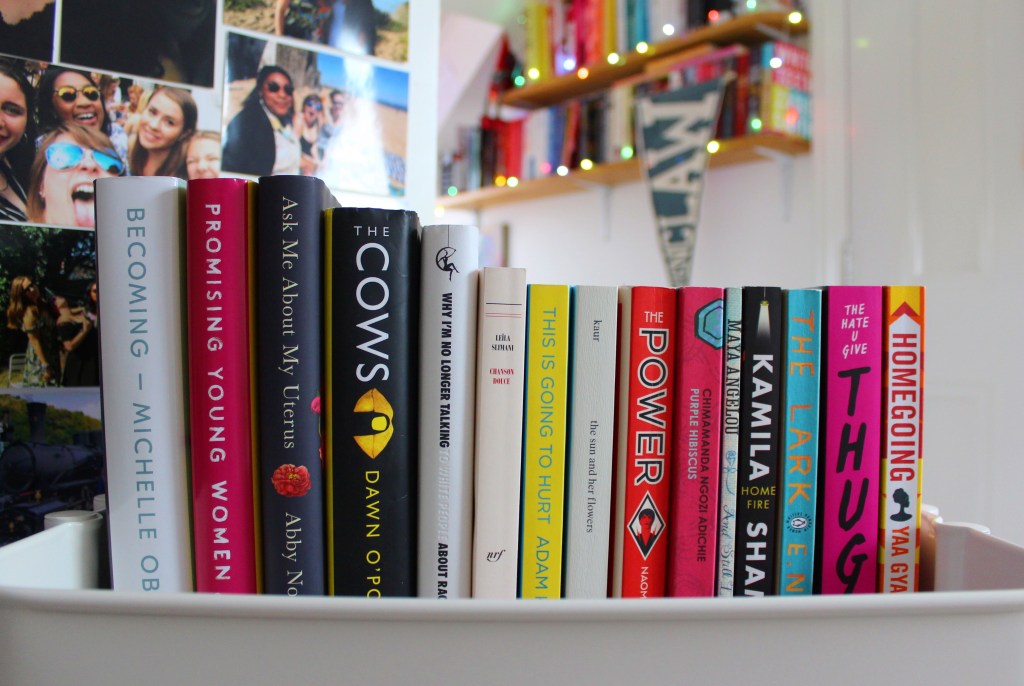
    I read Hillary Clinton’s book What Happened at the beginning of the year and recently finished Michelle Obama’s Becomingit feels natural to pair them together, not just because they’re two former first ladies but because both hardback books are obnoxiously large. I enjoyed Clinton’s book, but given it’s about the 2016 U.S. election, it was pretty depressing, whereas Obama’s was a lot more interesting, hopeful and joyful (for the most part, it still ends with the 2016 election…)

    obnxlarge
    See! Why do first ladies’ books insist on being enormous!

    The funniest non-fiction book I read this year would have to be Adam Kay’s This is Going to HurtAs you know I’m no stranger to the NHS and it’s great to see it being celebrated and ridiculed simultaneously, I hope it makes people realise how much trouble the NHS is in but also how important it is that we save it. #SaveOurNHS

    Ask Me About My Uterus by Abby Norman is a powerful book that I continue to think about, but I’d say the non-fiction book that’s had the biggest impact on me this year is the first one I read, Reni Eddo-Lodge’s Why I’m No Longer Talking to White People About Race. If you’re interested in Black British history and what it means to be an intersectional feminist (which you should be), give this brilliant book a read.

    *New* Fiction

    I had a steady income for the first half of the year and so I pushed myself to read new, shiny, contemporary novels while I could afford to buy them. On reflection, I realise that all the contemporary fiction I read this year was written by women… oops #sorrynotsorry. Over the year, I’ve recommended some of these books to friends and family, some of whom have been fundamentally challenged by them – but that, to me, is the sign of great writing.

    I’m still obsessed with Dawn O’Porter’s The Cows but I’ve definitely written about it more than enough on the blog. Ditto with Caroline O’Donoghue’s Promising Young Women – you can read reviews of both here.

    ficfaves2018I absolutely loved The Power by Naomi Alderman and The Hate U Give by Angie Thomas but I think, only slightly, Homegoing by Yaa Gyasi and Home Fire by Kamila Shamsie have a slight edge for me. Actually, I take that back – these are four astonishing books that deal with incredibly complicated, ever-present issues in thought-provoking, daring and often beautiful ways. My life is richer for having read them and I highly recommend you read them too.

    Fiction

    This year I read Philip Pullman’s His Dark Materials trilogy for the first time. I can’t say I totally get the hype, mostly because for some reason I just didn’t like Lyra’s character, which I’ve learnt is an unpopular opinion… but I enjoyed them nonetheless, particularly all the theological musings.

    From Penguin’s Women’s Writers editions released earlier this year, my favourite was E. Nesbitt’s The Lark, which was a really fun, uncomplicated read. But my favourite novel that I read this year is Chimamanda Ngozi Adichie’s Purple Hibiscus. The depth of Adichie’s writing always blows me away – her ability to create such whole, lifelike and complex characters without writing books the length of War and Peace is mindboggling (and a skill I hope I can learn myself).

    Français

    I’ll resist the temptation to repeat what I did last year and say that my favourite French reads have been Harry Potter, even though reading the series in French was one of the best reading endeavours I’ve ever embarked on, let alone finished this year. Instead, there’s another obvious choice: Chanson Douce (Lullabyby Leïla Slimani. It’s such a thrilling read, which I’ve discussed before, that paints a really uncanny picture of France today – I can’t wait to read it again in English.

    Special shout out to a bit of French ‘chick-lit’ that I read during my trip around France this summer. Le parfum du bonheur est plus fort sous la pluie by Virginie Grimaldi was the perfect match for my French reading level. I kind of hated the plot and characters at the beginning but it really surprised me and went down a much darker route than I expected, dealing with miscarriage and divorce in refreshing ways.

    Poetry

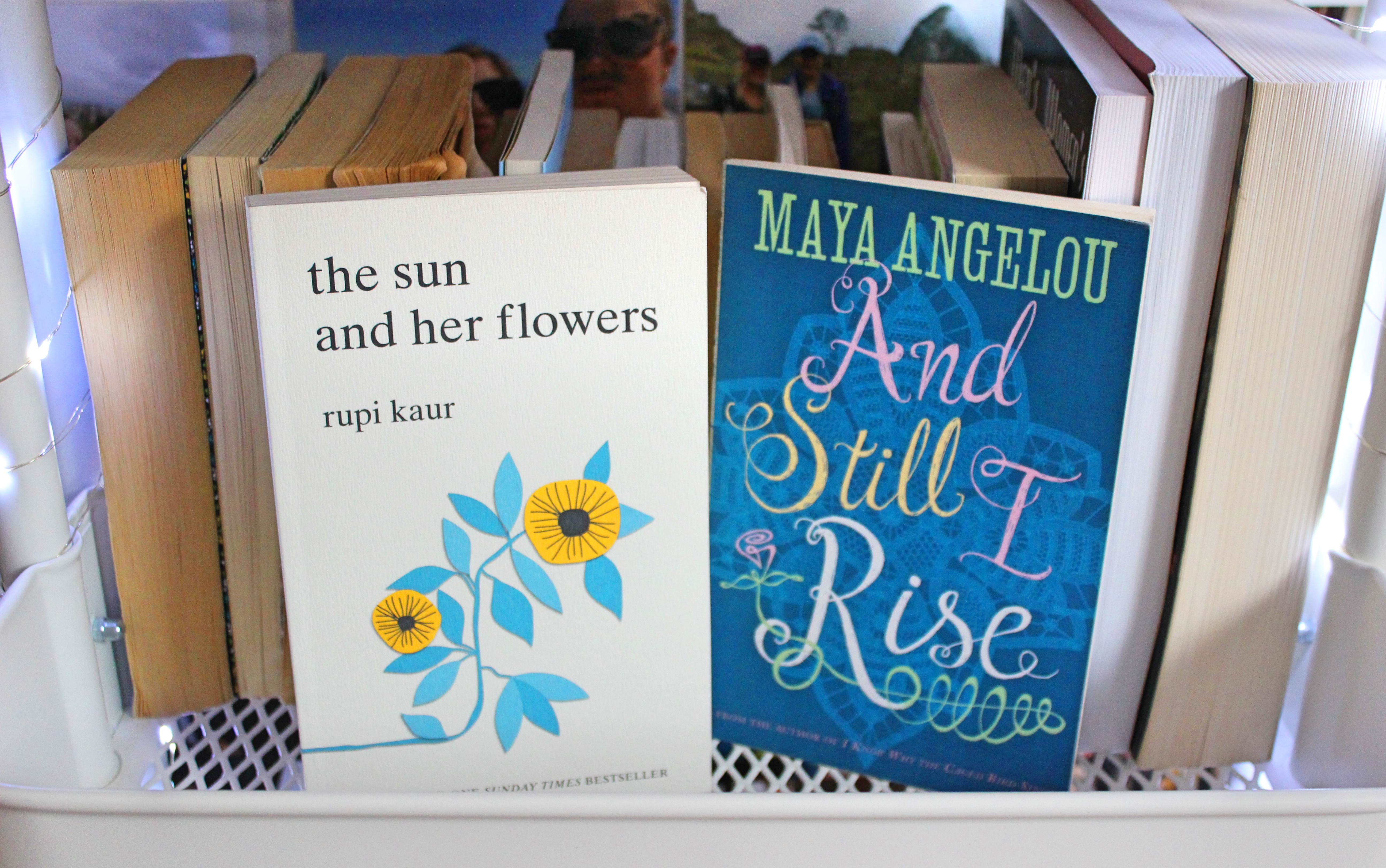
    I finally got into poetry this year, thanks to two brilliant women: Maya Angelou and Rupi Kaur. I’ve always really struggled with poetry but this year I realised that the poetry I studied at school and university was only the tip of the iceberg and that there’s so much out there that is much more to my taste. I read Kaur’s The Sun and Her Flowers and Angelou’s incredibly well-known collection And Still I rise. If, like I did, you think poetry isn’t for you, give these two a read if you haven’t already.

    poetry

    Book Buying Update!

    The final thing to say is that I met another one of my reading resolutions: I haven’t bought a single book from Amazon or Waterstones this year. It’s got me out of the house and into some really cool bookshops across London, exploring book stalls on holiday in Montpellier and Lyon and enjoying better, more ethical service from other online booksellers like Wordery.com. I have an affiliate link with Wordery, so if you’re buying books this Christmas please consider using my link as it will help me and the blog out big time. Thank you!