Category: Book Reviews

  • Review: The Cincinnati Tin Trunk – Richard Hopkins

    Review: The Cincinnati Tin Trunk – Richard Hopkins

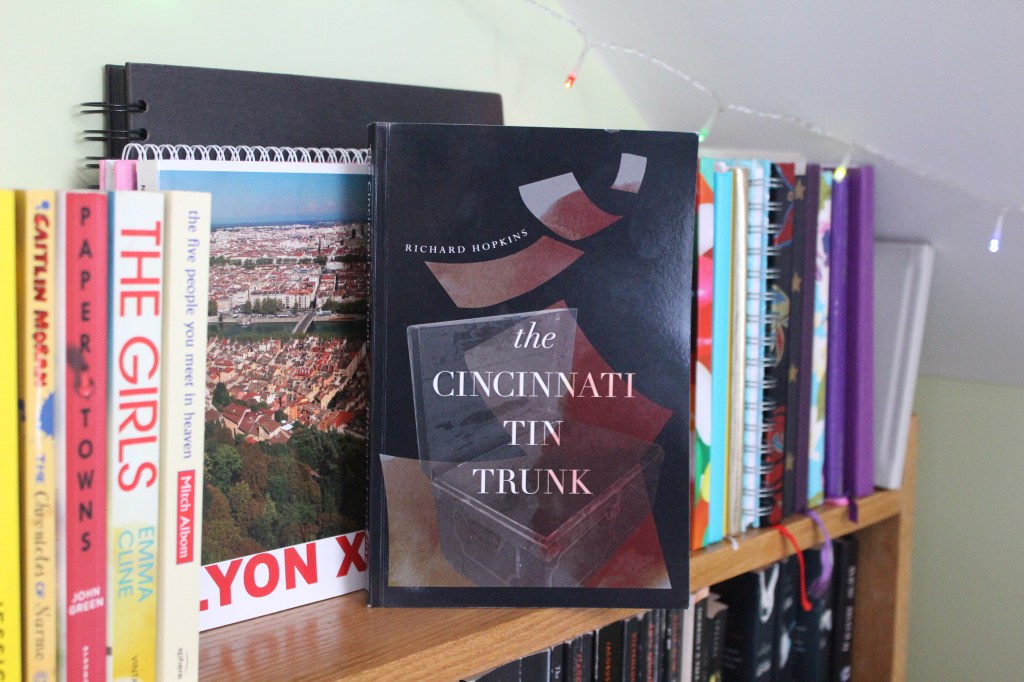
    Those who have been around for the long haul might remember that in my 2016 Favourites I mentioned the first book written and published by my friend Richard Hopkins – Interleaving. It’s now my pleasure to let you know that the second book in what is going to be a trilogy is out now!

    “Readers are taken on a historical treasure hunt”

    It’s always nice to be able to give a friend’s projects some airtime, and it’s even nicer when I really enjoyed the book. The Cincinnati Tin Trunk is like Interleaving in many ways, and totally different in others. I’ve talked before about how my relationship with historical fiction has been a bit rocky, but Richard’s books are a really great way to ease yourself into history – by literally immersing yourself in the past. Inspired by the life and work of a real nineteenth century Dutch photographic Assistant, Nicolaas Henneman, the novel follows the journey of one twenty-first century historian’s physical, literary and photographic quest to learn more. Together with Tom, his wife Libby and adult daughters, readers are taken on a historical treasure hunt across the US, Holland, France, the UK and back again.

    Both a product of its time (2016 – yikes!) and a captivating exploration of early photography, nineteenth century life and migration The Cincinnati Tin Trunk can’t help but take you on a walking tour of Henneman’s life. Like Interleaving Richard drops you into London, both then and now, and guides you around the places that you might otherwise not have noticed. The book is both a form of escapism and a reminder that every story have many sides, some of which still need to be uncovered.

    Despite the fact that the characters are all new in this second instalment of the trilogy, it does what all good middle trilogy books do – it leaves you pondering about the third. Once again the profits from the book are going towards charities that help homeless people in London. Both Interleaving and The Cincinnati Tin Trunk are available on Amazon in Kindle and paperback format, so check them out if you’re interested!

    The book I reviewed last week (Tigerish Waters)  is also giving its profits to charity – Christmas presents with a side of social justice anyone?   

    IMG_9837


  • Review: Tigerish Waters – Sophie Reilly

    Review: Tigerish Waters – Sophie Reilly

    Launching this week is a stirring book written from the front line of a bright young woman’s battle with her mental health. Tigerish Waters is the selected writings of Glasgow-born Sophie Reilly, edited by her brother Samuel Reilly after Sophie took her life last year. This striking combination of poetry, prose and fiction is both an upsetting marker of a waste of talent and a celebration of a short but thoughtful life.

    Knowing the context around Tigerish Waters you might not expect the book to be so funny, but Sophie’s voice and style is a lot of really wonderful things, and comic is one of them. Having suffered with a plethora of mental illnesses including Anorexia Nervosa, Bipolar Affective Disorder and Emotionally Unstable Personality Disorder, her writing speaks of unfathomable pain and hardship as well as total euphoria. By articulating her relationship with her mental health through drama, poetry, short stories and diary entries, Tigerish Waters offers insight into a gritty reality of extreme highs and the lowest of lows.

    The dark, ironic and humorous style leaves you wanting more from this talented young writer, but then you remember the context of the book’s publication and it all begins to feel desperately sad. Throughout, Sophie talks about the future, specifically about when she’s written a play or a memoir or a novel. “Nobody who attempts or commits suicide wants to die” she writes, and we think of how a book was always supposed to be part of Sophie’s future, but the reality is not how anyone, least of all Sophie, would have wanted it to come about. And yet, the publication of Tigerish Waters does come with barrels of hope. All profits made by the book are being donated to the Scottish Association for Mental Health (SAMH). The book passes comment on the “non-existence” of Dundee’s mental health services and the counter-productive support Sophie felt she received. Tigerish Waters has the power to serve as a real wake up call to a revolution that needs to happen with the treatment of mental illness in Scotland and beyond.

    For me personally, I was deeply effected by the normality of Sophie’s life. At first glance it is all very relatable. In her diary entries she talks about Gavin and Stacey, Harry Potter, Orange is the New Black, even her crush on the show’s star. She expresses her concerns about the overbearing presence of social media on girls’ self-esteem and she hesitates over whether or not she really needs a smartphone. She was a normal young woman with a promising future (she had been accepted to study Theology and Literature at St Andrews). If one ever needs a reminder of how mental health issues can and do impact everyone and anyone, Tigerish Waters is a prime example. In one diary entry Sophie calls us to take pride in our mental health issues. Taking inspiration from some of the triumphs of the Gay Pride movement Sophie titles the essay “Mental Health Pride”. It is a confident approach to mental illness that could have a really positive effect in my opinion, and I hope that message will be another positive thing to come from Sophie’s life.

    “If one ever needs a reminder of how mental health issues can and do impact everyone and anyone, Tigerish Waters is a prime example.”

    For me, the two most poignant parts of the book were the short play “Before the Snuff of the Lights” and the poem “Birth & Growth.” While both play an important part in telling Sophie’s story, they are also standout for their quality and creativity. (Update: I just heard a performance of “Before the Snuff of Lights” at the book’s London launch, which only affirmed my opinion that it is really extraordinary and mindful piece of writing.)

    It is easy to get swept up in the circumstances of Tigerish Waters’ publication, when perhaps the emphasis should be on the phenomenal talent the lies in the sentences and verses of Sophie’s writing. Anyone who has ever lived and wondered why will find something in this book that makes them say “I thought it was just me.” From that, I hope they will be motivated to demand help, receive it and share their unique voice with the world.

    Tigerish Waters, the selected writings of Sophie Reilly, edited by Samuel Reilly, is available on Amazon for £6.99. Published by Mad Weir Books, all profits from the book will be donated the Scottish Association for Mental Health.

  • Does being ‘anti-pill’ make me a bad feminist? #Periodically 13

    Does being ‘anti-pill’ make me a bad feminist? #Periodically 13

    As discussed at great length (sorry) in A Tale of Two Pills I consider my relationship with hormonal contraceptives to be over. It is an unpopular opinion, one I’ve struggled to conclude myself for a long time.

    In my world, the pill has always been seen as this great feminist tool. It sat on its pedestal throughout my childhood promising independence, reproductive freedom, sexual liberation and professional advancement. All my feminist icons raved about it, my sisters took it, my friends’ acne had been cleared, boobs had flourished, pain had lessened and my school despised it – by the time I was a teenager it was the most attractive piece of candy I had ever laid my eyes on. It symbolised maturity and being a strong, no nonsense woman. Until of course, I started taking it.
    IMG_9726

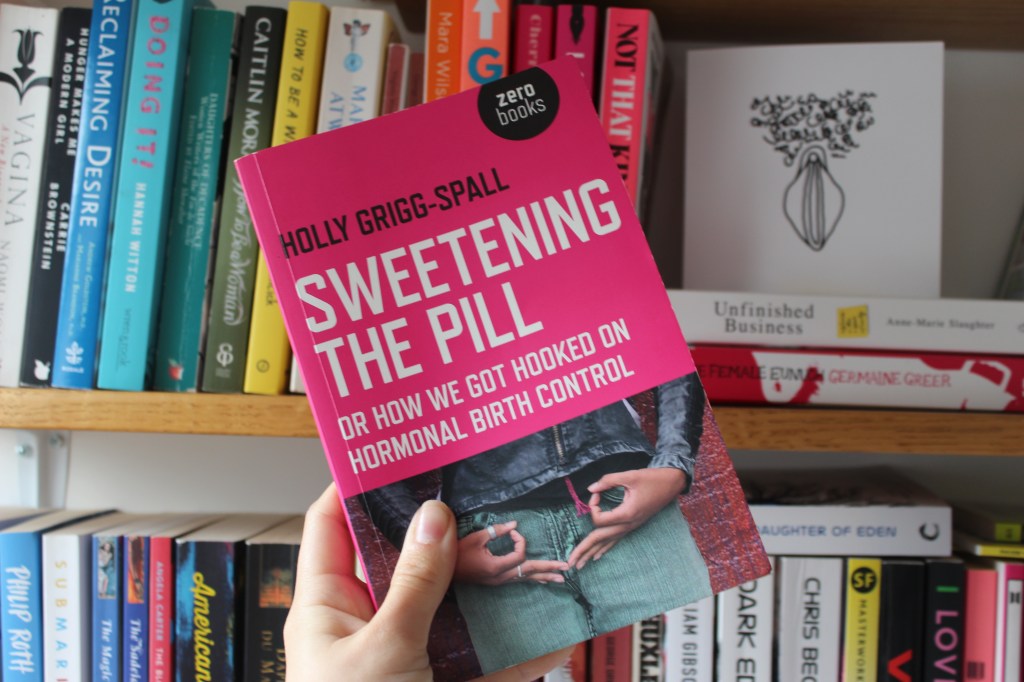
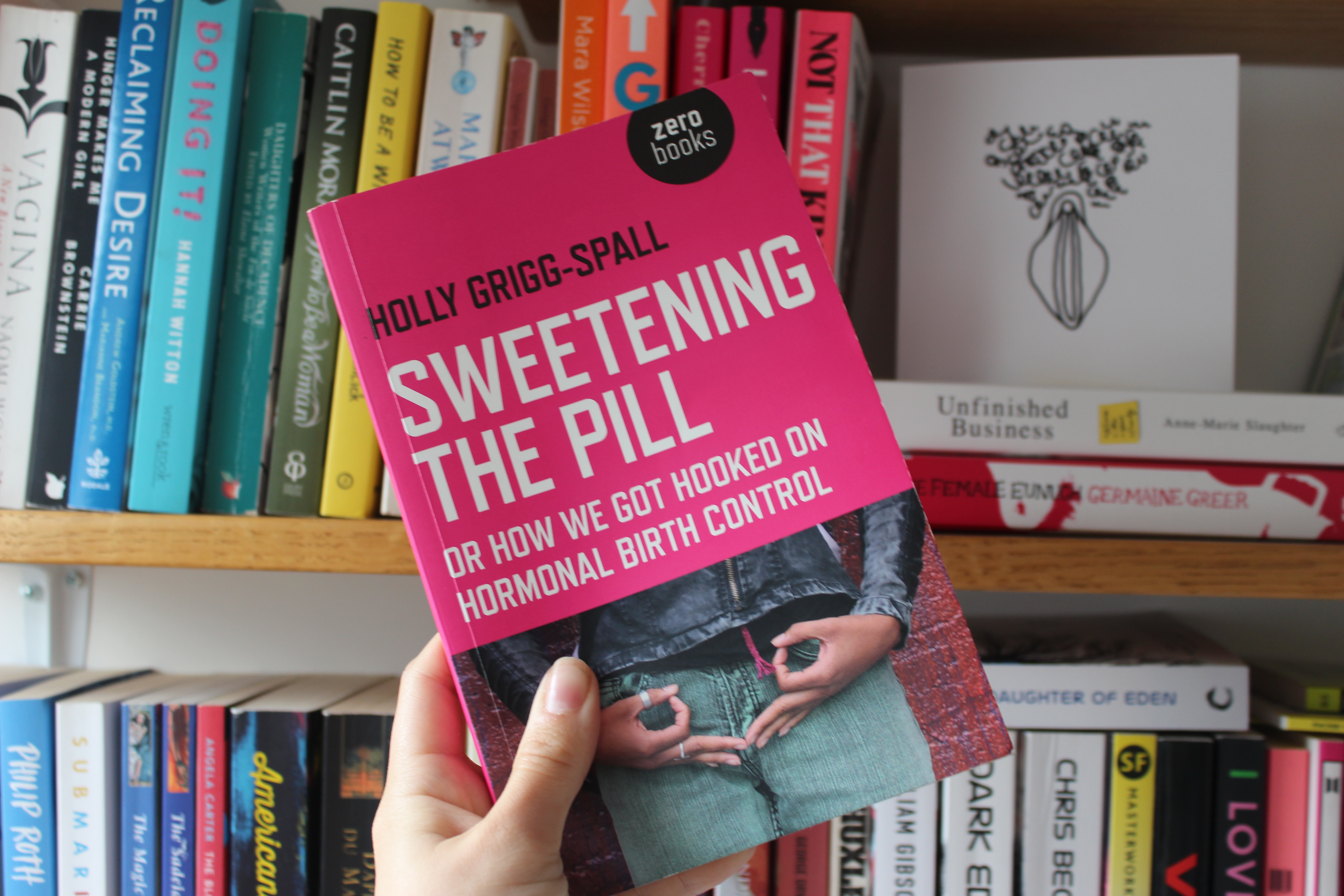
    Last week I read Sweetening the Pill: or How We Got Hooked on Hormonal Birth Control by Holly Grigg-Spall. I’ve been following Holly’s stuff for a couple of years or so now, but it took my longer than I care to admit to get to the book itself. While I can’t say I agree with everything suggested in Sweetening the Pill there were dozens and dozens of moments where I found myself saying ‘so it’s not just me!’

    “The pill is a rejection of femaleness. In swallowing the tablets women are swallowing the negative connotations that are attached to female biology,” Page 34. 

    When you strip the pill back of all the obvious benefits our doctors, and in America, the pharmaceutical companies rave about, you begin to realise that what the pill actually offers is a cure to femaleness. Hormonal acne? Take the pill. Horrible PMS? Take the pill. Heavy bleeds? Pill. Time of work due to menstruation? Pill! Period pain? Pill. And that’s before they start saying ‘hey you don’t need a period at all’ (to which the answer is the mini pill, implant or injection).

    “In lowering the hormonal levels and flattening out the fluctuations the pill takes away the natural peak of libido women experience in connection with ovulation and sometimes pre-menstruation,” page 50.

    I think the most poignant moment of Sweetening the Pill for me was the idea that when you try to suppress the natural lows of a menstrual cycle, you also inadvertently begin to suppress the natural highs. Menstrual cycles are (duh!) cyclical – that doesn’t have to be a bad thing. Good skin and hair days are often just as common as bad ones, randy days can be just as common as days when you don’t want anyone to come near you. In fact, your cycle can work for you, it’s not always a question of fighting it. Problem is, we don’t get to know how our cycle works. It can take up to six years for a menstrual cycle to mature, I was on the pill just over two years after I started my period and it took a year to become regular after I came off the pill. For many women, life on the pill is all we really know and the withdrawal from it can be so scary that it frightens us back onto the pill.

    It’s scary because when you start to think about it, you can’t not think about it. Why are we taking a pill every day when we’re only actually fertile for a few days every cycle – ought we not limit our scope a bit?

    As the book discusses at the length, the ‘anti-pill’ rhetoric has always been dominated by the Religious Right. It’s what put me off. I always assumed being opposed to the pill meant be anti-feminist, sexist and backwards. Thinking that people who spoke against the pill must be religious nuts was an opinion I held for a long time. It remains an unpopular opinion. When I talk to others about my experience with the pill I’m always sure to add the disclaimer ‘not that I’m at all suggesting you stop taking the pill,’ when actually I think that might be exactly what I’m suggesting.

    “FAM is absolutely not the same thing as the ineffective Rhythm Method, which tries to predict fertility based on the length of past cycles. Don’t believe those who tell you that FAM doesn’t work; women using it can achieve effectiveness rates as high as the pill – 99.4 percent.” Toni Weshler quoted in Sweetening the Pill, page 157. 

    What women, like myself, who have had issues with hormonal contraceptives need to do is demand more options, non-hormonal ones. Being done with hormonal birth control is not the same thing as being done with birth control. The book talks a lot about the Fertility Awareness Method (FAM). I had always associated it with the Rhythm Method, unsurprisingly preached about at my catholic school, that has been proven time and time again, not to work as a contraceptive method. Learning how FAM is different was really interesting, and it’s definitely something I’ll be looking into in the future. It’s fascinating to see how FAM and Femtech are beginning to offer an alternative.

    When the pill was released women had to stand up to their doctors to get the pill, today they must fight to get off it,” page 61. #RELATABLE 

    I want more options for female reproductive rights and I think we have the technology to find them – the research just isn’t happening as much as it should be, YET. Rejecting the pill from my own life hasn’t been an anti-feminist act but rather, it has been a feminist act of defiance for the benefit of my own quality of life, and the quality of life of other people in similar situations. In Sweetening the Pill Holly makes reference to hoards of other articles, journals and books, many of which I have now added to my reading list. Sadly, a lot of the evidence for hormonal birth control making women depressed, feel different (worse) and less libidinous is anecdotal and is rarely taken seriously. I’m hopeful that the more anecdotal evidence we report to our doctors, the more likely it will be that quantifiable research projects will take place.