Author: Hilary Webb

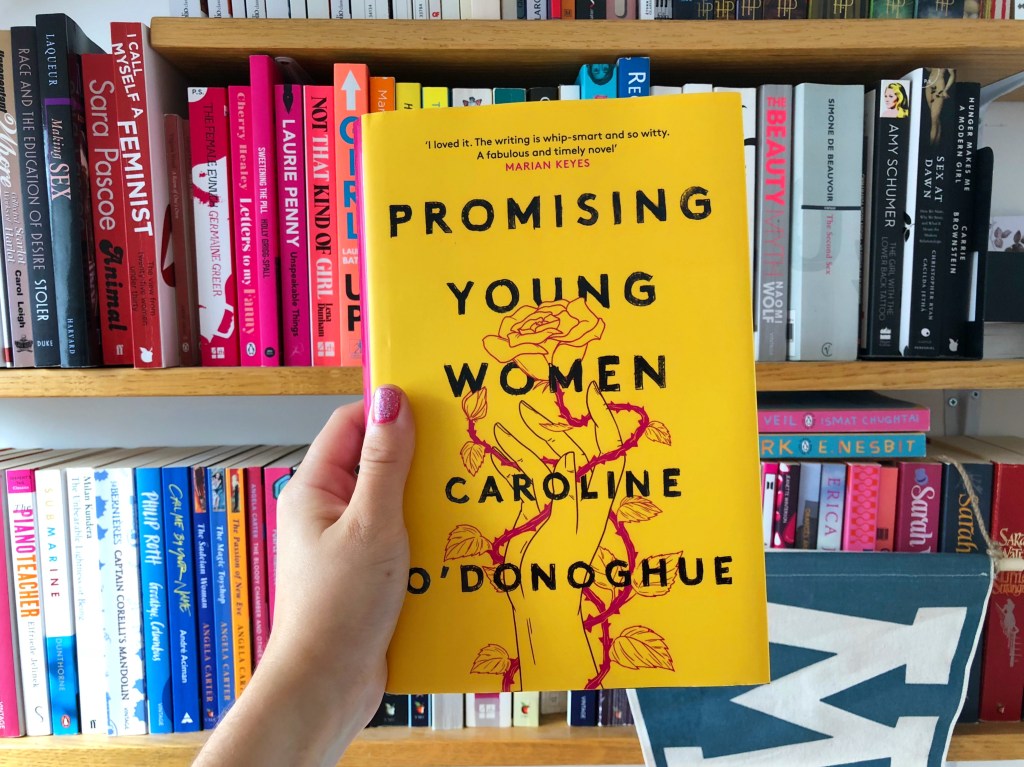
  • Review: Promising Young Women

    Review: Promising Young Women

    Like with most stories that start with a twenty-something London-based office worker navigating the breakdown of a long-term relationship, your mind settles in for a harmless piece of Chick-Lit. And then Caroline O’Donoghue’s Promising Young Women knocks you off-centre by turning into something else entirely.

    The praise on the book’s sleeve repeatedly uses the word “gothic.” Thanks to a module I did in my final year at Swansea (brilliantly named Uncanny places and cyberspaces: Gender and the fantastic) I’m well aware that gothic tropes aren’t limited to stories set in haunted houses in the nineteenth century, but even so Promising Young Women does something totally refreshing with ideas of uncanniness. It’s a novel that proves how relevant gothic images, like starving women fading away, mirrors, periods and other bodily fluids, continue to be relevant and effective at portraying contemporary crises.

    “I don’t have a boyfriend or a fabulous career, and I think she’d like some better adjectives to describe me to her friends with.” – Promising Young Women

    At first, the book doesn’t have the most groundbreaking plot you’ve ever heard of (woman’s anonymous blog seeps into her real life) but O’Donoghue gradually gets under your skin as she tells Jane’s story. A story that while almost fantastical is likely to be relatable and understandable for any young working woman.

    The darkness and depth of this book creep up on you and by the time you’ve realised, you can’t put it down. Dealing with power imbalances (professional and romantic), mental illness and the false security of the Internet’s anonymity, this debut novel makes O’Donoghue one to watch.

  • I changed my mind #Periodically 29

    I changed my mind #Periodically 29

    Maybe it’s because the idea of pain management came up directly after a flare-up, or maybe it’s because the drugs were actually working, but about six weeks into my trial with the low-dose anti-depressant amitriptyline, in an attempt to reduce my pain, I began to feel like this pain management route wasn’t for me. I sat on it for a couple of weeks and it wasn’t a decision I took lightly — I was well aware that maybe I was feeling like I didn’t need the drugs because the drugs were working. Except that wasn’t true at all, I was still in pain.

    The only noticeable difference was that my bizarre dreams, which I’ve always had a lot of, all became nightmares. I’ve heard that anti-depressants can mess with your dreams or stop them completely, the latter is a pretty scary idea for me. As a writer, I need my imagination to be relatively unhinged and out of control. The nightmares I can handle, but the idea that upping the dosage might mean I stop dreaming at all did not sit well with me.

    I knew if I went to my GP and said, “no I haven’t noticed any difference in my pain,” then her response would be to up the dose, as is standard procedure. But the very notion of how anti-depressants work as a means of pain management has bothered me ever since my GP first mentioned the idea. She said she was prescribing them, “essentially, to stop you feeling pain.”

    As nice of an idea that is, I don’t consider it to be a practical long-term solution, especially when I feel like there are still stones that have been left unturned (i.e. urology). Plus I don’t want to stop feeling anything, I just want to be in less pain, if that makes sense?

    I’ve now started with a psychosexual counsellor who is trying to make it dawn on me that my chronic pain may well be just that — chronic. I’m not too hot on accepting this “truth” just yet, but because of it, pain management is definitely something I shouldn’t shy away from. I need it for the sake of my mood, my work and my relationships (of all natures), but I think I’d rather open my world up to alternative pain management options before I put all my eggs in the amitriptyline basket.

    I discussed this with my GP and she agreed that it sounded like prescription pain management wasn’t the right course for me yet after all, and has instead finally granted my wish and referred me to a urologist. This means a lot to me — I’ve had issues with UTIs, my bladder and kidneys since I was two and while none of my current doctors are wildly convinced it’s got anything to do with my pain, for me, it feels like a really obvious path to explore. Here’s to owning your own health journey within the NHS!

  • Favourite Reads of 2018 So Far

    Favourite Reads of 2018 So Far

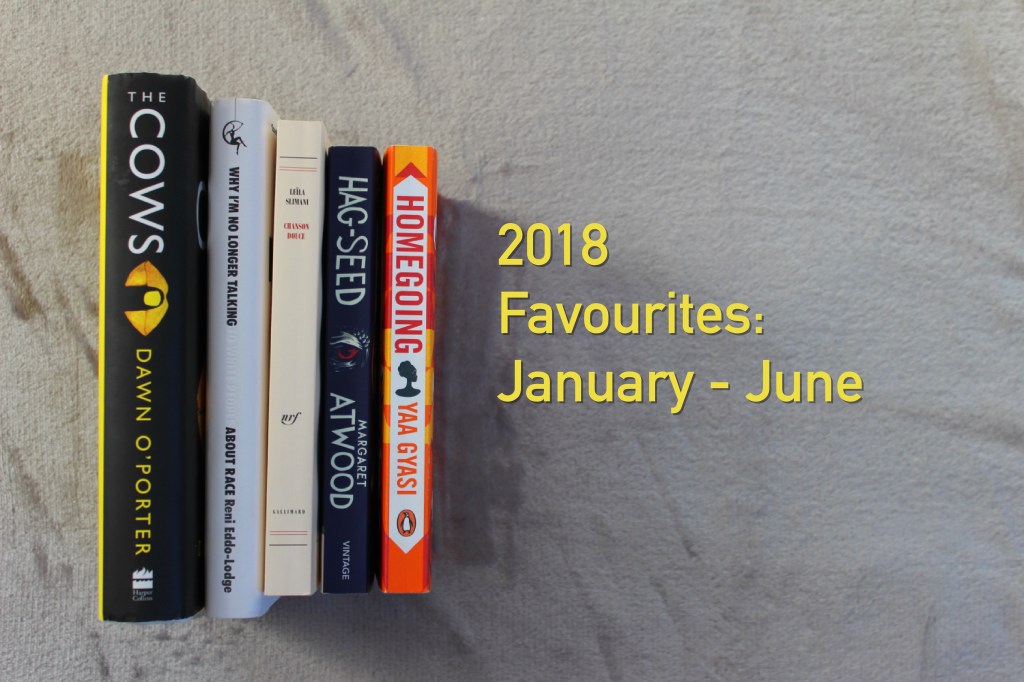
    Somehow, we’re already over half-way through 2018 and as the summer holidays approach I’ve had lots of people asking me what books they should read on holiday. So for this blog, I thought I’d try and pick my five favourite books from the first half of 2018, whether or not you fancy reading them on holiday is up to you.

    Homegoing – Yaa Gyasi

    Let’s start with one I actually read on holiday, shall we? My general rule is that if a book is recommended to me by two or more people in a short space of time then I should ignore the pile of unread books next to my bed and read it immediately. As was the case with this beautiful book. Homegoing traces two parallel family trees through every generation from the colonised Gold Coast to twenty-first century Mississippi. The stories in this book intertwine seamlessly, to reveal how slavery and colonialism leave indelible traces. So much happens in so many different places (in the world and in time) and yet every character in Gyasi’s book is fully formed and deeply complicated. Homegoing is a really special book.

    There’s also lots of interesting period commentary in this book if you’re here for the #Periodically blogs.

    The Cows – Dawn O’Porter

    I’ve talked about this book a lot since I read it in January, so why would I stop now? Everyone I’ve recommened The Cows to so far has loved it and it always kickstarts some really interesting conversations about motherhood, womanhood and, for want of a better word, unmotherhood. The book has a twist that literally dropped my jaw – I’ve had texts of shock as each of my friends have reached this page. Want to know what the twist is? Well, you’ll have to read it.

    Read my full review of The Cows here.

    Chanson Douce – Leïla Slimani

    In English this book is called Lullaby – you’ve probably heard of it as it’s been all over the place with headlines like, “The Killer-Nanny Novel that Conquered France.” It’s such an unusual, gripping and dark book. Thrillers are not usually my cup of tea, but I might have to reconsider that after Chanson Douce. The social, political and moral issues it explores give this book a real edge. This was one of the first contemporary French novels I’ve read and now I must read more. 

    Hag-Seed – Margaret Atwood

    This half-play half-novel is a retelling of Shakespeare’s The Tempest and is Atwood like you’ve never read her before. Set in a Canadian prison, this contemporary retelling uses Shakespeare’s themes and Atwood’s skill to create something brand new and brilliant.

    Read my full review of Hag-Seed here.

    Why I’m No Longer Talking to White People About Race – Reni Eddo-Lodge

    If you’re looking to swatt up on BME history in the UK this book is a great place to start. Eddo-Lodge’s voice is so refreshing and hard-hitting, informed yet digestible that it creates something truly unique. Her chapter on White Feminism was particularly poignant to me, as well as her discussion about how it’s no longer enough to simply just not be racist. I loved it so much that I then binged her podcast About Race, which I also recommend.

     Like the sound of these books? Buy them now from Wordery.