Author: Hilary Webb

  • The fun part? | Pleasure Moans #1

    The fun part? | Pleasure Moans #1

    1. Try not to intellectualise your bodily experiences (much too late for that)
    2. If you start dating again, you’re likely to unconsciously pick someone with erectile dysfunction (can I unknow this?)
    3. When you’re ready, try penetration but on your own (oh shit, here we go)

    Those are the three nuggets of wisdom my sex therapist gave me when we finished our sessions together in the autumn. She made it clear to me that she expected to see me again, or that I would see another psychosexual counsellor at some point in the near future. I was being discharged a) because my sister’s Danish health insurance had dried up and b) because we’d hit something of a brick wall in terms of progress. My generalised pelvic pain had improved and I was beginning to handle the upsetting side effects of the pill, the only thing left to test was the penetrability of my vagina. The fun part, right?

    I was in no rush to test this theory, partly because I was so encouraged by the way everything else had improved. Even in terms of vaginismus, we had come to the conclusion that any superficial, psychological pain and reaction I had was situational and secondary. We also agreed that I wasn’t ready to try penetration again. I was happy with the progress I’d made and while it was a really big deal to test the theory at some point, it was nice to live in the pain-free-ish, worry-free bliss for a little while. And it was worry-free. Until…

    A letter arrived announcing the date of my next appointment with my gynaecologist. I knew exactly what it meant. If I went into that appointment and said “yep, all good, pain’s reduced, periods are lighter, plus I’m handling the acne and mood swings” that my gynae would say “job done” and discharge me – rightly so. Honestly, I felt ready to be discharged. But in the back of my mind, the deadline of this appointment deeply worried me. I needed to test the theory that everything was fixed. I could foresee how upsetting it would be to be discharged and only then discover the horrible deep pain during sex was still there, meaning that if I needed more gynaecological care I’d have to start again, again, again.

    Despite the advice of my well-intentioned friends to ‘find a lad’ in order to test my internal mechanics, I knew exactly what to do, or at least, where to go. The Vaginismus Network has hosted a couple of its events at a Shoreditch sex shop called Sh! Women’s Erotic Emporium that has proven itself to be deeply knowledgable about unwanted pain during sex. Months of avoiding this big ominous question but one letter had me on a bus to a sex shop after class. Whatever it takes, I guess.

    Sh! hooked me up with a dilator set. These are specially designed vaginal trainers of different sizes, mostly used to treat vaginismus. While I wasn’t specifically treating vaginismus, I was advised that it was the best option for testing the water again, especially since I didn’t know if vaginismus was going to be part of the process or not.

    I was so sure it was going to be alright, because (have I said it enough?) everything else had genuinely improved. So I tried the smaller two. No pain, no vaginismus. I stopped there for a week or so, but this really bolstered me. I had reached the dream articulated by Fran Bushe in Ad LibidoI had fixed sex

    And then I tried the third one.

    Pain. Pain, pain, pain. Deep, cramping, breathtaking pain. Shortly and sharply followed by a different pain and resistance: vaginismus.

    What’s worse, the deep pain didn’t go away. It was like I had just turned my pain back on again, all of it, like a switch. Two days later I vomited up my breakfast because of pain, something that hadn’t happened since I started the pill. And I hadn’t even tried the largest one yet.

    Safe to say, I did. And it was agony and pretty upsetting. Not just for that moment but also because it was quite #triggering in ways I did not expect. I must have tried them for two, maybe three minutes. Not long at all. It just made me feel deeply disturbed, uncomfortable and worried by the fact I have had sex with that pain in the past.

    As a bonus stroke of discomfort, I currently live with my parents. They were pretty aware of my situation and how much it had improved. So when I was suddenly in pain again I was really unsure how to mention, “oh I’ve been upstairs testing out my vag before I see the gynaecologist on Tuesday!” So I did the very rational thing of saying nothing, becoming a bit of a stroppy teenager and not being a very nice person to live with. Oops. Sorry, folks!

    There are lots of things I hate about pain, but up at the top of the list is the exhaustion that comes with it. Whether it’s due to the cause of the pain itself or just by the toll being in pain takes, it sucks. I’ve found the masters draining and challenging, so adding some extra stress, pain and fatigue meant that by the end of term I just felt like a blob of matter floating around. Most of my diary entries from November and December start with “I am so tired,” “I’m fucking exhausted” “bloody exhausted” “you’d think I’d be used to exhaustion by now…” or various uncreative phrases of a similar ilk. I really thought it was just university, but my workload this semester is much bigger and yet I have had so much more energy and I wonder if it has a lot to do with my return to the regular use of painkillers and the fact I’ve stopped using the dilators for now.

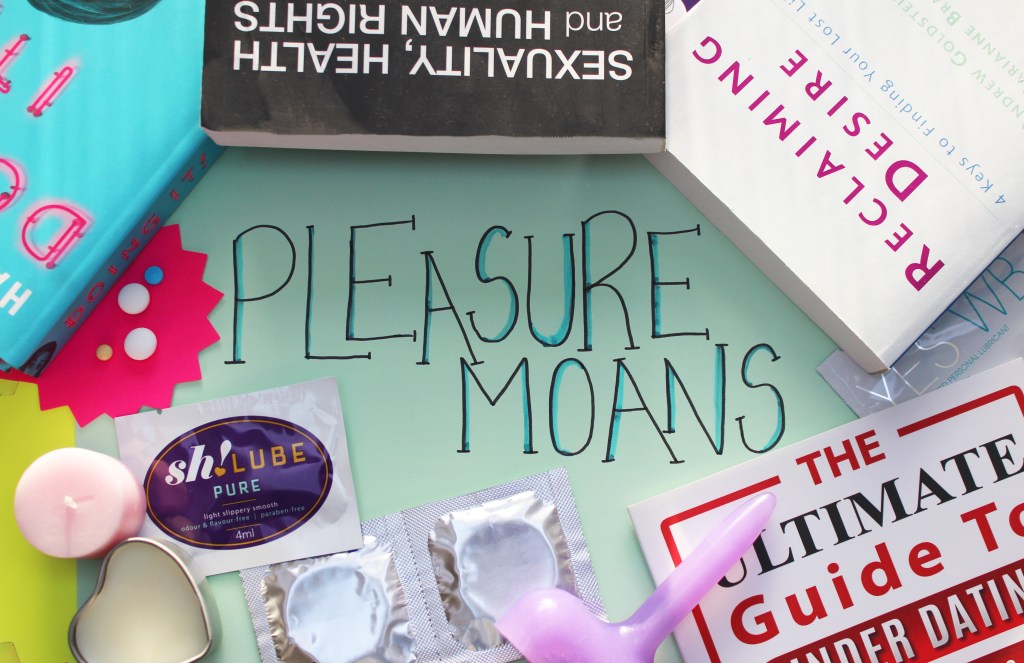
    I can’t tell you how much I’ve hesitated over writing this blog. At the LSE Gender Department there is a lot of talk of so-called Imposter Syndrome. I’ve certainly felt it there, but I’ve felt it in this respect too – how can I spend so much time writing about sex but feel uncomfortable discussing solo vaginal training? And yet I didn’t want to force myself to write about it. If I felt there was a new line being crossed then I was going to cross it slowly and thoughtfully. But I did want to cross it eventually. The rediscovery of this pain has opened up a whole load of new questions, like was my pain ever hormonal? Did the pill actually fix something or did my pain just improve because more time had passed since the last time I had penetrative sex? The other feeling of imposter syndrome came from the fact I had restarted the pain myself. Should I devalue this pain because I had unknowingly but voluntarily made it worse? These questions haven’t gone away and I think this part of the story is crucial if I’m going to tell the next part. And though it does continue on from the #Periodically blogs, which aren’t going anywhere, I’m going to do so under a new banner: Pleasure Moans. 

    This blog is already way too long so I’m going to end it here. It’s obviously not the end of this (never-ending) story. I didn’t want this post to be quite so depressing but it is what it is. I promise the second half of this ‘episode’ is more constructive and angry and funny. I’ll try to write it soon, rather than leaving it another four months, but I’m making no promises. Thank you as always for your support, kind words and patience! 
  • My Favourite Reads of 2018

    My Favourite Reads of 2018

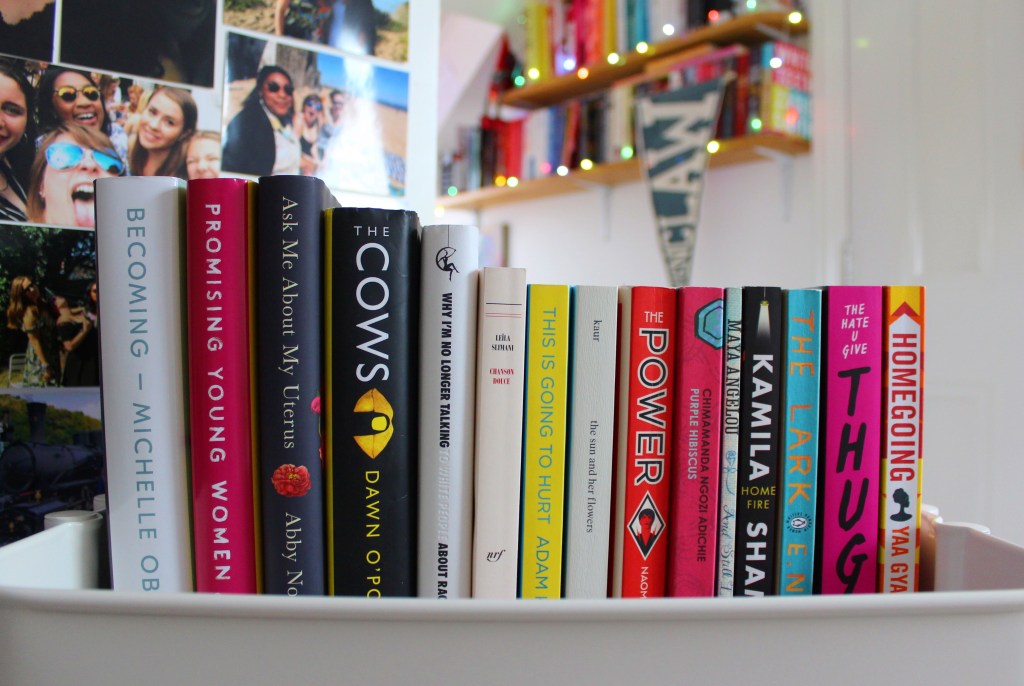
    Happy almost-Christmas-and-New-Year! It’s been a busy few months and blogging took a back seat while I got my teeth into the first semester of my masters but I wanted to take the time to reflect and chat about what I’ve read this year. My goal was to read 65 books including 12 in French and I actually did it! I hit 65 in September, and 12 French books in November. There’s still a few weeks left in December but I’ve been reading much slower since I started studying again so I’m currently on my 80th book of the year (and have been for a while). But 80 is ridiculous and points to the fact that I had a lot of down-time earlier this year. Still, I’m chuffed with it because, for the most part, it’s been really good, proper reading.

    Halfway through 2018 I wrote about my favourite books of the year so far and I’m sure there might be a few crossovers, but otherwise here are my favourite reads of 2018!

    Non-Fiction

    About 30% of my reading this year has been non-fiction. The latter end of the year has included a lot of textbooks but the first half saw lots of biographies and slightly more entertaining non-fiction books. Biography highlights include Juno Dawson’s The Gender Games and Lily Allen’s My Thoughts Exactly. I’ve since written an essay about the latter that wasn’t nearly as complimentary as my review on the blog… academia’s getting to me!

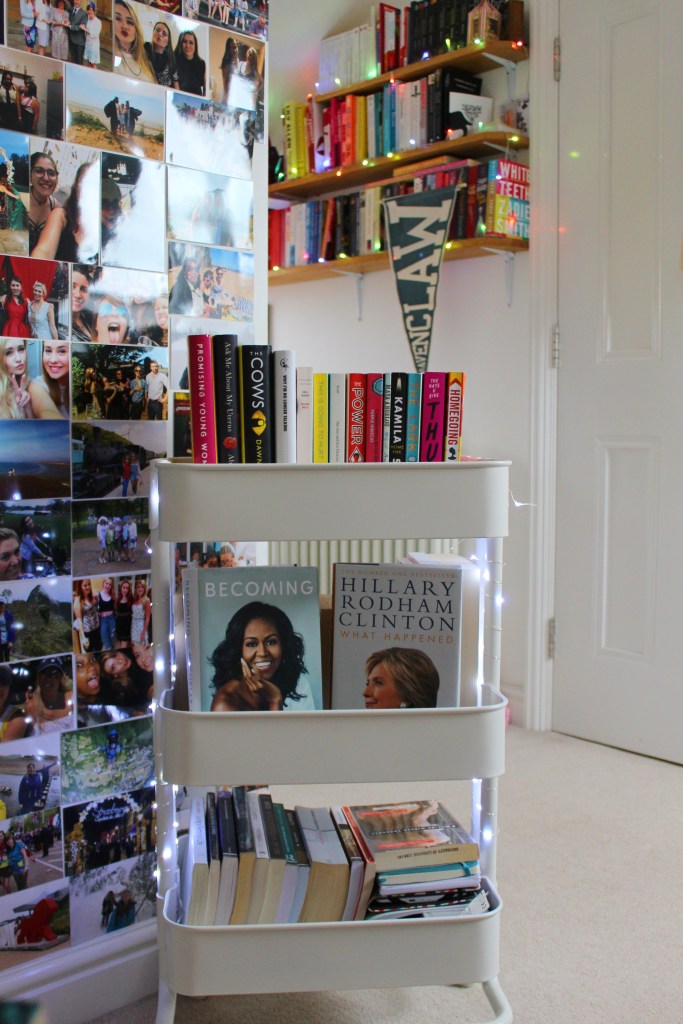
    I read Hillary Clinton’s book What Happened at the beginning of the year and recently finished Michelle Obama’s Becomingit feels natural to pair them together, not just because they’re two former first ladies but because both hardback books are obnoxiously large. I enjoyed Clinton’s book, but given it’s about the 2016 U.S. election, it was pretty depressing, whereas Obama’s was a lot more interesting, hopeful and joyful (for the most part, it still ends with the 2016 election…)

    obnxlarge
    See! Why do first ladies’ books insist on being enormous!

    The funniest non-fiction book I read this year would have to be Adam Kay’s This is Going to HurtAs you know I’m no stranger to the NHS and it’s great to see it being celebrated and ridiculed simultaneously, I hope it makes people realise how much trouble the NHS is in but also how important it is that we save it. #SaveOurNHS

    Ask Me About My Uterus by Abby Norman is a powerful book that I continue to think about, but I’d say the non-fiction book that’s had the biggest impact on me this year is the first one I read, Reni Eddo-Lodge’s Why I’m No Longer Talking to White People About Race. If you’re interested in Black British history and what it means to be an intersectional feminist (which you should be), give this brilliant book a read.

    *New* Fiction

    I had a steady income for the first half of the year and so I pushed myself to read new, shiny, contemporary novels while I could afford to buy them. On reflection, I realise that all the contemporary fiction I read this year was written by women… oops #sorrynotsorry. Over the year, I’ve recommended some of these books to friends and family, some of whom have been fundamentally challenged by them – but that, to me, is the sign of great writing.

    I’m still obsessed with Dawn O’Porter’s The Cows but I’ve definitely written about it more than enough on the blog. Ditto with Caroline O’Donoghue’s Promising Young Women – you can read reviews of both here.

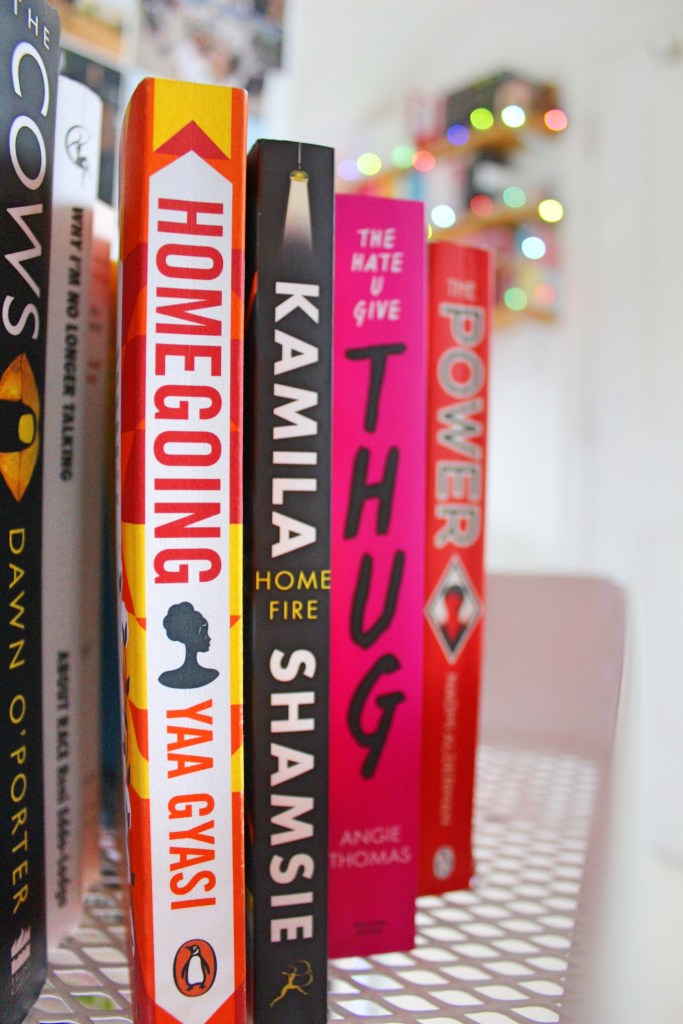
    ficfaves2018I absolutely loved The Power by Naomi Alderman and The Hate U Give by Angie Thomas but I think, only slightly, Homegoing by Yaa Gyasi and Home Fire by Kamila Shamsie have a slight edge for me. Actually, I take that back – these are four astonishing books that deal with incredibly complicated, ever-present issues in thought-provoking, daring and often beautiful ways. My life is richer for having read them and I highly recommend you read them too.

    Fiction

    This year I read Philip Pullman’s His Dark Materials trilogy for the first time. I can’t say I totally get the hype, mostly because for some reason I just didn’t like Lyra’s character, which I’ve learnt is an unpopular opinion… but I enjoyed them nonetheless, particularly all the theological musings.

    From Penguin’s Women’s Writers editions released earlier this year, my favourite was E. Nesbitt’s The Lark, which was a really fun, uncomplicated read. But my favourite novel that I read this year is Chimamanda Ngozi Adichie’s Purple Hibiscus. The depth of Adichie’s writing always blows me away – her ability to create such whole, lifelike and complex characters without writing books the length of War and Peace is mindboggling (and a skill I hope I can learn myself).

    Français

    I’ll resist the temptation to repeat what I did last year and say that my favourite French reads have been Harry Potter, even though reading the series in French was one of the best reading endeavours I’ve ever embarked on, let alone finished this year. Instead, there’s another obvious choice: Chanson Douce (Lullabyby Leïla Slimani. It’s such a thrilling read, which I’ve discussed before, that paints a really uncanny picture of France today – I can’t wait to read it again in English.

    Special shout out to a bit of French ‘chick-lit’ that I read during my trip around France this summer. Le parfum du bonheur est plus fort sous la pluie by Virginie Grimaldi was the perfect match for my French reading level. I kind of hated the plot and characters at the beginning but it really surprised me and went down a much darker route than I expected, dealing with miscarriage and divorce in refreshing ways.

    Poetry

    I finally got into poetry this year, thanks to two brilliant women: Maya Angelou and Rupi Kaur. I’ve always really struggled with poetry but this year I realised that the poetry I studied at school and university was only the tip of the iceberg and that there’s so much out there that is much more to my taste. I read Kaur’s The Sun and Her Flowers and Angelou’s incredibly well-known collection And Still I rise. If, like I did, you think poetry isn’t for you, give these two a read if you haven’t already.

    poetry

    Book Buying Update!

    The final thing to say is that I met another one of my reading resolutions: I haven’t bought a single book from Amazon or Waterstones this year. It’s got me out of the house and into some really cool bookshops across London, exploring book stalls on holiday in Montpellier and Lyon and enjoying better, more ethical service from other online booksellers like Wordery.com. I have an affiliate link with Wordery, so if you’re buying books this Christmas please consider using my link as it will help me and the blog out big time. Thank you!

  • Clue Plus Review #Periodically 33

    Clue Plus Review #Periodically 33

    One of WordPress’ slightly creepier features allows me to see that a whole bunch of people have been coming to my blog looking for reviews of Clue Plus – the paid-for version of a popular menstrual tracking app. I reviewed it when it was called ‘premium’ and still super expensive, but now that the new and improved version has been rolled out I thought I would update you all on how I found two months using it.

    As mentioned, Clue has made its paid-for version much cheaper. In the UK it now only costs £0.83 a month if you buy a year at a time (£9.96), or £0.99 month-by-month, just a casual £33.03 cheaper than the original version – SO much more affordable. So what about the features, are they more interesting?

    Yes and no. I’ll get to the main feature, forecasts, in a minute but first I want to talk about what else is new. IMG_2986

    Sorry I couldn’t resist that picture placement… Other than the cheaper price and forecasts the only added feature on the paid-for version is that it now notifies you when your period or other menstrual symptoms are ‘out of normal range.’ This is pretty neat and it might help people take their problematic menstrual symptoms seriously, but it doesn’t (yet) consider other data you’ve inputted. For example, I got the alert below, but it didn’t take the fact I’d recently changed hormonal contraception into account and so a 22 day period threw my average off. But, I should add, this might be my fault for not taking advantage of the ‘exclude this cycle’ feature – which exists in the free version and is such a great idea.

    The main feature of Clue Plus is ‘forecasts.’ When Plus was first released it said ‘know the future’ on its call-to-action button, which completely undermined the meaning of the word ‘forecast’ (estimate) but that was soon gone. Unlike when I first trialled forecasts under Clue Premium I actually got forecasts this time – progress! Unfortunately,  notifications appeared sporadically and often in the evening, so I wasn’t sure if it was talking about today or tomorrow. They all come with one of several generic messages, meaning that if you get multiple forecasts one day things are likely to be repetitive, which ruins the great personalised feel Clue used to have. The cool thing about the forecasts feature is that it asks ‘did this happen today?’ and if you answer yes or no it will log it so you don’t have to.

    As for the accuracy of the forecasts… I’m not convinced but I think other forces are at play (in my body, not at Clue), and it makes me wonder: is there any point in tracking your cycle when you’re on hormonal contraception? When I was off the pill it was really interesting and almost fun to track my cycle because I could see how my mood, motivation, exercise habits, libido and acne all varied across it and how certain things, like staying up all night or having a cold, impacted my cycle. It was also vital in helping me spot trends that led me to seek medical help. But on the pill, there’s far less variation or ‘excitement’ and I find myself using and needing Clue less and less. I do use its pill reminder feature but annoyingly it’s been glitchy lately.

    There is one thing I’d love to see from Clue, that I *might* be willing to pay for, and that’s the ability to analyse two categories at the same time. I think this could really help people identify what’s causing pain or other symptoms. 

    So while Clue Plus is definitely an improvement on its last iteration, I’m not sure there’s much in it for someone on hormonal contraception like myself. I didn’t renew my membership but for now, at least, I still use the free version.

    Let me know if there are any other period or Femtech products you’d like to see me try and I’ll see what I can do! Check out my review of Natural Cycles here.